Politicians talk about net zero – but not the sacrifices we must make to get there


John Harris
Too few leaders will arrive at Cop26 bearing any mandate for serious climate action, because hardly any have tried to get one

To be facetious about it, they only have 12 days to save the Earth. As politicians and officials from 197 countries begin just under a fortnight’s work at the Cop26 summit in Glasgow, you can sense a strange mixture of feelings: expectation, cynicism, fatalism, anger and fragile hope.
It will be easy to lose track of what is at stake and who is who – although anyone feeling confused should recall the report issued in August by the Intergovernmental Panel on Climate Change and its bracing conclusion: that huge environmental changes triggered by global heating are now everywhere, and avoiding a future that will be completely catastrophic demands “immediate, rapid and large-scale reductions” in carbon emissions. The point is simple enough. But one familiar factor may well weaken the resolve of the key people at Cop26: the fact that too few politicians will arrive in Scotland bearing any mandate for serious climate action, because almost none of them have tried to get one.
Two crucial political problems define the contrast between what is required and what those in power have so far chosen to deliver. One centres on the populism and power cults that actively get in the way of climate action – something evident in both the records of strongmen like Donald Trump, Vladimir Putin, Brazil’s Jair Bolsonaro and Turkey’s Recep Erdoğan, and where our ecological emergency sits in the cultural and generational conflicts that are now bubbling up all over the world.

In the UK, the latest manifestation of the populist right’s belligerent scepticism is the suggestion that we might rerun the Brexit referendum in the form of a vote on whether or not to pursue the goal of net zero carbon emissions. You also see it in those seemingly daily video clips of some or other sub-Alan Partridge TV or radio host arguing with someone from Extinction Rebellion or Insulate Britain, a ritual which feels like a new national sport.
The other impediment to action is more insidious. On both the centre-left and centre-right, there is superficial recognition of the hard yards required to do something about the climate emergency but, so far, an aversion to thinking about the huge changes to everyday life that will be necessary. “We can build back greener without so much as a hair shirt in sight,” says Boris Johnson.
Keir Starmer may not have uttered anything so crass, but he too seems to believe in a modest utopia of a new green economy, insulated homes, increased funding for science, and the day somehow being saved by British derring-do. “Climate change is about jobs,” he insists, which is partly true. But, like Johnson, he doesn’t mention revolutionising what we eat and why and how we travel, or – God forbid – the continuing fetishisation of economic growth.
Might that be an inevitable feature of democracy? Perhaps. But in the UK, the first focus of blame should be the two-party Westminster model of politics kept in business by our stupid electoral system, and the way that it sustains political philosophies that ought to have been left behind in the 20th century.
On the right, notwithstanding Johnson’s swerve into the politics of big spending and economic interventionism, Toryism remains beholden to the market, and dead against the idea of the common good shaping the lifestyles of anyone who is halfway affluent (the poor, of course, are fair game). Its contorted priorities are illustrated by the fact that the government’s current leading lights managed to take us out of the European Union at a huge cost to national income and the country’s economic future. But they cannot muster anything like the same enthusiasm for risking some stability and prosperity in the interests of saving the planet.
And Labour? Here is a radical thought: given his beleaguered position and the urgency of the crisis, Starmer could conceivably go for broke, and predicate his leadership on the climate emergency, finally bringing its scale and urgency somewhere close to the heart of politics. The thought, unfortunately, would not even occur, because of what the Labour party is. Its origins lie in a world of coalmines and smokestacks. Like its sister social-democratic parties in Europe, whatever reinventions Labour has undergone since, it has a deep, sentimental attachment to an idea of the good life centred on work and the factory, and raising people’s living standards so that they can consume with the same enthusiasm as everyone else. At the most basic level, it shares the Tory idea that growth is the sine qua non of economic policy.

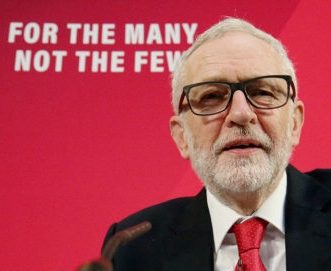
During the Corbyn years, some of this stuff was undoubtedly shaken up, although there were also signs of a conservatism that still runs across all wings of the party. In 2015, as he ran for the leadership, Jeremy Corbyn endorsed reopening mines in south Wales. Four years later, as Labour decisively embraced a so-called Green New Deal in preparation for the 2019 election, some of the big unions – who represent gas, oil, and aviation workers – insisted on 2030 being a target for “significant progress” rather than a non-negotiable net zero deadline.
It is worth remembering the view of the then leader of the GMB union, Tim Roache: the latter stance, he raged, would mean “within a decade people’s petrol cars being confiscated. This will mean families can only take one flight every five years. Net zero carbon emissions by 2030 is utterly unachievable.”
So, which way out? As a means of at least trying to reorientate our politics, a lot more people are going to have to vote for the Green party – and, to maintain the sense of last-ditch urgency that Extinction Rebellion have brought to things, the case for what some people call extra-parliamentary activity feels beyond argument. Without wanting to sound overly pessimistic, the most likely outcome of all the negotiations and diplomatic theatre in Glasgow will push even more people in that direction, and their protests will bring on the usual sneers and priggishness, not least from Westminster politicians. But as ever, the people involved will have a simple answer: that if politics endlessly fails, the streets may be all you have left.

https://www.theguardian.com/commentisfree/2021/oct/31/politicians-net-zero-sacrifices-cop26-climate?CMP=Share_iOSApp_Other


John Harris is a Guardian columnist

Brexit will only be judged a watershed if it leads to major new directions in the constitution, political economy, or external stance of the stat

Britain’s oscillation between engagement and non-engagement with the rest of Europe is likely to remain a fundamental part of British politics, writes Andrew Gamble. But whether Brexit marks a major watershed remains to be seen. 

How will Brexit come to be judged? Five years on from the referendum, it is still unclear whether this striking manifestation of popular sovereignty will come to be seen as a major watershed in British politics or not. As with all revolutions, the rupture which is proclaimed at the time often masks much deeper continuities in policy which soon reassert themselves. I explore these questions and other aspects of British politics in a collection of my essays on British politics published over the last forty years. After Brexit was chosen as the title essay because it reflects on the historical contexts which have shaped the British political economy and its external relationships in the decades of European engagement and non-engagement since the Second World War. The European issue has been central in British politics in the last forty-seven years, since Britain first entered the European Community in 1973. But it reaches back before that, to Churchill’s identification of Europe as one of three circles of key external relationships in which Britain was involved (the other two were the Empire and the United States), to Britain’s refusal to become involved in the first steps towards European collaboration after 1945, followed by the two failed attempts to join the Common Market in the 1960s.

When Edward Heath finally secured entry in 1973, he intended Europe to provide a new national purpose and to give Britain a new role in the world, following the withdrawal from Empire. It was regarded as a watershed moment in Britain’s post-war development and a decisive recalibration of Churchill’s three circles, giving top priority (for the first time) to the European circle. In the same way, the decision to withdraw from Europe after the 2016 referendum has the potential to be a major watershed which some of the leaders of the Leave campaign are hoping will recalibrate the three circles again by giving priority to the United States and the wider Anglosphere. If this could be achieved, it might reshape British politics in many different areas – its political economy, its role in the world, its party system and its constitution.

Britain was often a reluctant member of the European Union. But both supporters and opponents of the European turn in British policy assumed that membership was permanent and unlikely to be reversed, despite the presence of a strong and vocal anti-European minority. Europe was always an issue of low importance for most British citizens, but it was a vital matter for parts of the political class as the virulence of the civil war in the Conservative Party attested. Both main parties were divided about the merits of integrating with the rest of Europe and the priority to be given to Britain’s relationship with Europe over its relationship with the United States.

The increasing Europeanisation of Britain’s laws, institutions, policy-making processes and of its regulatory regime over four decades intersected with other domestic issues and debates. These included the response to the relative decline and poor performance of the economy, the character of Britain’s hybrid Anglo-liberal model of capitalism, the reshaping of the post-war Keynesian welfare state, the rise and fall of Thatcherism, the transformation of both the Conservative and Labour parties, the relationship between Britain and the United States, the new regulatory state, and the changing  constitutional order, with the devolution of power to assemblies and parliaments in Wales, Scotland, and Northern Ireland.

For all the passions Brexit has aroused, it will only be judged a watershed by historians if it leads to major new directions in the constitution, political economy or external stance of the British state. The most likely form a constitutional watershed arising from Brexit might take is the breakup of the United Kingdom. Brexit has further destabilised the Union, increasing secessionist pressure in Scotland, raising the possibility of Irish reunification, enhancing support for Welsh independence, and accelerating the emergence of a new politicised Englishness. The new disunited Kingdom has been on full display during the pandemic.

A second possibility is that Brexit may mark a watershed in Britain’s political economy. Will it be seen as leading to a decisive turn from the economic principles which have shaped British economic policy since the Thatcher Government in the 1980s? There is talk of a more active role for the state, in part spurred by the Conservative agenda of levelling up to retain its new support in former Labour areas, in part by the demonstration of what an active state can achieve during the COVID-19 emergency. But to make these changes of direction, there would need to be political commitment to a fundamental broadening and deepening of the tax base and some major institutional changes in the way policy is delivered; at present, there are few signs of either.

A third possibility is that Brexit marks Britain’s relaunch as ‘Global Britain’. The initial flurry of symbolic gestures and rhetoric may be a poor guide to the pragmatic choices British governments actually make over the next ten years. One scenario sees Britain inexorably edging back towards closer involvement with the EU and adopting the kind of associate status Jacques Delors once urged the UK to consider. That is because the realistic possibilities for ‘Global Britain’ outside the EU orbit altogether are not great. Promotion of deeper links with the Anglosphere finds little support within the Anglosphere nations themselves. Britain will remain a strong supporter of the western alliance and the leadership role of the United States, but this was Britain’s position before Brexit. Britain was always a reluctant and at times an awkward partner for Europe, but the relationship was also an indispensable one for both sides. That has not changed. The British have won greater freedom of action in some areas by giving up the power to shape and influence the general direction of European policy, much of which Britain will still be obliged to comply with.

Since Britain cannot just cut its links with Europe, the relationship threatens to be one dominated by friction and resentment. But this again is hardly a change from what existed before Brexit. Britain’s European odyssey shows no signs of ending any time soon, because although Britain is now after Brexit, it will never be after Europe. Britain’s oscillation between engagement and non-engagement with the rest of Europe is likely to remain a fundamental part of British politics.

Note: the above summarises aspects of the author’s new book, After Brexit and Other Essays (Bristol University Press, 2021).

About the AuthorAndrew Gamble is Professor of Politics at the University of Sheffield and Emeritus Professor of Politics at the University of Cambridge.

https://blogs.lse.ac.uk/politicsandpolicy/after-brexit/?utm_source=feedburner&utm_medium=email&utm_campaign=Feed%3A+LSEGeneralElectionBlog+%28General+Election+2015%29

The Police, Crime, Sentencing and Courts Bill includes major proposals on crime and justice in England and Wales.

David Mead writes that its introduction is an attempt to divert attention away from serious threats – such as climate change and racialised policing – and onto those who try to raise awareness.

‘By giving the police the discretion to use these powers some of the time, it takes away our freedom all of the time’. David Lammy’s closing speech at the end of the Second Reading debate of the Police, Crime, Sentencing, and Courts Bill gets to the nub of the issue – a potentially massive increase in the power of the state to regulate protest and activism. The Bill, despite some of the hyperbole, does not remove the right to protest; it is drafted very carefully to avoid such a charge, but it does render it far more precarious, and far more in the gift of the police. If we hadn’t before, events at the Sarah Everard vigil on the night of 13 March should make us question the wisdom of this Bill very, very closely.

I will not engage with the question of the Bill’s scope and effect (see instead hereand here). What I want to focus on is the parliamentary passage of the Bill, specifically the side-lining of scrutiny. There are three related issues I want to touch on: the provision of information to the public and MPs about the Bill; the speed of passage; and the need for the legislation (and, more importantly, what MPs see as the need).

The Bill had its First Reading on 9 March, and two days were set aside for the Second Reading later that month. Not only is this a 307-page, 176-clause Bill, but at least for the public order sections, there was no White or Green paper, no draft Bill. There had before been some floating of the need to make inroads though nothing officially was said before March. In late November, Netpol – the network for police monitoring – posted about plans for a ‘major crackdown on protest in 2021’, in light of talks it had had with HMICFRS. The plans were said to include equalising the power to impose conditions as between marches and assemblies; lessening of the trigger from serious to significant disruption to the life of the community; and plans to introduce stop-and-search powers to prevent such disruption. The Bill certainly covers the first, to some extent it touches on the second, but does not include the third. The provisions in the Bill that allow for conditions on noisy protests – if the noise level is such as likely to cause some serious unease, alarm or distress – is new, as is the planned power to regulate one-person protests, the power to prohibit obstructions of entry/exit into the Palace of Westminster, and plans to put common law nuisance onto a statutory footing – though the latter dates back to a Law Commission report in 2015.

Of course, the mood music has been playing for a while – most of the past 18 months have featured regular, albeit sporadic calls for action and castigation of activists, going back to evidence given by Met Commander Adrian Usher to the JCHR in April 2019, where he argued for the police to have powers to deal with unlawful protests, in total contradistinction to ECHR case law. More recently, they go back to claims made about Black Lives Matter and Extinction Rebellion, most especially the pulling down of statues and the blocking of the distribution of several Murdoch press titles in September 2020. The Home Secretary responded by labelling ‘so-called eco-crusaders turned criminals’ while some Black Lives Matter protesters became ‘hooligans and thugs’.

It was clear, then, that the tide was turning, perhaps had done so. That does not explain the Bill that has just landed, accompanied by a 161-page HMICFRS report vindicating the government’s approach. Neither does it explain the absence in the Bill of a power allowing the police to impose conditions centrally, so avoiding the restrictions of the High Court decision in the Jenny Jones judicial review. There, it was held the Met had acted unlawfully when a senior officer had imposed conditions on several cross-London Extinction Rebellion ‘pop up’ protests, since the legislation, properly interpreted, required that to be done separately at each scene.

The Bill then is something of an enigma: to what is it supposed to be a response? We soon see an enigma wrapped up in a puzzle when we consider the views expressed by Conservative backbenchers during the debate. Several (not all – see the thoughtful interventions of StephenHammond and Fiona Bruce) managed to convince themselves into holding two irreconcilable positions: that the Bill was proposing things not actually in it, and yet was needed to cater for things that were already covered. For instance, Gareth Johnson said that ‘the Bill seeks to balance those competing rights. It will allow protests, vigils, demonstrations and marches, but not the blocking of bridges or stopping traffic and bringing cities to a standstill. Protests, yes; causing serious disruption to others, no.’ Then, TimLoughton warned that ‘Labour Members may try to claim that they have objections to the new public demonstration conditions proposed for preventing serious disruption to the life of the community’. Finally, Richard Drax was reassured that ‘the Home Secretary indicated in her speech that these new powers are aimed at preventing protesters from stopping people going to work or closing a city like London for days on end’.

Serious disruption to the life of the community has been the trigger for imposing conditions for 35 years, since the relevant Public Order Act 1986. There is nothing in the Bill that adds to the armoury here, yet none of those three MPs addressed the real challenge to peaceful protest, what I term an existential threat: conditions based on likely noise levels. They may simply be repeating a Whip-derived line – that the Bill does not affect the right to protest. But that is nonsense. Any increase in police power has that capacity and potential. Whether it is ever used, whether we think it should ever be used, are entirely different and valuable normative questions. But to deny that this Bill changes anything at all is false. This is compounded with the realisation that, in fact, the Bill does not deal with Extinction Rebellion protests. It does not alter the Jenny Jones decision. Neither does it deal with protests by putting common law nuisance onto a statutory footing. While it is true that since Rimmington a charge cannot be laid if there is a statutory alternative, that is the very point: either there is already an offence in an Act – charge someone with that – or if there is not, the common law provides the charge. This Bill does not change that.

We see the Bill, then, in its proper light: a lightning rod, diverting proper attention away from the imminent threat of climate change and onto those who exhort for a different way of life to tackle it, away from those subjected to racialised policing and onto those who tear down statues. The Bill is the epitome of much wider contemporary political discourse, one that allows government to cast us as good or bad, activists and citizens, reinforcing tensions and division at the expense of collective social solidarity, and for that reason alone we should oppose it.

____________________

About the Author

David Mead is Professor of UK Human Rights at the University of East Anglia. He has worked with Amnesty, Greenpeace and Liberty on protest issues, been involved with practitioners in cases up to and including the Supreme Court, and been consulted by the UN Special Rapporteurs on both Peaceful Assembly and on Use of Force. Most recently, his evidence has been relied on by the JCHR in its report on protest under COVID-19. He is a member of Netpol’s Lawyers’ Group. He is the author of The New Law of Peaceful Protest: Rights and Regulation in the Human Rights Act Era.

LSE blog

Budget 2021: a missed opportunity to make permanent the £20 increase to Universal Credit

Posted: 03 Mar 2021 09:50 AM PST

Ruth Patrick, Kayleigh Garthwaite, Geoff Page, Maddy Power, and Katie Pybus comment on the government’s decision to extend the £20 uplift to Universal Credit by six months only. They argue that the increase should be a permanent one, as part of a broader commitment to reforming the social security system.

We’ve learned a lot over the past 12 months of the pandemic. About ourselves, our children, our local areas, but also, inevitably, about our politicians and government. We’ve learned that our government is sometimes willing to make bold policy decisions, such as the recent announcement of the extension of furlough into the autumn. As part of the 2021 Budget, Rishi Sunak promised that he would ‘do everything it takes’ to protect ‘lives and livelihoods’. His government’s budgetary measures simply did not live up to these words.

The decision Sunak announced to extend the £20 uplift to Universal Credit by justsix months is testament to this. Not only has the government missed the opportunity to properly invest in social security into the longer term, but they have also failed to extend the support provided through the £20 Universal Credit uplift to an estimated 2.5 million legacy benefit recipients. They have further failed by not acting to make those subject to the Benefit Cap eligible for support through the £20 uplift.

These failures on the budget are part of a broader narrative emanating from this government on ‘welfare’, which continues to rely on divisions between ‘deserving’ and ‘undeserving’ populations, and shows an unwillingness to retire old (and arguably ineffective) policy tools, such as welfare conditionality. Both Sunak and Johnson have also shown an unwillingness to think more ambitiously and structurally about the social security system. They have been unprepared to delivery long overdue reform to address issues tied to adequacy and eligibility to social security support, whilst they have also failed to address the design limitations with Universal Credit, which negatively impact on the experiences of existing claimants, and the millions of households who have claimed as a direct result of the pandemic.

Through the Nuffield Foundation funded COVID Realities research programme, we are working in partnership with over 100 parents and carers living on a low-income, who are documenting their everyday experiences in online diaries and by responding to weekly video questions. The parents are also meeting up together in virtual discussion groups. In these monthly meetings, parents work with us to develop recommendations for change, recommendations which are rooted in their own experiences, that are all too often of insecurity, of poverty, and of a social security system that is failing them.

After the budget, some of the parents we have been working with gave their reactions to the decision on Universal Credit. Dorothy, a single parent to two children, one of whom is disabled, told us:

I am a bit relieved that they have extended the £20 UC payment, but I’m disappointed it is only for six months because I don’t think the pandemic is going to go away within six months. The cost of living went up so much from the pandemic and from having children at home. In my eyes, the pandemic is no way near over and the £20 just did not go far enough.

Aurora, a widowed single parent, spoke for many who do not receive the £20 uplift at all:

We as the poorest members of society cannot understand why we’ve been overlooked yet again. Why have we been ignored? We have already bared the brunt of austerity and continue to do so. That extra £20 would’ve been going towards feeding us or ensuring we were able to meet the increased costs the pandemic has inflicted on our lives. But we don’t receive it at all because our benefits are capped. I’m just thankful to Covid realities for giving us a voice when no one cared.

The Universal Credit decision extends and perhaps makes permanent the insecurity and anxiety that social security claimants face. Now, Universal Credit claimants must wait till the autumn to find out what will become of their £20 a week, which for many is the difference between keeping their heads above water, and finding it simply impossible to get through the week. Winter explained what this feels like and the difference the £20 currently makes to her family:

The proposed change [removing the £20 uplift] is the difference between paying our bills and not being able to pay some of them. And if [a] one off expenses crop up (like new shoes for kids etc) then you can’t cover it. Amy changes to benefits are very stressful.

From our work with parents and carers, we know how this financial insecurity intersects with, and is compounded by, the insecurity that we all face because of the conditions that the pandemic creates. We also know that the £20 uplift is not a panacea, and it is not enough: families with children urgently need help with the costs of their children, and to address the stubbornly high levels of child poverty. Lexie, who receives the £20 uplift explained:

The £20 is the bare minimum of help to be honest. I know that sounds ungrateful but £20 doesn’t cover much these days. By the end of the month, we are still choosing between eating and heating. We have always aimed to do better by our children than what we had but it’s almost impossible. No one in today’s day and age should be choosing between eating and heating.

As analysis by the Institute for Fiscal Studies has shown, the £20 uplift to Universal Credit represents the first significant real increase in benefit levels in the last half century for families without children. However, and this is especially important, while a sizeable and significant increase, it has made ‘barely a dent’ in the decline in the real value of the social security safety net (excluding housing) for childless families as a faction of earnings levels, which has fallen almost continually for the last 50 years. The picture for families with children, the focus of our COVID Realities work, is more complicated; but there is a broader message that the £20 uplift is only a partial and limited corrective for decades of decline in the real value of social security, which hastened under the 2010-2019 Conservative-led governments, especially due to the freezing of benefit levels. Against this context, it was especially important to make the £20 increase a permanent one as part of a broader commitment to the social security system in the UK.

We have seen the possibility in their pandemic response for the government to be bold, to spend money, and to intervene to protect livelihoods. But there has been a failure to do this on social security, and this failure needs to be writ large in all the analysis of this budget, in the weeks and months ahead. It is a failure of ambition and a failure to do what our society so urgently needs.

_______________________

Note: The project on which the above draws has been funded by the Nuffield Foundation, but the views expressed are those of the authors and not necessarily the Foundation.

About the Authors

Ruth Patrick is Lecturer in Social Policy at the University of York.

Kayleigh Garthwaite is a Birmingham Fellow in the Department of Social Policy, Sociology and Criminology at the University of Birmingham.

Geoff Page is Research Associate at the University of York.

Maddy Power is a Research Fellow at the University of York.

Katie Pybus is a Research Fellow at the University of York.

https://blogs.lse.ac.uk/politicsandpolicy/budget-2021-20-uplift/?utm_source=feedburner&utm_medium=email&utm_campaign=Feed%3A+LSEGeneralElectionBlog+%28General+Election+2015%29

En Allemagne l’extrême droite refait surface

Depuis la fusillade raciste de Hanau, il y a un an, qui a fait neuf morts, et avec la multiplication des attaques, le pays a pris conscience des dangers du discours identitaire et de la menace terroriste, trop longtemps sous-estimée par les forces de l’ordre.

PAR STÉPHANE ROLAND INTÉRIM À BERLIN. Libération vendredi 19 février.

Hamza Kurtovic avait 22 ans. Il venait de finir sa formation de magasinier et s’apprêtait à démarrer son premier job à Hanau, une ville située à 20 kilomètres à l’est de la capitale financière allemande, Francfort-sur-le-Main. Ce mercredi 19 février 2020, il attend quelques amis à l’Arena Bar, situé sur la place Kurt-Schumacher. Mais il a la malchance de croiser sur son chemin Tobias Rathjen, qui vient d’exécuter cinq personnes quelques minutes auparavant dans un bar à chicha du centre-ville. Le terroriste lui tire dessus à bout portant. Hamza ne saura jamais pourquoi.

«Pour moi, la violence d’extrême droite, c’était loin. Je n’imaginais pas que cela puisse concerner un jour ma famille,témoigne sa sœur, Ajla Kurtovic, qui a appris la mort de son frère le lendemain de l’attentat. Tout à coup, on a été rattrapés par la réalité.»

Ce jour-là, c’est toute l’Allemagne qui est rattrapée par la réalité. L’attentat raciste de Hanau, qui fait neuf morts et au moins cinq blessés, traumatise le pays. «Ce fut une césure pour le vivre-ensemble et la cohésion sociale», a rappelé il y a quelques jours la chancelière allemande, Angela Merkel, devant les députés de l’Assemblée fédérale (Bundestag).

A l’époque, les Allemands prennent conscience que la violence d’extrême droite n’est plus seulement une affaire de «cas isolés» ou de «déséquilibrés», mais une menace pour une société qui compte aujourd’hui plus de 20 % de citoyens issus de l’immigration. «Pour la première fois, les responsables politiques qualifient cette attaque de “raciste”», remarque Matthias Quent, sociologue et directeur de l’Institut pour la démocratie et la société civile à Iéna (Thuringe). La violence d’extrême droite ne s’est pas seulement manifestée à Hanau. Ce sont 23 080 actes racistes, antisémites ou «dirigés contre le système démocratique» qui ont eu lieu en 2020 – un nouveau record depuis 2001. Selon les chiffres du gouvernement, 109 personnes ont été tuées depuis 1990 par l’extrême droite pour des raisons racistes ou antisémites. Selon les organisations non gouvernementales, ce bilan dépasse les 200 morts.

Balle dans la tête

Hanau est aussi le troisième attentat d’extrême droite en moins d’un an. Le 2 juin 2019, Walter Lübcke, élu proréfugiés du district de Cassel (Hesse), est exécuté d’une balle dans la tête dans son jardin. C’est la première fois dans l’histoire de la République fédérale qu’un représentant de l’Etat est assassiné par l’extrême droite. En septembre, la synagogue de Halle (Saxe-Anhalt) est attaquée par un néonazi le jour de la fête juive de Yom Kippour. Les fidèles auront la vie sauve grâce à la porte d’entrée qui refuse de céder aux tirs du terroriste.

«L’attentat de la synagogue était prévisible, insiste Marc Grünbaum, membre du Conseil de la communauté juive de Francfort. La société allemande a fermé les yeux trop longtemps. Ce qu’il y a de nouveau, c’est que la menace est devenue visible.»Horst Seehofer, le ministre fédéral de l’Intérieur, le reconnaîtra lui-même, et pour la première fois, quelques jours après l’attentat de Hanau : «Le plus grand danger pour l’Etat de droit et la démocratie allemande, c’est l’extrême droite.»

Cette menace a toujours existé. Mais elle n’avait encore jamais été nommée comme telle. Cette haine «ronge notre société depuis longtemps», insiste le leader écologiste Robert Habeck, rappelant qu’en 1980, un néonazi avait fait exploser une bombe à la porte d’entrée de la fête de la bière de Munich, faisant 13 morts et plus de 200 blessés.

L’émergence de l’AfD (Alternative pour l’Allemagne), première force d’opposition au Bundestag depuis 2017, a permis de libérer la parole raciste. Créé en 2013 par des eurosceptiques favorables au retour du Deutschemark, le mouvement est passé sous l’influence de l’aile nationale identitaire (völkisch), beaucoup plus radicale que le Rassemblement national (RN) en France ou le FPÖ autrichien. Pour Angela Merkel, l’AfD souffle sur les braises avec ses discours de haine. «Les paroles favorisent le passage à l’acte», dénonce la chancelière. «Mais l’AfD ne doit pas être considérée comme l’explication du problème. Elle a seulement rendu acceptable un discours d’extrême droite qui était considéré autrefois comme trop radical», insiste Nauel Franziska Semaan, experte dans la lutte contre le terrorisme à la Fondation Konrad-Adenauer.

Les Allemands prennent surtout conscience de l’aveuglement de leurs forces de sécurité. «Les auteurs d’attentat ont souvent été présentés comme des déséquilibrés ou des cas isolés, contrairement aux islamistes», fait remarquer Matthias Quent. En effet, la police criminelle allemande (BKA) n’a fiché qu’une centaine d’extrémistes de droite représentant un «danger pour la sécurité de l’Etat», alors qu’ils sont plus de 700 chez les islamistes. Plus de 1 200 extrémistes de droite fichés bénéficient encore aujourd’hui d’un port d’arme. L’auteur de l’attentat de Hanau détenait lui aussi un permis alors qu’il était fiché et qu’il avait effectué un séjour en hôpital psychiatrique.

Réseau «Hannibal»

L’influence de l’extrême droite au sein même des forces de sécurité est une grande source d’inquiétude. «Nous savons depuis longtemps que la police a un problème d’extrémisme», estime Tobias Singelnstein, spécialiste de la violence policière à l’université de la Ruhr à Bochum. Depuis un an, les procédures disciplinaires se multiplient contre les agents défendant des positions racistes sur des forums néonazis.

Plusieurs scandales ont également ébranlé la confiance des Allemands dans leur armée (Bundeswehr), notamment après la découverte du réseau «Hannibal», un forum entre néonazis et membres issus des forces de sécurité (policiers, militaires, membres des renseignements généraux, etc.). Le procès qui se tient actuellement à Leipzig (Saxe) contre un ancien soldat de l’unité d’élites KSK, accusé d’avoir caché des armes dans son jardin, marque la volonté des autorités de «tuer le mal dans l’œuf».

Jamais le ministère de l’Intérieur n’avait interdit autant de groupuscules néonazis que l’an passé : Combat 18, Nordadler («aigle nordique»), ou encore Sturmbrigade 44 («brigade d’assaut 44»). Pour ne citer que quelques exemples… Et 1 milliard d’euros ont été débloqués pour lutter contre l’extrême droite, avec notamment la création de 600 postes de «surveillants» au sein de la BKA afin de contrôler l’influence des néonazis dans l’armée et dans les administrations. «Les responsables politiques et les forces de sécurité ont tiré les leçons des attentats», estime Matthias Quent.

Dans les milieux culturels, on se félicite de cette réaction bien tardive des autorités. «Nous avons mis en place depuis longtemps des formations spécifiques pour les directions de théâtre afin de les aider à trouver une stratégie contre la menace d’extrême droite, explique Marc Grandmontagne, directeur de la Fédération des théâtres et des orchestres allemands (Deutscher Bühnenverein). L’atmosphère est devenue agressive depuis l’arrivée de l’AfD dont les élus sont présents dans les Parlements.»

Pour discréditer le travail des artistes, les membres de l’AfD remettent en question le financement des institutions culturelles. Ils harcèlent l’administration en déposant des requêtes sur tout. Ils réclament la nationalité des comédiens dans les théâtres publics. Leurs militants interrompent des représentations théâtrales en distribuant des tracts hostiles ou en huant dans les salles. «Ils ont fait une pause avec la crise sanitaire. Mais ils reviendront»,prévient Marc Grandmontagne.

«Élan de solidarité»

Quant à la société civile, elle ne veut pas rester muette face à la flambée de violence. «L’élan de solidarité a été exceptionnel après l’attaque de la synagogue», témoigne Max Privorozki, président de la communauté juive de Halle. «C’est une grande différence avec 1938 [année de la “nuit de Cristal”, ndlr], où les habitants applaudissaient devant les synagogues en feu. Cette fois, les gens sont venus nous soutenir et manifester leur opposition à la violence», constate-t-il. «Il y a eu un élan de solidarité exceptionnel qui nous a montré que la cohésion sociale était encore très forte», ajoute Ajla Kurtovic, à Hanau, dont la famille est originaire de Bosnie-Herzégovine. «La démocratie allemande a su montrer qu’elle était en état de se défendre», confirme Marc Grünbaum, de la communauté juive de Francfort.

Marina Weisband reste même optimiste. Cette Germano-Ukrainienne de confession juive a été la première représentante de la troisième génération de l’après-Shoah à prononcer un discours à l’Assemblée fédérale, le 27 janvier (date de la libération du camp d’Auschwitz), à l’occasion de la Journée nationale dédiée à la mémoire des victimes du nazisme. L’ancienne figure du Parti pirate se félicite de voir que «la société allemande et les forces de sécurité ont pris la menace au sérieux». «Un jour viendra où les policiers n’auront plus besoin de surveiller les synagogues jour et nuit en Allemagne, prédit-elle. Mais je ne vois pas encore ce jour arriver. La société continue actuellement de glisser vers la droite.»

Liberation