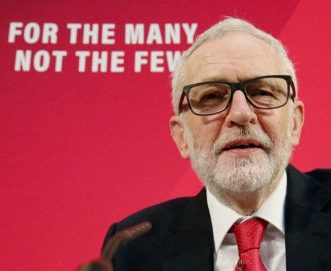
Revealed: Nationalisation of utilities would save the UK billions, according to new report

UK households would save £7.8 billion a year if water, energy grids, and Royal Mail were nationalised, according to a new report by the University of Greenwich for We Own It.

Households would be £142 better off a year on average as a result of nationalising energy grids, and £113 better off if English water companies were nationalised.

This is after compensating for returning shareholders’ investment under nationalisation, which would cost £49.7 billion.

This figure is significantly lower than the £200 billion quoted by the Confederation of British Industry (CBI) as it would only repay shareholders the money they invested, rather than paying ‘market values’, which would result in excessive returns at the expense of UK households.

There is no legal obligation for the government to pay market value when nationalising industries. Both Labour and Conservative governments have nationalised without paying full compensation.

For example, Labour nationalised Railtrack in 2002 for £500 million, a sum the courts accepted as lawful.

Professor David Hall, co-author of the report, said “nationalisation would pay for itself in less than seven years”.

Meanwhile, the £3.6 billion takeover of Royal Mail by Czech billionaire Daniel Křetínský is due to complete later this month.

Renationalising water companies

Public ownership of water companies would reduce water bills by £3–5bn a year.

The report finds 35p of every £1 on English water bills goes to shareholders. In Scotland, just 8p in every £1 goes to shareholders, and bills are £113 lower.

“We’re all paying a 35% ‘privatisation tax’ on our water bills,” said Matthew Topham, lead campaigner at We Own It. “By ditching private shareholders and bringing water back into public ownership, we will save up to £5 billion a year.”

The government has previously claimed it would cost up to £100 billion to renationalise water.

The figure has been widely debunked, with Labour MP Clive Lewis calling it “a smokescreen by private companies” to protect private ownership.

Topham added: “By refusing to take water into public ownership, the government is starving our water sector of billions of investment every single year – they must act now before the entire system collapses.”

The Guardian view on Britain’s broken economy: ‘That’s your bloody GDP, not ours’

Editorial

Despite growth in 2024, living standards fell. Inequality, weak public investment and government cuts threaten prosperity. Labour must offer voters something different.

The picture painted by official data for the UK economy in 2024 reveals a country broken by 14 years of Conservative party rule. True, the economy grew – somewhat unexpectedly – but GDP per head fell, showing prosperity didn’t reach most people. There are a few reasons for this decline but none suggests a healthy society. One is runaway wealth inequality, with gains hoarded at the top. Another is stark regional disparities, with some areas falling further behind despite national GDP rising. A third is rising immigration without enough job creation – more workers, but not enough well-paying positions.

A growing economy means little if it doesn’t improve living standards. In 2024, it didn’t. This political reality has shaped recent years, and not in a good way. It’s worth recalling a Newcastle woman’s tart response to the political scientist Anand Menon in 2016 when he warned that Brexit would hit GDP: “That’s your bloody GDP, not ours.” That continuing frustration explains the current backlash against mainstream politicians. No wonder Sir Keir Starmer wants his party to be one of disruption.

Thursday’s growth figures offer the prime minister a chance to break the mould of British politics. Unfortunately, he seems reluctant to act. What’s clear from the statistics is that, in 2024, government spending drove growth – boosted by rising wages, especially in the public sector – rather than business investment or net trade. Labour could challenge the status quo with a new economic vision centred on the state. Instead, unfortunately, the government promotes the idea that growth depends on government inaction in the face of unfettered capitalism.

Statistics often disguise the state’s role, framing public services as just another economic input rather than the engine of demand they are. This distortion makes the economy look more market-driven than reality, reinforcing neoliberal myths. The chancellor, Rachel Reeves, unfortunately, seems more eager to conform to these narratives than challenge them. She plans to cut public sector net borrowing from March 2025 to meet fiscal rules – austerity by another name. The last time this happened, post-2010, it led to a decade of weak growth and stagnant wages. The justice secretary, Shabana Mahmood, gets it. This week, she called out austerity’s role in wrecking probation services. If she was trying to change the chancellor’s mind, she deserves thanks. Britain can’t afford years of cuts.

One of John Maynard Keynes’ sharpest insights was what’s good for society isn’t always good for profits. That’s why the Green Alliance, a thinktank, is right – injecting £3bn into discounting rail fares to boost passenger miles by 22% is smart economics. It’s a win for regional growth, for the climate and for cleaner air. The state has the power to make capitalism work for the public – if it chooses to use it. But Labour’s delay on releasing its industrial strategy is a worrying sign.

The UK must move away from a debt-driven, low-wage, financialised economic model. Public investment in infrastructure – especially in underserved regions – and in skills and industry is needed to stimulate demand and create high-quality jobs. Raising wages and reducing inequality will ensure broad-based prosperity, not just asset bubbles. The belief that “markets know best” has prevented bold action on Britain’s yawning economic divides and the climate emergency. After 40 years of weakening the state and rewarding rentier capitalism, reform is urgent. Labour must build a system that delivers it.

Guardian 13/02/2025

theguardian

The Conservatives are shrinking the state – to make room for money and privilege

Boris Johnson’s talk of restoring sovereignty is a lie. He is handing democratic power to economic elites, not the people. George Monbiot writes in the Guardian 14th October 2020.

The question that divides left from right should no longer be “how big is the state?”, but “to whom should its powers be devolved?”. In his conference speech last week, Boris Johnson recited the standard Tory mantra: “The state must stand back and let the private sector get on with it.” But what he will never do is stand back and let the people get on with it.


The Conservative promise to shrink the state was always a con. But it has seldom been as big a lie as it is today. Johnson grabs powers back from parliament with both fists, invoking Henry VIII clauses to prevent MPs from voting on crucial legislation, stitching up trade deals without parliamentary scrutiny, shutting down remote participation, so that MPs who are shielding at home can neither speak nor vote, and shutting down parliament altogether, when it suits him.


He seeks to seize powers from Scotland, Wales and Northern Ireland: the internal market bill appears to enable Westminster to take back control of devolved policies. He imposes the will of central government on local authorities, refusing to listen to mayors and councils while dropping new coronavirus measures on their cities. He claws back powers from the people, curtailing our ability to shape planning decisions; shutting down legal challenges to government policy; using the Coronavirus Act and the covert human intelligence sources bill to grant the police inordinate power over our lives.


His promises to restore sovereignty are lies. While using the language of liberation, he denies power to both people and parliament. He promised to curtail the state, but under his government, the state is bursting back into our lives, breaking down our doors, expanding its powers while reducing ours.


Instead, he gives power away to a thing he calls “the market”, which is a euphemism for the power of private money. This power is concentrated in a small number of hands. When Johnson talks of standing back and letting the private sector get on with it, he means that democratic power is being surrendered to oligarchs.


Under the Conservatives, the state shrinks only in one direction: to make room for money and privilege. It grants lucrative private contracts to favoured companies without advertisement or competitive tendering. It gifts crucial arms of the NHS to failed consultants and service companies. It replaces competent, professional civil servants with incompetent corporate executives.


We need a state that is strong in some respects. We need a robust economic safety net, excellent public services and powerful public protections. But much of what the state imposes are decisions we could better make ourselves. No Conservative government has shown any interest in devolving genuine power to the people, by enabling, for example, a constitutional convention, participatory budgeting, community development, the democratisation of the planning system or any other meaningful role in decision-making during the five years between elections.


The Labour party’s interest in these questions is scarcely more advanced. The 2019 manifesto talked of “urgent steps to refresh our democracy”. It called for a constitutional convention and the decentralisation of power. But these policies were scarcely more than notional: they lacked sustained support from senior figures and were scarcely heard by voters. During his bid to become Labour leader, Keir Starmer announced that “we need to end the monopoly of power in Westminster”. He called for “a new constitutional settlement: a large-scale devolution of power and resources”. Since then we’ve heard nothing.


When challenged on its policy vacuum, Labour argues that “the next general election is likely to be four years away … There’s plenty of time to do that work.” But you can’t wait until the manifesto is published to announce a meaningful restoration of power to the people, and expect it to be understood and embraced. The argument needs to be built – and Labour local authorities, by developing powerful examples of participatory politics, need to show how Starmer’s promised new settlement could work. Instead there’s a sense that the parliamentary Labour party still sees its best means of enacting change as seizing a highly centralised system, and using this system’s inordinate powers to its own advantage.


For many years, Labour relied on trade unions for its grassroots dynamism and legitimacy. But while the unions should remain an important force, they can no longer be the primary forum for participatory politics. Even at the height of industrialisation, when vast numbers laboured together in factories and mines, movements based in the workplace could only represent part of the population. Today, when solid jobs have been replaced by dispersed and temporary employment, and many people work from home, the focus of our lives has shifted back to our neighbourhoods. It is here that we should build the new centres of resistance and revival.


Starmer has so far shown little interest in reigniting the movements that almost propelled Labour to power in 2017. But even if Labour wins an election, without a strong grassroots mobilisation it will struggle to change our sclerotised political system. Any radical political project requires a political community, and this needs to be built across years, not months.
The popular desire to take back control is genuine. But it has been cynically co-opted by the government, which has instead passed power from elected bodies to economic elites. The principal task of those who challenge oligarchic politics in any nation is to offer genuine control to the people, relinquishing centralised power and rewilding politics. Yes, the state should stand back. It should stand back for the people, not for the money.


• George Monbiot is a Guardian columnist

https://www.theguardian.com/commentisfree/2020/oct/14/conservatives-state-money-privilege-boris-johnson-power?CMP=Share_iOSApp_Other