UK workers feel pain of years of falling wages

August 6, 2013 12:01 am

By Jim Pickard and Elizabeth Rigby
Real wages have fallen in 36 of the 37 months since David Cameron became prime minister, according to new data. The figures suggest the average worker will have lost the equivalent of £6,660 in that period.
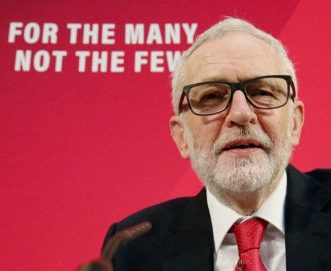
Labour unveiled the data on Monday in an early attempt to draw a battle line in the 2015 general election campaign, with the cost of living expected to be a key area of debate.

“Cameron likes to talk about the global race but there has been a race to the bottom when it comes to wages,” said Chris Leslie, shadow Treasury minister. “Workers are, on average, earning today the same as they made in 2001.”
Some ministers are privately hopeful about the prospects of economic recovery after recent positive data, including Monday’s encouraging services PMI figures.
Yet households are likely to remain under pressure with more public spending cuts, or tax rises, expected to deal with more than £1tn of public debt.
Against that backdrop, few expect the issue of living standards to suddenly disappear as an electoral issue even if gross domestic product rises.
David Cameron has called the cost of living “the most important issue to families up and down the country”.
Ed Miliband, Labour leader, has promised that May 2015 will be a “living standards election”.
As such, the search is on for all the political parties to find ways to help consumers at no cost to taxpayers: for example by forcing companies to improve their transparency and provide cheaper services.
Jo Swinson, business minister, will on Tuesday announce plans to give online shoppers more time to return goods, while also giving the public greater protection from rogue traders.
George Osborne, chancellor, said the Treasury’s proposed childcare package would “help those on tight family budgets” as it launched a consultation on plans to offer tax breaks worth up to £1,200 per child to families where both parents work.
But the Resolution Foundation, a think-tank, said only a “tiny fraction” of the new money would go to the lowest paid. “It’s crucial that the government adapts its scheme to help the poorest working families,” Resolution said.
Labour has drawn up rival policies designed to give consumers better value for money, including “strict caps” on rail fares, forcing energy companies to put all over-75s on their cheapest tariff and capping interest rates charged by payday lenders.
The reason the cost of living is high is because Labour crashed the economy
– Mark Hunter, Liberal Democrat MPr
The party said on Monday that the UK had seen the biggest fall in workers’ income in any country in the Group of Seven leading economies since the general election. A YouGov poll for The Times newspaper on Monday found that 58 per cent of workers believed their pay would fall in real terms over the next year.
Few of Labour’s policies, however, would have any direct impact on the level of wages paid by the private sector – with Mr Miliband only tentatively supporting the idea of a higher “living wage”.
Mark Hunter, a Liberal Democrat MP, said the coalition had helped workers by raising the threshold where they started paying income tax.
“The reason the cost of living is high is because Labour crashed the economy,” he said. “For them to criticise the coalition for cleaning up their mess is utterly hypocritical.”
The issue of pay and workplace rights has come into sharp focus with the revelation that 1m British workers are on “zero-hours contracts”, which often provide no holiday or sick pay.
Vince Cable, Lib Dem business secretary, said he would consider changing the rules for workers who were only allowed to work for one employer. “We could move forward with recommendations to consult on legislation,” he suggested.
Chuka Umunna, shadow business secretary, will hold a summit this month to seek to establish more facts about the trend for zero-hours working. “We want to take an evidence-based approach to this, get people around the table, both employers and those on these contracts,” Mr Leslie said.
“In some circumstances there may be justification for this. But when you think of the pressure people are under, how can you plan ahead for your family if you don’t know what income you’ll get from week to week?”
 . . . 
Policy battlegrounds
Banks
The coalition is introducing new rules in September to make it easier for customers to change banks in an attempt to boost competition. Labour has promised action to cap the cost of credit, especially in relation to payday lenders.

Housing
The £130bn Help to Buy scheme will, from next year, underwrite the mortgages of homebuyers with small deposits. Labour would borrow billions to build new social housing and tackle abuses in the private rental market by introducing a national register of landlords.

Transport
Fuel duty has been frozen for two years at a cost of £6bn. Ministers want to spur competition by forcing service stations to display fuel prices on motorway signs. A rise in train fares of inflation plus 3 per cent was reduced to RPI plus 1 per cent. Labour would apply “strict caps” to fare rises and backs a new legal right for passengers to be offered the cheapest ticket.

Wages
Labour has highlighted a fall in real wages and the rise of insecure zero hours contracts. The opposition has promoted the living wage, currently paid by some employers in London, but has stopped short of committing to introduce it nationally. Ministers say the minimum wage has kept going up – it is now £6.19 – and an increase in the income tax threshold to £10,000 will ease pressure on low earners.

Energy
David Cameron promised to force energy companies to put all customers on their lowest tariff. Under the guidance of regulator Ofgem the market is being simplified, albeit to a lesser extent than the prime minister proposed. Labour would abolish Ofgem and create a “tough new energy watchdog” to pass on price cuts when the cost of wholesale energy falls.
Copyright The Financial Times Limited 2013.

Zero-hours contract workers – the new reserve army of labour?

Karl Marx would see zero-hour contracts for what they are: rank exploitation – the type of working conditions that spawned trade unions in the first place

It is a pity Karl Marx was not around last week to comment on the news that 90% of the workers at Sports Direct are on zero-hours contracts. The author of the Communist Manifesto would also have had plenty to say about the news that the official estimates of those working in this form of casualised labour had shot up by 25%. It would have amused him to hear that even Buckingham Palace – the very symbol of the ruling class – had got in on the act.

It is safe to say Marx would have cavilled with those who see zero-hour contracts as an expression of Britain’s economic strength, a demonstration of flexible labour markets in action. He would have thought “reserve army of labour” a better description of conditions in which workers were expected to be permanently on call for an employer.

The Office for National Statistics said last week that 250,000 people were now on zero-hours contracts – a 25% increase on its previous estimates but still small in relation to the 30 million people employed in the UK. The estimate is, however, disputed by some labour market experts who point out that more than 300,000 care workers are on such contracts. What is certain is that the total is on a steep upward curve; it may be as high as one million and growing.

Bodies representing employers say zero-hours contracts should be welcomed since without them unemployment would be even higher. Better, they say, that people should be working 20 hours one week and no hours at all the next rather than be on the dole.

Seen in this light, Vince Cable – who is conducting a review of the contracts – should be thinking of further deregulation of the labour market rather than contemplating measures that might reduce this “flexibility”. He could, for instance, repeal the 1874 Factory Act that banned children under 10 from working in a manufacturing plant. He could rethink the 1847 10-hour Act that said children should not work for more than 10 hours a day. He could be really bold and say that Parliament erred in 1841 when it voted in favour of the Mines Act that prevented a child under 10 from working underground in a pit. Because, let’s face it, all this legislation represented regulation of the labour market that made it less “flexible”.

It’s only fair to say that some employees are content to be on zero-hours contracts. Some students, for example, want to combine work with study and are willing to turn up when summoned. That’s also true of older workers topping up their pensions with a bit of irregular, part-time work.

That said, there is an early 19th-century feel to zero-hours contracts. It is as though Britain has gone back to the future, returned to an age where the employer had the whip hand and where the rights that workers enjoyed under the feudal system had been removed.

Research by the Resolution Foundation thinktank shows that those on zero-hours contracts earn less than those on staff or on fixed-hours contracts. They have no rights to sick pay. Holiday pay is often refused. And there is plenty of anecdotal evidence to show that if they turn down work when it is offered – even if it is to take a child for a medical appointment – they will be pigeon-holed as not suitably “flexible”. The choice to refuse work is, in reality, no such thing.

These were the sorts of labour market practices that gave rise to trade unions in the first place. Back then they had a name: exploitation.

Many big employers are wary of zero-hours contracts and there are sound economics reasons for their refusal to do so. The first is the risk of reputational damage. There have been plenty of examples in recent years of firms that have suffered from a consumer backlash against business practices deemed to be unethical or anti-social, and in an age when social media campaigns go viral the damage can be instant and severe.

The second is that in an economy increasingly dominated by the service sector, many firms want their employees to be loyal, motivated and customer-friendly. They believe that the chances of recruiting and retaining the best staff improve when employees are paid higher wages and have greater job security.

Public sector employers, in particular, should be aware of the risks. The growing use of such contracts in care homes is the consequence of an ageing population and the drive to cut costs. This is a combustible mixture, and it doesn’t take much imagination to envisage the likely outcome: more cases of neglect and cruelty.

Finally, there are the big picture consequences of casualised labour. For the individual firm, cutting costs through zero-hours contracts may make perfect sense. Firms only employ labour when they need it, so that the cost of employing an additional worker is equivalent to the extra output produced. Lower wages equals higher profit, leading eventually to higher investment and an increase in employment.

The issue is whether this equation works at an economy-wide level, the Keynesian doctrine is that driving down wages leads either to falling aggregate demand (leading to lower profits and pressure for even lower wages), a higher government bill for tax credits or increased individual debt.

In the 30 years that followed the second world war, the social democratic model held sway. It was a time when governments followed full-employment strategies, trade unions were strong, and when governments believed that rising real wages and job security were good for capitalism.

The mood changed in the mid-1970s, and in the subsequent decade high levels of unemployment, curbs on trade unions, deregulation and globalisation combined to shift the balance of power in favour of employers.

So what happens now? In one sense, a controlled experiment is under way. If the free marketeers are right, then companies such as Sports Direct will thrive while Tesco will not. Similarly, those countries that have “flexible” labour markets such as the UK will do better than those countries that cling on to social democratic values.

Marx would have seen zero-hours contracts as the continuation of a long historical trend, stretching back to the mid-1960s when the profitability of western manufacturing firms started to fall. From that moment, he would say, the search was on for measures to boost profits, and this has manifested itself in a number of ways: by direct attacks on organised labour; by the increased financialisation of the economy; by the search for cheap raw materials whatever the environmental cost; and by asset bubbles. Accordingly, zero-hours contracts are the response to tougher conditions facing firms as a result of the financial crisis. Reversing that trend will require more than legislation: it will mean tackling one of the root causes of that crisis: the imbalance of power in the labour market.

LSE British Politicast Episode 2: Austerity Economics and Central Banking

LSE British Politicast Episode 2: Austerity Economics and Central Banking

Posted: 31 Jul 2013 04:00 AM PDT

In this episode, we focus on austerity economics and the role of central banks in times of financial crisis. The UK coalition government embarked on a programme of spending cuts when it came to power in 2010. Since then many economists and academics have argued that the intellectual justification for austerity has crumbled and it is a self-defeating strategy in bad economic times. Mark Blyth, Professor of Political Science at Brown University in the US, takes this view in his new book Austerity: The History of a Dangerous Idea. He discusses why he thinks austerity is merely a form of self-harm. We also hear from Claire Jones, economics reporter at the Financial Times about the role of central banks, particularly that of the Bank of England, in the age of austerity.LSE British Politicast Episode 2: Austerity Economics and Central Banking.