
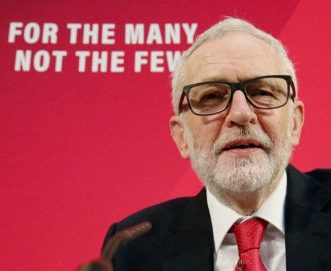
Lest we forget – in 2007 Cameron endorsed even less regulation of banks than Labour …….
Tag: Conservative led Gvt
Paid work is never enough: we need to pay attention to the quality as well as the quantity of jobs created
Getting people into employment will not on its own ensure decent living standards and reduce poverty, finds Peter Taylor-Gooby. His research shows that, while higher employment is associated with lower poverty, other factors are more important. The most important factor in reducing poverty levels across the countries looked at was the strength of contractual rights, and other policies, such as access to child care, policies to reduce discrimination against women were also significant.
Most people think paid work is the royal road to a better life for people of working age. The value of work is at the centre of policy thinking across the board, from Labour’s Compulsory Jobs Guarantee to UKIP’s commitment to ‘enroll unemployed welfare claimants onto community schemes or retraining workfare programmes’. Ian Duncan Smith’s Universal Credit puts work ‘at the centre of our welfare system’. The EU’s 2020 Growth Strategy ‘is about more jobs and better lives.’ And so on.
The idea that getting people into work will solve the problem of achieving decent living standards for those of working age was given extra impetus as unemployment rose from about 5 to over 8 per cent between 2008 and 2012, paralleled with a rise in working-age poverty. Now unemployment is falling back towards pre-crisis levels but, as IFS analysis shows, poverty among working age adults is failing to respond. The poor quality of many of the new jobs indicates short-comings in the case for paid work as the foundation of welfare.
Most of those in poverty live in working households. Among families the proportion in households with at least one member in work rose from 50 to 68 per cent between 1996 and 2013 according to the DWP’s Households Below Average Incomes statistics. The job market started to recover from its low point in 2012 but many of the jobs on offer are far from satisfactory. The number of part-time workers rose from 7.2 million to 8.2 million between the recession in 2008 and 2014, the numbers of involuntary part-timers from 0.7 to 1.7 million and the number of temporary workers from 1.4 to 1.7 million. The Labour Force survey shows a doubling of zero-hour contracts between 2007 and 2013 to 300,000.
These statistics suggest that we need to pay attention to the quality as well as the quantity of jobs created. Our new research examines factors affecting employment and poverty across 17 European countries for the period of prosperity and growth between 2001 and 2007. This is the time when the sun shone, the most favourable period in recent history for the work = welfare = decent living standards project. The research shows that, even at this time, new welfare was much more successful at getting people into work than at reducing poverty.
Employment rates rose across Europe, especially for women. However, far from declining, poverty rates also increased (by the standard EU 60 per cent of median income measure) from 18 to 18.6 per cent between 2001 and 2007 in the UK, and also in other successful economies such as Germany (11 to 15.2 per cent), Sweden (9 to 11.5 per cent) or Poland (16 to 17.3 per cent). One explanation is to do with access to paid work. Governments need to make sure that even more people move into work. This is the logic that lies behind the EU’s Employment Strategy and Horizon 2020 programme and behind national work-centred policies such as Universal Credit. Then the great recession swept everyone towards work at any price policies, redoubling the stress on paid work.
These were the good times, when, if ever, the link between work and decent incomes should be strongest. Higher employment is associated with lower poverty, but the analysis shows that, even during this period, other factors were more important. In fact the most important factor in reducing poverty levels across the countries was the strength of contractual rights. Other policies such as access to child care, policies to reduce discrimination against women were also significant.
The level of employment plays a role in ensuring decent living standards, but one that is less powerful than that of employment rights. The suggestion is that while employment is probably a good thing, if we want people to be better off, we also need to make sure that the quality of jobs is adequate. The best way to ensure that is to strengthen contractual rights against dismissal and to promote trade union membership. Recent trends in policy to weaken employment protection, to undermine the role of trade unions and to introduce high fees for access to employment tribunals move us in entirely the wrong direction. Shovelling people into low-paid jobs is all the fashion, but it is not the answer to the problem of poverty among those of working age.
For more, see “Can ‘New Welfare’ Address Poverty Through More And Better Jobs?” by Peter Taylor-Gooby, Julia M. Gumy and Adeline Otto.
About the Author
Peter Taylor-Gooby is Research Professor of Social Policy at the University of Kent’s School of Social Policy, Sociology and Social Research. He chaired the British Academy New Paradigms in Public Policy Programme (2010/2011) and is Chair of the REF Social Work and Social Policy and Administration panel 2011-15, a Fellow of the British Academy, a Founding Academician at the Academy of Social Sciences and, previously, a Fellow of the Royal Society of Arts and President of the British Association for the Advancement of Science, Sociology and Social Policy Section.
Related
The Chancellor’s 2014 Autumn Statement: Missed targets and missed opportunities
George Osborne’s Autumn Statement was a reminder of the government’s missed targets and missed opportunities, writes John Van Reenen. The Chancellor’s promise to eliminate the structural deficit has failed spectacularly and the UK economy is barely above its pre-crisis level, a major cause of which was the the decision to launch a premature austerity programme in 2010. Crucially, Osborne’s plans fall short in addressing Britain’s chronic problem of low productivity.
There are things to like in the Autumn Statement. The reforms to end the “cliffs” in stamp duty and make it more graduated tax are welcome, but even better would have been to replace stamp duty entirely with a tax on land values. Rather than taxing people who move, tax the unmoveable wealth that they have. And if you have to raise taxes, few will feel sympathetic with multinationals who will find it harder to avoid taxes or banks who won’t be able to offset their accumulated losses against future taxes.
But the economic elephant in the room is what has happened to productivity. GDP per hour is over 15 per cent below where we would have expected on long-term pre-2008 trends. This is why wages are so low and the deficit remains high. There is nothing serious in the Chancellor’s plans to tackle this pressing issue.
Missed Fiscal Targets
In 2010 George Osborne pledged to eliminate the structural deficit by the end of this Parliament – the 2014/15 financial year. This has spectacularly failed to happen with forecasts of government borrowing rising to £91 billion this year and no expectation of balancing the books before 2018/19. And don’t hold your fiscal breath on it happening even by then.
So what went wrong? Less income taxes have come in than expected in the last year, partly because of the increase in personal allowances, but mainly because of low pay. It’s a stunning fact that real earnings have fallen by over 8 per cent since 2008. Many jobs have been created, but they have generally poorly paid. Low wages, low taxes.
Harpo Marxist Economics
The fundamental problem is that growth has been pretty lousy under the Chancellor’s rule. Don’t be fooled by the 3 per cent headline GDP growth rate. The size of the economy is barely larger than it was on the eve of the crisis representing the worst recovery in over a century. Our faster growth this year is like a “Harpo Marx” effect. The story goes that when Harpo was asked why he was banging his head against a wall. He responded “because it feels so good when I stop.” Similarly, it is unsurprising to have strong growth when you’ve been pushed so far underwater. The real surprise is why it took so long.
A major cause of low growth was the Chancellor’s decision to launch a premature austerity programme in 2010 which choked off the nascent recovery. Austerity eased somewhat since 2012/13, but even the OBR estimates that this knocked off a percentage point off growth per year in 2010/11 and 2011/12. The Eurozone crisis also played a part, as EU leaders administer the same fiscal medicine as Dr. Osborne with similarly disappointing results. Southern European countries can at least say they have no choice if they wish to keep the Euro, but there is no excuse for Northern EU countries like Germany to insist in balancing their own budgets in the face of serious deflationary risks.
Attempting even more severe austerity to meet the 2010 targets – as some on the right have argued – would have been an even more serious error. Like the government’s policy to reduce net migration to under 100,000, it is better to fail at imposing a silly policy than to cause terrible harm in trying to meet it.
But what to do about the productivity elephant?
As analysed by the LSE Growth Commission, Britain has a chronic problem of low productivity rooted in the failure make long-term investments. We argued that we could address this though radical supply side changes in the way we support innovation, and educate, tax and finance our citizens.
A major way of reducing public spending after 2010 was to slash public investment. With low interest rates, under-utilised resources and falling private investment, this was the exact opposite of standard economic advice. The outcome was widely predicted – rather than building, we dug ourselves into a deeper economic hole.
Some of this infrastructure destruction has been reversed, but the Chancellor plans again to accelerate public spending cuts to pay for tax cuts after the election. Since public investment creates capital that can be used in the long-term, it should not be lumped in with current spending like civil service salaries. But for purposes of creating an absolute budget surplus it has been and so, once again, will be ripe for the chop. The Liberal Democrats and Labour rightly want to keep capital investment separate. Let’s hope, if re-elected, this will be one more target that the government misses.
About the Author
John van Reenen is Professor of Economics at the LSE and Director of the Centre for Economic Performance. He tweets from @JohnVanReenen
The Chancellor’s 2014 Autumn Statement: Missed targets and missed opportunities
Labour needs policies that end low paid and low skilled work
By Tony Burke | Published: October 27, 2014
The UK has too many poorly performing workplaces, according to a new report
On October 23, the Smith Institute launched a report entitled ‘Making work better: an agenda for government‘ – an independent inquiry into the world of work by Ed Sweeney.
Sweeney of course is the former chair of the Advisory Conciliation and Arbitration Service (ACAS), former deputy general secretary of Unite and former general secretary of the finance union Unifi, now part of Unite.
The report, which runs to over 100 pages, is the product of a nine month inquiry involving research, interviews, discussion events around the UK as well as opinion polling.
It sets out the argument that the UK has too many poorly performing workplaces, with poor treatment of workers who Sweeney’s report states are “underpaid, over-worked and ignored”.
The report also argues that the UK has a “long tail of broken workplaces” which are holding back the recovery and costing the country billions in lost income and in the payment of welfare benefits to those out of work but also to those workers eking out a living in low paid, precarious and agency work.
The report has been welcomed by Labour, the TUC and EEF (the manufacturing employers’ organisation), who were all represented at the report’s launch: shadow business secretary Chuka Umunna for Labour; general secretary Frances O’Grady for the TUC and Judith Hogarth, head Of employment policy of the EEF
Sweeney’s report highlights the UK’s poor performance on a range of indicators, including:
poor productivity, with the USA, France and Germany being 30 per cent more productive than the UK;
a skills shortage and mismatch, with half of employees interviewed saying that their jobs do not make full use of their skills and abilities;
job insecurity with over half of employees worried about loss of employment or job status – the Office of National Statistics now estimates there are 1.4 million zero-hour contract workers;
stagnating pay levels – since 2004 wages for workers on the median wage or less have stagnated or fallen in real terms and since 2010 median wages have fallen by more that 6 per cent in real terms;
and 50 of workers interviewed said they faced unreasonable treatment, while 40 per cent faced disrespect from employers.
The report also recommends that the government should amend the Information & Consultation Regulations to giver workers a stronger voice and bring the UK into line with other EU countries.
The ICE Regulations are barely used by unions to establish these structures as they are dauntingly complex and unions usually face open hostility from some of the worst employers who do not wish to hear the views of their workers, never mind consult with them.
The report makes a series of important recommendations, including a new mandate for the Low Pay Commission to increase the national minimum wage towards 60 per cent of the median wage; a target for government of lift one million workers to the living wage by 2020 and, interestingly, a requirement on the government to promote the positive role trade unions play in achieving fair pay and giving ACAS the power to promote collective bargaining and good employment relations.
At the launch, the issue of collective bargaining was a major talking point, with a number of speakers and questioners (including academics and trade unions) arguing strongly that the restoration of widespread collective bargaining would do much to restore decent work and pay equality.
Speakers pointed out that this was always ACAS’s role (it was the Major government who scrapped ACAS’s role in promoting collective bargaining) and it would require significant political and financial support.
On the role of trade unions, Chuka Umunna said in his remarks:
“The report is right to highlight that trade unions have an important role to play here in boosting training, pay and conditions for their members and helping Britain win that race to the top.
“At a time of rapid global economic change and a cost of living crisis at home, it is vital that the UK continues to have strong and modern trade unions as a genuine voice fighting against discrimination and abuse.”
Building on Ed Sweeney’s report, Chuka Umunna also announced the setting up a further review of Labour’s policies in regard to the world of work, to be lead by John Monks, former head of the TUC and the ETUC, Douglas McCormick, former MD of Atkins UK Rail and Alison Downie, head of the Employment Department at Goodman Derrick LLP.
Frances O’Grady hit the nail on the head at the launch when she said:
“With so many facing stagnant pay and too many new jobs made insecure through zero-hours contracts, agency working or low value self employment, we won’t fix the economy without fixing the workplace.”
Labour has to recognise that in order to win the election and win back working people, there is crying a need to promote clear policies to end low paid and low skilled work; but also to end exploitation, firmly regulate precarious work and create decent employment in decent workplaces.
Tony Burke is assistant general secretary of Unite
Labour needs policies that end low paid and low skilled work
Increase in number of people on low pay
Increase in number of people on low pay
By Left Foot Forward | Published: November 3, 2014
The number of people on low pay has risen by 147,000 to 5.3 million in the last year, according to a study by KPMG.
Childcare vouchersjThe research indicates that 22 per cent of employees are now earning less than the Living Wage – up from 21 per cent last year.
According to the data, part-time, female and young workers are the most likely to be earning a wage that fails to provide a decent standard of living.
The research, conducted by Markit for KPMG, also found that the proportion of people earning less than £7.65 per hour (£8.80 in London) is higher amongst part-time workers. More than 4 in 10 part-time workers take home less than the Living Wage, compared to 13 percent of full-time employees.
There are also more part-time roles paying less than the Living Wage (2.98 million) than full-time jobs (2.29 million), despite making up less than a third of all UK jobs.
The research revealed that during October of this year almost three times as many people who earned less than the Living Wage (29 per cent) reported that their household finances had worsened over the month, compared to just 10 per cent who saw an improvement. Meanwhile, twice as many people who earn below the Living Wage (18 per cent) reported an increase in their need to borrow, compared to 9 per cent who saw a reduction.
The financial outlook for many remains bleak. Five per cent of those earning less than the Living Wage said they expected to see their household finances worsen between now and November 2015. Almost a quarter (22 per cent) also reported fears over job security.
Commenting on the research, head of Living Wage at KPMG Mike Kelly said:
“Although there are almost 1,000 organisations pledged to pay a Living Wage, far too many UK employees are stuck in the spiral of low pay.
“With the cost of living still high the squeeze on household finances remains acute, meaning that the reality for many is that they are forced to live hand to mouth. Inflation may be easing, but unless wages rise we will continue to see huge swathes of people caught between the desire to contribute to society and the inability to afford to do so.
“For some time it was easy for businesses to hide behind the argument that increased wages hit their bottom line, but there is ample evidence to suggest the opposite – in the shape of higher retention and higher productivity. It may not be possible for every business, but it is certainly not impossible to explore the feasibility of paying a Living Wage.”
 Dnmufc's Blog