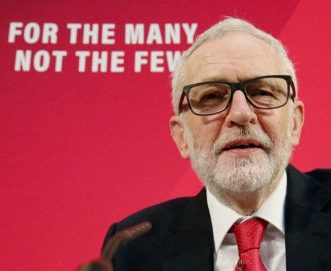
Mark Steel: Labour’s leadership candidates are all against the war now

There’s an honourable tradition in the Labour Party of bravely standing against an unjust war – as long as the war ended several years ago. So, one by one, Labour’s leadership candidates are announcing their opposition to the invasion of Iraq, just in time for it all to end. Labour leaders did a similar thing after the Vietnam War, and the First World War, and at the moment they all support keeping the army in Afghanistan, but I bet they haven’t a good word for the Second Crusades, which is the main thing.

Maybe the whole anti-war movement should follow this example, as it would make people feel more effective than campaigning against wars still going on. Imagine how powerful demonstrators would feel if they held a Stop the Crimean War march. Someone could announce at the rally afterwards that it had indeed stopped, 160 years ago. Then, instead of the usual feelings of impotence, everyone would go home delighted.

Ed Balls and the Milibands have distanced themselves this week from the war they supported, so to get ahead Ed Miliband will now say he’s going on the march, adding that he would have gone on it at the same time as everyone else seven years ago but he was waiting in for a wardrobe to be delivered and it’s only just come.

Ed Miliband now says he “believed the UN inspectors should have been given more time,” although he doesn’t appear to have said this back then, presumably as he was saving up this comment for when it really mattered. Next he’ll say “and I’m a firebrand on the Corn Laws now I’ve made my mind up”. And David will say: “I did vote for the war, but I had a dream that me and a squirrel were stuck in a windmill in Basra, which shows that my subconscious was firmly against it.”

David Miliband, the only one lucky enough to be an MP at the time, says he supported the war because of evidence of Saddam’s famous “weapons”, adding he would have opposed it “if we had known then what we know now”. But the only reason people believed Saddam had those weapons was because Miliband’s government was telling everyone he did. So, he’s saying: “If I’d known I was lying it would have been different, but how could I possibly know I was making stuff up? You can’t blame me for fooling myself, as I’m very persuasive.”

David Miliband is also accused of being complicit in handing suspects over to be tortured, so maybe he’ll try a similar defence, saying: “If I’d known at the time that torture could include pain I would never have approved of it. But someone told me electrodes were more tingly than unpleasant, like one of those strange chairs that massages your back. Still, you live and learn.”

Something similar has happened on other issues as well, so ministers who’ve advised and voted in favour of making their party friendly to the City are now appalled by the greedy bankers they spent 15 years admiring. It was all done to place Labour in the centre, but what they didn’t see is that the centre can change place, and what was once seen as extreme, such as opposing wars and despising bankers, is now mainstream.

Otherwise why would they all have discovered the war was wrong right now? Even a month ago they said nothing, so they’ve all just changed their minds, have they? Some people might suspect they’ve decided to oppose the war because they figure this will help them get elected as leader, and they supported it before to help their careers, and the effect of their decisions on the fate of millions of people has played no part in their judgement at any time. But that would be cynical so let’s just accept it must be a coincidence.

But also, there were plenty of others who weren’t fooled by the shady evidence, so surely the Labour Party would do better to entrust the leadership to people who weren’t so easily duped. There’s contender John McDonnell, who opposed the war from the start, and others include Damon Albarn, Zoe Ball, Chris Eubank, Leo Sayer and Jimmy Hill, who should surely form the basis of a far more principled, astute and imaginative shadow Cabinet.

Independent Wednesday, 26 May 2010

A new politics? Not until we blow away the rhetorical smokescreens

After so much political disenchantment, now, when we have this new beast in office, a peacetime coalition, is it time not to be cynical, but instead to take pause and allow our new political élite to prove itself? Should all us naysayers and members of the professional sarcastocracy shut up?

Not likely.

Over the past 15 years or so, the electorate has become increasingly disaffected by and disengaged from the political process, at the same time as the political classes have claimed to be acting more and more in response to our opinions. In the “information age”, politicians hide their behind-closed-doors approach to politics beneath a veneer of public accessibility and accountability. They go on YouTube, but their decisions are made where you can’t see them.

In particular, the language in which public debate is still conducted – the mentioning of you, I, and we – is a rhetorical smokescreen to allow undiscussed, undisclosed policies to be enacted under the guise of apparent transparency. It bends sense, maths, logic and English to breaking point.

The most blatant instance of such disintegration remains, for me, the moment in February 2003 when one and a half million people marched in vain against the invasion of Iraq. When it was put to a government spokes-man that it would be very hard to ignore such a great number demonstrating on the streets of London, his reply was devastating in its logic. “A million-and-a-half may have marched,” he said, “but there are 60 million people in Britain, which means there are 58-and-a-half million who didn’t march.” By the same logic, when the Queen Mother died, 100,000 queued to walk past her coffin, which indicates that, given over 59 million of us chose not to, she must have been one of the most reviled and hated figures in British history. Giving democratic victory to those who choose not to do something makes The X Factor one of the most despised TV shows in recent times, the Daily Mail an unpopular paper for minority interests, and David Copperfield a ridiculous flop of a book with no lasting impact.

Changing this abuse of logic – and it may take a generation – will define whether or not we really have a “new politics”.

Here’s Nick Clegg, three weeks before the election, outlining why, despite all the constitutional niceties built up over centuries of parliamentary democracy, no Prime Minister, especially one called Gordon Brown, should be allowed to stay in Downing Street the day after an election, even if a coalition government hasn’t yet been formed: “Well, I think it’s complete nonsense. I mean, how on earth? You can’t have Gordon Brown squatting in No 10.” (The implication being that this is how we think so we can’t really argue with what he says.) He added: “Whatever happens after the election has got to be guided by the stated preferences of voters, not some dusty constitutional document which states that convention dictates even losers can stay in No 10.”

Said the man who came third and now has an office in Number 10.

David Cameron performed a similar constitutional volte-face. Fourteen days before the election, he proposed that anyone who became Prime Minister without winning an election first would be obliged to call one within six months of taking office. Two weeks later, when he proposed the coalition, he announced it would secure itself in government for five years by raising the majority threshold for a dissolution of Parliament to 55 per cent of MPs. Cameron had gone from arguing passionately for more elections to arguing passionately for fewer. He gave as his reason: “It is a big change. It is a good change. It is a change that will result in strong and stable government, as I believe we are demonstrating already.”

That’s it. No commission, no panel of constitutional experts, no private consultation with senior civil servants.

It is a quick fix to a problem, rammed through as an extension of the Blair mantra, “I did it because I thought it was the right thing to do”, but sugar-coated in the reformist language of change. Ideas uttered in that context are, today, simply unassailable, and anyone in the media or the commentariat or the Opposition who questions them is dismissed as being out-of-touch and churlish.

Blair once infamously said: “Do I know I’m right? Judgements aren’t the same as facts. Instinct is not science. I’m like any other human being, as fallible and as capable of being wrong. I only know what I believe.”

That passage only makes sense if the final line is reversed. Normally, we seek evidence, and form conclusions on the basis of what we find. We believe what we know. Blair’s logic overturns about two-and-a-half-thousand years of rational inquiry.

“I only know what I believe” typifies the thinking of the modern politician, who speaks in an “aw-shucks” conversational tone to make himself seem and sound a regular kind of guy, but who will use whatever props are at his disposal to enact his predetermined decisions without deviation.

Our political masters try to look and sound like normal people, while being more exclusively political than any previous generation. All the main candidates for the Labour leadership are forty-something career politicians who studied politics at university before going into political research, think tanks, and Parliament. Cameron and Clegg are two young like-minded individuals running the country who have known very little else outside the world of politics. Politicians only know what they believe because they’ve had nothing else to know.

It’s no coincidence, I think, that the number of people voting for the main parties in general elections has fallen dramatically in the past decade and a half, just as this new hermetically-sealed language of political self-belief has flourished, and just as the media commentariat has grown in number. That’s because the language and tone the media adopt seem no different from the politicians they’re meant to be critiquing. Politicians and broadcasters are gravitating towards each other, in much the same way we’re told that similar masses will coalesce at the end of the universe. They have been increasingly finishing each other’s sentences, inhabiting each other’s mindsets, and the result has been a homogenous body of material light years away from the electorate.

So how Britain governs itself, and how its political élite behaves and thinks, cannot be overturned by one quirky election result. The mindset has to change as well, and it requires a mighty effort of engagement by us.

The public used its own initiative to engage with this election. There were record voter registrations, especially among the 18 to 25s, and the electorate was broadly interested and energised by the television debates. Moreover, the traditional weapons of party propaganda were neutralised by faster-moving online communities, who came up with collective responses to any claims that seemed unreasonable. Wild allegations about Nick Clegg in the Tory press saw a tsunami of sarcasm engulf the elderly media barons – and Nick Clegg’s press improved. And after the online spoofs of Cameron’s airbrushed posters were followed by Cameron’s own spoofing of Labour’s Ashes to Ashes parody, posters were spoofed beyond relevance and never heard of again. There is now a media- and politically-savvy population with the means to engage creatively in politics.

I believe it is precisely at this point in our politics, just as we might be persuaded we should sit quietly and give all the new chaps in the Government a chance, that we should actually be at our most alert. For this moment of “change” to have any meaning, people in government must have their words, their behaviour, policies and arguments, dissected and held up to scrutiny. That is not negative. It is not destructive to be forensic. It is possible to have a positive belief in the power of politics to change lives for the better, and to wish those in office well, while urging more diligence than ever before.

Looking for the pitfalls, pointing out the contradictions and alerting people to the flaws contributes to a larger movement of inspection and debate and questioning that we must all participate in if we are ever to get the politics we truly deserve.

Armando Iannucci Saturday, 5 June 2010


draconian cuts to public spending which will hit the poorest hardest?

The Guardian, Wednesday 2 June 2010
Article history
The government has now begun its cost-cutting measures in an attempt to save money (Spending cuts, 25 May). David Cameron said that he would protect the poorest in our society. However, the axe has fallen on the child trust fund and Becta, the information technology organisation that also administers the home access grant scheme. Becta, through the home access scheme, has benefited youngsters who find information and communication technology beyond their reach by providing laptops and broadband to over 200,000 of the poorest children. Becta is levelling the playing field between those who can afford ICT and those who cannot. Becta not only advantages poor children, but also benefits the Treasury, as its centralised procurement arrangements save schools and colleges many times more than Becta costs to run.

The child trust fund has helped children save since 2001, with £250 given on birth – double for children in the lowest income bands – and again when the child is aged seven. It pays even greater dividends to disabled children. It would have been simple to means-test the CFT in the way that the home access grant scheme means-tested eligibility for laptops.

This government has lied about protecting the poorest. Their words are a smoke screen for doing exactly the opposite. The Lib Dems should be ashamed about their part in this disgraceful realisation of this government’s hollow promise.

Henry Page

Newhaven, East Sussex

• Of the 23 members of the new coalition cabinet 17 are millionaires, 15 are Oxbridge graduates and 12 went to private schools (David Laws’s life goal was to cast people out of work, 1 June). Where is the justice in this privileged elite forcing through draconian cuts to public spending which will hit the poorest hardest?

Dave Taylor

Purbrook, Hampshire
Letters Guardian 2/6

Spot the Difference Mr Laws

Norfolk mother jailed for benefit fraud

CHRISTINE CUNNINGHAM

Last updated: 27/05/2010 06:30:00
A Norfolk mother who falsely claimed more than £76,000 in benefits after failing to declare she was living with a partner, was last night starting a 20-week jail sentence.

Sarah Riley, 34, falsely claimed the benefits over a six year period from 2001 to 2007. Norwich Crown Court heard that she obtained a total of £64,433 in income support and £10,225 in housing benefit as well as £1,583 in council tax benefit.

Matthew Edwards prosecuting said that Riley’s claim had not been fraudulent from the outset but she had failed to notify the Department of Work and Pensions when she had started living with her new partner in 2001.

The court heard that Riley had now split up from her partner and was making efforts to repay some of the money and had paid back more than a £1,000.

Riley of Cremer Street, Sheringham, admitted 10 counts of benefit fraud.

Jailing her for 20 weeks, judge Alasdair Darroch, told her he accepted that prison would be devastating for her but said: ?This is a very large sum of public money and there was dishonesty going on for a long period of years.?

Burying everything New Labour did is not the road to recovery

It is one of the oldest and most effective tricks in the political book, which is why it is always played by an incoming government at the expense of their defeated opponents. Dirty up the record of your vanquished predecessors in order to cast the blame in their direction for everything wrong and make yourself look like a refreshing change. The voters will probably give you the benefit of believing this because they have just chosen to eject the people you are damning.
The historian Tristram Hunt, newly elected as Labour MP for Stoke, puts it nicely: “Ever since the scribes of the Renaissance branded the Middle Ages as ‘the Dark Ages’, propagandists have deployed history to codify the future. You rubbish the past as a lost opportunity of waste, indecision and stupidity. And you celebrate the present as a blessed release from such hopelessness.”
The coalition will want to blacken Labour’s record. The Tories and the Lib Dems will have an additional incentive to do so in order to displace on to their inheritance from Labour the blame for the excruciating spending cuts and accompanying tax rises. Blame not us, but them, will be the cry from the government side. David Cameron gave Labour a taste of this medicine during the opening debate on the Queen’s Speech when the Tory leader scorned Harriet Harman for failing to begin her contribution with an apology for leaving the place in such a mess.
If new governments are fortunate, they are helped by the behaviour of the opponents who have just been dumped out of power as the defeated sink into tortured introspection. The opening phase of the contest for the Labour leadership is already an orgy of competitive self-flagellation. The contenders come not to praise New Labour, but to bury it. This was to be expected from Diane Abbott and John McDonnell, the two leftwingers who hope to get on the ballot. Both were declared enemies of the Labour government even when it was in power. They were disillusioned with New Labour before it had even taken office and became more disaffected with Tony Blair the more elections he won.
It is more eyebrow-raising that the denigration of New Labour has also been joined by the Miliband brothers, Ed Balls and Andy Burnham, a quartet who served their political apprenticeships in the courts of Blair and Brown and then ascended to the cabinet. They are jostling to criticise the government of which they were very recently prominent members.
David Miliband says that New Labour is done with. He is especially sharp about its timidity in tackling the City and the super-rich. He suggests that New Labour was too trapped in the 1980s and 1990s and has little to teach the party now. In its place, he proposes “Next Labour”, a concept still in search of a definition from him or any of his rivals.
His younger brother traces the beginning of the decline to the Iraq war which led to a “catastrophic loss of trust”. Ed Miliband is not wrong about that, but he stretches our credulity when he claims that, had he been an MP then, he would have voted against the invasion. Had he been at Mr Brown’s side at the time rather than on sabbatical in America, I am pretty certain he would have acted exactly as his older brother and Ed Balls did. Once Tony Blair had fixed on war, and Gordon Brown had decided to back it, their aides all worked together to win a majority for it in Parliament.
Ed Balls identifies the abolition of the 10p tax band as a major misjudgment of Gordon Brown’s premiership which did Labour’s reputation serious damage amongst the party’s natural supporters. There’s no arguing with that, but the needle on my bullshit detector is in the red zone when Mr Brown’s closest ally suggests that he was secretly opposed to scrapping the 10p band all along. Others who were inside the Treasury at the time of that decision remember things rather differently.
Andy Burnham does not resile from the Iraq war, which at least makes him stand out from the others and may be enough to secure Tony Blair’s vote, assuming the former prime minister is still a member of the Labour party. Mr Burnham does agree with other contestants that Labour lost touch with the concerns of people who ought to be among its supporters and failed to respond to discontent about immigration, antisocial behaviour and crime.
Labour’s first instinct when it has lost power is always to go through a period of flaying the leadership for betraying the party’s ideals and voters when they were in office. The novelty this time around is that those who were part of the leadership are doing the whipping. To a point, this is natural and even desirable. Labour did commit grave blunders in office. Labour does need to understand why it received a miserable 29% of the vote, just a percentage point higher than Michael Foot in 1983, which made it the party’s worst performance in a general election since the First World War.
Some of the reasons for that defeat are so bleeding obvious that they need not detain the leadership contenders for much time. Labour presided over the worst recession since the 1930s. Three terms is a long stretch in power. Thirteen years turned New Labour old, tired, unimaginative and crippled by the burden of its mistakes.
David Miliband is right to say: “In a change election, we were perceived to be defending the old order. Future is the most important word in politics, but we looked out of time.” Ed Miliband is correct to say: “We came to seem more caretakers than idealists – more technocratic than transformative.” Ed Balls accurately observes: “People felt we had stopped listening.”
These are obvious accounts of some of the reasons why Labour lost. They are also ways of not addressing some subjects which are just too uncomfortable for these candidates. None of them has much to say about Gordon Brown beyond offering encomiums to the departed prime minister. Labour is a sentimental party that doesn’t like to kick an ex-leader when he is down and out. The truth, which members of the last cabinet will only admit to in private, is that Gordon Brown’s lack of communication skills, strategic failure to renew Labour in office and personal unpopularity probably cost the party around 40 seats at the election.
That is the difference between the Con-Lib coalition that is now governing Britain and the Lab-Lib coalition that might have been under a different leader. This is difficult history for Ed Balls because he ran the 2006 coup against Tony Blair to lever Gordon Brown into Number 10. This is tricky territory too for Ed Miliband because he was part of the Brownite team that then stitched up the succession so that their master was crowned without a contest. David Miliband and Andy Burnham sat in the cabinet that knew Gordon Brown was leading Labour over the cliff edge but never summoned up the nerve to do anything about it.
None of the candidates seems any keener to discuss the size of the deficit, why it grew too large and how they’d be tackling it. This is not to say that the scale of the defeat was simply down to the last prime minister. New Labour was too insolent about civil liberties, too cringeing to high finance, too tolerant of sleaze, insufficiently dynamic about public services and too crabbed about welfare and constitutional reform.
Labour will only be on the road to recovery once it understands why it lost. Yet it is unlikely to win again if it is so consumed by regret and guilt about its failures that it also forgets what made it a success. Humility about the last government’s vices needs to be balanced with pride in its successes which ranged from peace in Northern Ireland to the minimum wage. It did win three elections in a row, a very rare feat in British politics. That was an achievement the more remarkable given that Labour had never previously held on to power for two full terms. The core New Labour prospectus, that economic efficiency can be combined with social justice and decent public services, remains as attractive in 2010 as it was in 1997. They ought to take it as a compliment that the coalition accepts much of its legacy. At the last election, pollsters found that voters still preferred the values they associated with Labour to the values they associated with the Tories. The problem was that they were sick and tired of Labour government.
The essential insight of the creators of New Labour was that the party could only win and retain power by appealing to both aspirational voters and its more traditional supporters. That will be no less true at the next election. Labour’s next chief will be a failure if he leads the party up a narrow, tribal cul-de-sac. That is precisely the direction in which David Cameron would like to shove them.
As the sons of New Labour bury that which gave them their careers, they need to have a clear view of why it won as well as why it finally went down to defeat. Disavowing everything about the previous 13 years is neither necessary nor wise. And, anyway, there’ll be quite enough dirtying up by the other side.