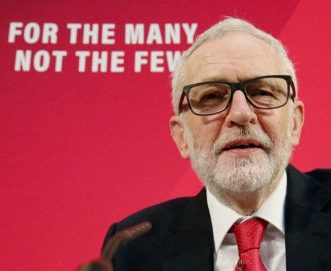
We’re all in this together…..

Latest survey of boardroom pay finds average compensation went up by 49% to £2.7m The Guardian, Friday 28 October 2011 Chief executives’ pay rose on average by 43.5%, finance directors’ by 34.1%, and all other directors by 66.5%, according to the latest IDS survey. Photograph: Photodisc Total earnings for directors of FTSE 100 companies increased […]

FTSE directors’ pension pots average record £3.9m

TUC PensionsWatch shows top pensions rise along with big jump in FTSE chiefs’ pay as real wages for workers decline

The directors of the largest 100 British companies are in line for average annual pension payments of £224,000 each, according to a survey today.

The report shows 362 top directors have built up final salary pensions worth £568m and the average pension pot transfer value is at a record high – £3.91m compared with £3.8m last year. Directors also retire earlier than their staff. The most common age is 60, while for ordinary scheme members it is 65 and expected to rise.

The highest earning pensioner among current FTSE 100 directors will be the former chief executive of oil group Royal Dutch Shell, who is entitled to £1.2m a year from his company scheme. Jeroen van der Veer, who stepped down from the top job in 2009 but remains on the board, has amassed a pension pot worth £21.6m, the TUC has revealed in its 9th annual PensionsWatch report.

Just before his retirement, Van der Veer declared that pay had little impact on performance, saying: “If I had been paid 50% more, I would not have done it better. If I had been paid 50% less then I would not have done it worse.”

The details of FTSE directors’ pensions comes days after another survey showed that chief executives at the top 100 companies saw pay and bonus packages jump by an average of £1.3m to almost £4.5m last year, the biggest leap in nine years.

According to a study commissioned by the High Pay Commission, the average pay deal for a FTSE 100 boss soared from £3.09m to £4.45m as business leaders were able to enjoy record windfalls from share-based incentive schemes, thanks to a sharp bounce in the stock market.

The benefits reaped from the stock market bubble by FTSE 100 executives have not been mirrored on the shop floor. Annual wage rises stood at 2.2% for the final three months of 2010. Factoring in the rising cost of living – the retail price index stood at 4.8% last December – that means most workers in Britain saw a significant decline in their real incomes.

The TUC survey shows a growing number of bosses receive cash instead of, or in addition to, company pension scheme contributions. Pearson’s long-standing chief executive, Marjorie Scardino, banked the largest cash payment, of £620,700 – nearly 76% of her salary – while Peter Clarke, chief executive of hedge fund Man Group, pocketed £532,000 – 94% of his salary.

Stephen Hester, chief executive of state-controlled Royal Bank of Scotland, received the third largest cash payment, collecting £420,000, or 35% of his salary.

Companies with defined contribution schemes – less advantageous than the final salary schemes gradually being phased out – make much larger contributions to directors’ pensions as a proportion of salary than they do for the average employee.

Directors surveyed enjoyed average company contributions of 22% of their salaries. The average for all employees is 6.7%, while many companies set default contributions even lower, at 3%, according to the Association of Consulting Actuaries.

TUC general secretary Brendan Barber said: “This survey highlights the real pension scandal in Britain today. Public sector workers are rightly furious about being told that their pensions of just a few thousand pounds are ‘gold-plated’ and unaffordable by the same business leaders who stay silent on the multimillion-pound pensions that many enjoy themselves.”

Barber added: “It’s hardly a surprise that these lavish rewards are signed off when directors sit on each other’s company remuneration committees. This culture of mutual backslapping must be tackled by giving ordinary staff members a voice on remuneration committees.”

Barber called on the government to force companies to disclose directors’ pension arrangements so that they could be scrutinised by staff and shareholders.

With more directors opting for cash payments, the TUC says pensions secrecy is increasing. In some cases, retirement cash is listed under other “emoluments”, making such payments harder to detect. “This may result in the number of directors being covered in any review of executive retirement provision shrinking,” according to the report.

Directors still receive 23 times more than the average worker, a figure which has stayed fairly constant since the survey began in 2003. Members of company and public sector schemes receive an average annual pot of £9,568, while the average public sector pension is £6,497.

Darren Philp, policy director for the National Association of Pension Funds, said: “More transparency is needed around boardroom pensions. It is also worrying that directors’ pensions are not usually linked to performance. This could mean bosses are rewarded in their retirement despite failure in the job. Pensions must not become a back-door to boosting pay.”

http://www.guardian.co.uk/business/2011/sep/07/ftse-directors-pensions-worth-millions

9/11 anniversary: How the Guardian reported the attacks | World news | guardian.co.uk

9/11 anniversary: How the Guardian reported the attacks | World news | guardian.co.uk.

A firefighter at the site of the World Trade Centre in New York on September 11 2001

A firefighter at the site of the World Trade Centre in New York on September 11 2001. Photograph: Graham Morrison/AP

The editor of the Guardian, Alan Rusbridger, does not normally oversee the news operation directly, having a loftier role in charge of all departments. But he was, coincidentally, sitting at the head of the newsdesk on 9/11.

He decided the magnitude of the event dictated something different. For the first time in the paper’s history, he gave the entire first three pages over to photographs. The Guardian was still a broadsheet then, and the effect was dramatic.

9/11 archive front pageFront page of The Guardian newspaper, September 12 2001. Photograph: The Guardian

The words began on page four. It was lunchtime in Britain when the attacks took place and many staff were not in the office (we were of course, updating our website as events unfolded). On their return, they quickly caught up and, as the deadline approached, the editor had a huge array of pieces to choose from.

As well as reporting from Ground Zero that is still moving to read today, there was a wide range of analysis and comment about the repercussions for the US and the rest of the world. Even at that early stage Guardian writers identified issues that would be debated for the rest of the decade, such as the US security failure, and cautioning the White House against seeking revenge in places such as Iraq.

Some of the pieces proved controversial, particularly for Americans who turned to the Guardian website, curious about how Europeans viewed the attacks and finding opinions they would not see in the US media, suggesting that America had to take at least some of the blame for the way it had dealt with the Muslim world.

The best piece of reporting on the day was co-written by three correspondents based in New York, general reporter Mike Ellison, Ed Vulliamy of the Observer, and Jane Martinson, who covered Wall Street. Given the confusion, the constraints of time and the emotion – concern over missing friends – the three put together more than 3,000 words of quotations and descriptions of the devastation to provide a sense of what it was like in lower Manhattan that morning.

Among the many quotes is one from a Brooklyn fire team searching for survivors in the debris. “Richard Clayton, thick-set but worn out, had twice disobeyed orders to rest during the day but now sat on the kerbside of Gold Street, and hung his head between his knees after ripping off his mask. He said: ‘Some dead, some alive, most almost alive … one was just a little girl’s dress with something that looked like a dead little girl in it … what’s with us,” he said, “that people want to come crushing a little girl under a fucking building?”

9/11 archive 5From the archive: the Guardian, 12 September 2001. Photograph: The Guardian
Click image to read the full article

Ellison, who was later to give up journalism to run a bar in Puerto Rico,followed up the next day with another, equally good piece, again describing the rescue operation and the police, firefighters, national guard and other volunteers who turned up in what he called “a traffic jam of compassion”.

The Guardian editorial was devoted primarily to an expression of outrage over the attack but it raised several pertinent questions, such as the failure of the White House, in particular then vice-president Dick Cheney, to respond to intelligence warnings. Even today, this failure remains such a raw issue that Cheney, in his newly published memoirs, running to almost 600 pages, barely addresses it.

The editorial assumed Osama bin Laden was responsible and described it as a blessing in disguise that it was not Iraq, though that blessing proved short-lived. The Guardian cautioned against American overreaction. “The temptation right now is to make somebody pay. And pay … and pay … and pay. Take a deep breath, America. Keep cool. And keep control,” the editorial said.

9/11 archive1From the archive: the Guardian, 12 September 2001
Click image to read the full article

The Guardian editorial the following day proved to be even more prescient, pointedly calling on Tony Blair to advocate restraint, noting that Clement Attlee had pleaded with Harry Truman not to use nuclear weapons in the Korean war and Harold Wilson had kept his distance from Lyndon Johnson in the Vietnam war. “Mr Blair needs to get his history and his principles right. We must stand, as he said, “shoulder to shoulder” with America in outrage at Tuesday’s events. But to stand shoulder to shoulder with whatever America does next is contrary both to their interests and to ours,” the editorial says. Blair’s premiership would be viewed very differently today if he had listened to that advice.

Veteran Guardian columnists such as Martin Woollacott, a foreign correspondent who had covered Vietnam, identified other issues that would come to dominate the debate over America’s ‘war on terror’. He proposed ending one of the causes of friction between the Muslim world and the west by resolving the Israeli-Palestinian conflict as an alternative way forward, a policy that Blair was to press on the White House without success. Neither the White House or Israel would concede there was any linkage between the treatment of Palestinians and the way the US is viewed in the Muslim world. “Would a settlement of the Israeli-Palestinian conflict and the establishment of an adequate Palestinian state end all Muslim terrorist violence? Perhaps not, but it would go a long way toward doing so,” wrote Woollacott.

9/11 archive 7From the archive: the Guardian, 12 September 2001
Click image to read the full article

James Rubin, state department spokesman in the Clinton administration, writing in the paper the same day, disagreed. “I think it is seriously misguided to link yesterday’s attack to the Palestinian/Israeli conflict … Even when the Middle East talks were at their most hopeful and Palestinian leaders were optimistic about the prospects for peace, Bin Laden, driven by his own agenda over the US presence in Saudi Arabia and a warped view of American power, was plotting against the US.”

It was not just the columnists and commentators who raised points that would come up again and again in the following years. Matthew Engel, then a Washington correspondent, questioned the bravery of George Bush and congressional leaders and others on the day, meandering about in the air or hidden in secret locations. “As displays of courageous leadership go, none of this ranks with standing on a tank in the streets of Moscow or even remaining in Buckingham Palace throughout the blitz,” wrote Engel.

Three pieces in particular provoked a strong reaction from the US and even in Britain where some suggested it was bad taste to air such views while bodies were still being removed from the debris. Faisal Bodi, an occasional columnist for the paper writing mainly on Muslim affairs, was blunt. “Yesterday’s attacks are the chickens of America’s callous abuse of others’ human rights coming home to roost.”

George Galloway, then a Labour MP, pointed out that Bin Laden, whom he described as the likely culprit, had been a former western protege, recruited, armed and initially financed by the US to take on the Russians in Afghanistan. Like others writing in the paper that day, Galloway was prescient about another issue that was to grow bigger during the decade, the resentment felt by US Muslims. Recalling his attendance as a guest speaker at a convention of the Islamic Society of North America, he noted that “many were brimful of bitterness at the US role in the world”, particularly over Iraq and the Palestinians.

The piece that probably produced the biggest controversy came a day later from a Guardian staff writer, Seumas Milne, writing, like Galloway, from the left, under the headline ‘They can’t see why they are hated’. He was accused of callousness for a piece in which he wrote: “Shock, rage and grief there has been aplenty. But any glimmer of recognition of why people might have been driven to carry out such atrocities, sacrificing their own lives in the process – or why the United States is hated with such bitterness, not only in Arab and Muslim countries, but across the developing world – seems almost entirely absent. Perhaps it is too much to hope that, as rescue workers struggle to pull firefighters from the rubble, any but a small minority might make the connection between what has been visited upon them and what their government has visited upon large parts of the world.”

Such pieces have led to accusations from the US state department and others in the American government that the paper was anti-American. Part of the problem is that people reading the Guardian in America usually do so on the website and do not see the whole array of pieces published, some of which offered an alternative view to those of Bodi, Galloway and Milne, among them Rubin, Thomas Friedman, the New York Times columnist, and Wesley Clark, the former US commander in Europe, in a piece reprinted from the Washington Post.

9/11 archive 21From the archive: the Guardian, 14 September 2001
Click image to read the full article

And it was not just Americans but staff writers such as the late Hugo Young, the most authoritative political writer on the paper, who admonished the left for being critical of the US for the previous three decades and expressed concern that US might opt for isolationism.

I was diplomatic editor of the Guardian at the time and, after a panic call from the foreign editor telling me to get back from lunch, was given the task, along with other reporters, of finding out who was responsible for the attacks. Bin Laden was the obvious suspect but there was speculation in the first few hours about whether it might have been Palestinians, the Iranians or Libyans, or even home-grown terrorists. The official line from the Foreign Office was that it was too soon to say but a source, who had been reading intelligence reports from the US, as well as from MI6, stated unequivocally it was Bin Laden.

The source, in almost the same breath, added hastily: “It has nothing to do with Iraq.” That was to remain the view of Foreign Office diplomats up until and beyond the invasion of Iraq, in spite of US claims linking Iraq to al-Qaida terrorists.

The next day, a detailed account of Bin Laden and al-Qaida tactics came from an unlikely source, Giles Foden, who worked in the paper’s arts section. Foden had been gathering material for a fictional account of the al-Qaida attacks on the US embassies in East Africa in 1998, published in 2002 as Zanzibar, and, based on New York court testimony, put together a piece about al-Qaida tactics and Bin Laden, whom he labelled the “Gucci muj”.

The Guardian’s Los Angeles correspondent, Duncan Campbell, pulled together from various sources a detailed account of how a small band of terrorists were able to defeat airport security.

9/11 archive 12From the archive: the Guardian, 13 September 2001
Click image to read the full article

Martin Amis, summing up a few days later, touched on a theme that came up again and again, the comparison with disaster movies. “A week after the attack, one is free to taste the bile of its atrocious ingenuity. It is already trite – but stringently necessary – to emphasise that such a mise en scene would have embarrassed a studio executive’s storyboard or a thriller-writer’s notebook (“What happened today was not credible,” were the wooden words of Tom Clancy, the author of The Sum of All Fears). And yet in broad daylight and full consciousness that outline became established reality: a score or so of Stanley knives produced two million tons of rubble,” he wrote.

9/11 archive 29From the archive: the Guardian, 18 September 2001
Click image to read the full article

By the time Amis’s piece appeared attention had already shifted from the attacks to the likely US response, an attack on Afghanistan. Reporters Luke Harding and Rory McCarthy, writing from Pakistan, wrote about refugees massing at the border to escape the expected US bombardment.

Another veteran Guardian foreign correspondent, Jonathan Steele, who had covered the Russian occupation of Afghanistan and the subsequent civil war, warned the US against invasion, offering a prediction that holds good today as America tries to make its exit. “You can garrison the cities and deploy your troops in lowland bases. You can rumble up and down between them. But you can never occupy the mountain villages or find, among the hundreds of mutually antagonistic tribal groupings, local leaders to do your bidding for long. The British tried three times to subdue Afghanistan, the Russians once, and if American troops invaded they would no doubt meet the same fate.”

9/11 archive 18From the archive: the Guardian, 14 September 2001
Click image to read the full article

On September 15, the Guardian, unusually devoted all three of its daily editorials to 9/11. One stands out, “Brute force is not the way to defeat the terrorist threat“, denouncing “the verbiage about ‘democracy’s war’ and ‘freedom’s brightest beacon’ and cautioning of against a wider war that would include Iraq.

9/11 archive 23From the archive: the Guardian, 15 September 2001
Click image to read the full article

“It does not have to be like this. There is another way … For only
by exploring every legitimate avenue, only by retaining the moral
advantage, only by seeking justice through just and proportionate means
will Americans find the lasting solace and vindication for which they cry
out. In this spurious ‘clash of civilisations’, this is the civilised way.”
Bush and his colleagues Cheney, Donald Rumsfeld, Paul Wolfowitz and the others thought otherwise.

I’ll always be grateful to the GP who eased Mum’s pain – even if it hastened her death

By Nick Maes

Nick Maes's mum Wil lived with a diagnosis of dementia for three yearsNick Maes’s mum Wil lived with a diagnosis of dementia for three years

Earlier this month, Dr William Lloyd Bassett, a Shropshire GP, was hauled in front of a disciplinary panel at the General Medical Council.

It was alleged that he’d deliberately hastened the death of a terminally-ill man by giving him a huge dose of morphine.

The case made headlines across the country, and prompted debate about the fine and treacherous line between aiding a patient in distress and hastening death.

But for me, this case was especially shocking. For I had witnessed Dr Bassett in action: he gave my mother morphine as she was about to die.

The recent General Medical Council hearing centred on an incident in May 2009 when Dr Bassett went to the home of a man dying from lung cancer and treated him with a high dose of diamorphine.

This led to him being questioned over his fitness to practise; a serious charge that could have ended his career.

Crucially, though, the family of the man who died would have nothing to do with the charges against him, and supported Dr Bassett 100 per cent in his actions.

The patient had become deeply distressed in his final hours. Although Dr Bassett accepted that the 100mg dose of morphine was too high and a mistake, it led, in all likelihood, to a more peaceful death

Last week, the hearing decided that Dr Bassett should continue to practise, but issued a warning of serious misconduct against his name.

Such cases mean many GPs are now nervous about administering pain relief to people in the final hours of life, in case they find themselves in a situation similar to Dr Bassett’s.

Dr Clare Gerada, chair of the Royal College of GPs, agrees that doctors are frightened to administer powerful opiate drugs.

‘It’s very difficult for doctors to offer palliative care because of the threat of manslaughter charges should the patient die soon afterwards. When one hears of a patient dying after a dose of morphine, there’s a sense of relief that you’re not the one who has administered it.’

Dr William Bassett gave Wil morphine as she was about to dieDr William Bassett gave Wil morphine as she was about to die

But after witnessing Dr Bassett at work in a similar situation as he attended my dying mother three years ago, I can only thank him for his caring, professional intervention.

At 83, my mother Wil — the name she was known by to all her family and friends — had been living with a diagnosis of dementia for three years.

Yet she managed to remain at home because of the stalwart support of her family, and carers who came in a couple of times each day.

Mum was determined to stay put. That was her resilient, forthright character — some would call it bloody mindedness, but it made her who she was.

When a social worker pushed for her to enter a home, the idea was swiftly rejected — by Mum and by us as a family. She’d cling to her staunch independence, a trait compounded by losing her husband Arthur nearly 40 years earlier.

But Wil’s general health was suddenly complicated as her vital organs began to fail: heart failure, water retention, high blood pressure and immobility intensified the problems.

Our family GP had no sure way of telling how long she might live, although it was suggested she might survive for another two weeks.

Mum’s condition rapidly deteriorated. Within 24 hours, she looked intensely frail and was hallucinating.

But that evening she seemed to rally. She sat up in bed and enjoyed an impromptu party, drinking brandy, laughing and chatting with all those closest to her.

Mum loved a good party and I think secretly enjoyed being the centre of this particular one. Our spirits were raised, even though we sensed, deep down, this would be the final stage of her illness.

At midnight, as my three sisters and I prepared Mum for bed, she had a seizure. Her eyes rolled into the back of her head, her body became a dead-weight and any colour that might have been there drained from her complexion. It was as if she’d imploded.

We eased Mum back into bed, tacitly understanding the end was close. Yet none of us really quite knew what to do. We’re not a foolish or mawkish family by nature, yet confronted by our mother’s inexorable slide towards death we found ourselves helpless.

It was eventually decided to call Shropdoc, the local out-of-hours doctor’s service. Dr Bassett isn’t our family doctor; it was sheer luck that he happened to be on call that night. His response was quick, and after examining Mum he suggested sending for an ambulance.

Nick Maes, aged four, with his mum WilNick Maes, aged four, with his mum Wil

We didn’t want Wil to go to hospital; there was no logical reason to send her. Dr Bassett respected our wishes and left, urging us to call again if there were any change.

We took it in turns to sit with Mum. But as the night drew on, Wil became restless, pointing into space, trying to shift her tiny frame off the bed. Mum’s agitation and distress became more marked and then she was sick.

At 4am we called Shropdoc again and Dr Bassett returned. It was obvious that neither I nor my sisters knew what we were doing. Dr Bassett’s presence was a huge reassurance to us, and more importantly to Mum, towards whom he was compassionate. He was with us for an hour all told and his manner was exemplary.

He spoke with Mum as she drifted in and out of semi-consciousness, asking her how he could help. Eventually he suggested that she might like morphine as a drip and as an oral dosage to ease her pain and relax her. (Wil hadn’t had any other medication until that point.)

Mum was unequivocal and nodded agreement. Wil was a woman who’d always said she wasn’t afraid of death, and now her old resilience flashed back. I felt an innate sense of relief, as did my sisters, that a decision had been made and a course of action taken.

Dr Bassett didn’t shy away from explaining what would happen, not to Mum nor to us, her children. The morphine would calm her and relax her; as the drug worked she’d probably slip away with less fight, drifting inescapably into a deep sleep.

He attached a line to Wil’s leg and placed the morphine drip-feed device on the dressing table — an incongruous addition to the knick-knackery of mirrors, perfume and jewellery usually found there.

Ensuring Mum was comfortable, Dr Bassett slipped quietly out of the house, leaving us to sit and gently talk with her.

The morphine quickly took effect, and she drifted off into a calm and deep sleep. We sat around her bed, holding her hands, stroking her hair, reminiscing about the marvellous times we’d had together and telling her how much we loved her.

Just after 9am the next day — a little over five hours later — Mum stopped breathing; she’d died with dignity and in peace.

The nature of her death was due to Dr Bassett’s seemly and humane intervention.

Her suffering had been minimal and she’d had the great good fortune to die in her own bed surrounded by all of her children.

Because of this experience, I’m under no illusion that assistance for those in the final stages of dying should, if requested, be given by doctors without fear of reprisal.

I’m not advocating wholesale euthanasia, or ending life along the lines practised at centres such as Dignitas in Switzerland. But when life is undeniably ebbing away, it is surely our responsibility, as a kind and caring society, to alleviate unnecessary suffering.

Doctors are rightly governed by a strict code of conduct. Key to the principles of medical ethics is that the doctor acts in the best interest of the patient. This would include giving pain relief to ease the suffering of the dying patient.

But this action can conflict with another key principle: do no harm. Even small doses of morphine suppress breathing, and there is a point where adequate doses may, inevitably, stop the breathing.

Dr Clare Gerada explains: ‘There’s no guidance regarding the amounts of diamorphine to be used on patients. This is because some cancers require hundreds of milligrams and others maybe just 10 or 20. It makes it very difficult for doctors because it’s difficult to predict.

‘Morphine is a very good drug, not because it kills people, but because it calms people down; and in the case of lung cancer makes it easier to breathe.’

Yet I would argue that if someone was on the verge of death, then what difference would alleviating the pain and hastening the inevitable make?

It’s a pragmatic approach, due in no small way to the practical influence of my mother.

‘We all have to go at some time,’ my mother would say. ‘No exceptions. There’s nothing to be scared of.’

Of course, the real fear is of dying in anguish. But the use of morphine to ease this fear still conjures up — almost unavoidably — awful memories of Dr Harold Shipman.

However, we shouldn’t make these nervous connections and demonise the drug. It’s vital that we have open and honest dialogues with GPs, patients and families in order to make informed decisions.

Until recently, it was common knowledge that the family GP, when tending the dying at home, might help shorten the suffering with morphine.

Maybe this was more an implicit arrangement — an unofficial, yet profoundly caring intervention that was acknowledged but not openly talked about.

Perhaps in previous generations there was a greater level of interaction between doctor and patient than we have today.

Each year, approximately half a million people die in Britain. A recent report from the think-tank Demos shows two-thirds of us would like to die in the peaceful and familiar surroundings of our own homes.

This is an infinitely preferable option to the noisy and frightening environments found in over-stretched and busy hospitals.

Yet, in reality, barely 18 per cent actually manage to achieve this last wish — which equates to more than 190,000 dying in hospital each year when they would rather die at home.

The Dying for Change report suggests that by 2030, just one in ten will have the opportunity to die at home.

Charles Leadbeater, the report’s co-author, said: ‘It’s not just that we’re living longer; part of this means that people are dying over a longer period, losing first their memory and then their physical capacities in stages.

‘If we put in the right kind of supports for people to cope at home, many tens of thousands of people could have a chance of achieving what they want at the end of life; to be close to their family and friends, to find a sense of meaning in death.’

From sitting in those final moments with my mother, I know nothing is as intimate or as personal as being with someone as they die. It is a great and intensely private honour.

And when my time comes, I can only fervently hope that someone as caring and as compassionate as Dr Bassett will be at my bedside.