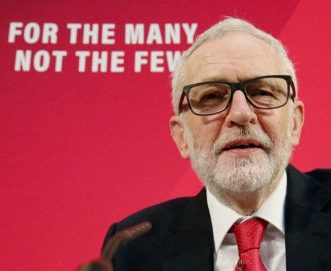
Accountability and transparency demand that Freedom of Information requirements should be an essential corollary of receiving public funding, throughout the whole of the NHS

Posted: 30 Jan 2013 05:15 AM PST

Changing patterns of provision for public services can have serious implications for existing standards of public accountability, converting large swathes of previously open and published information into ‘commercially confidential’ material kept secret by for-profit companies. Grahame Morris MP argues that the solution to this creeping decrease in accountability is to require that FOI rules on public disclosure apply even-handedly to all service providers within the NHS, whether they are in the public or private sectors.

In late January 2013 the Department of Health announced the formation of an expert panel within the Department advising the government on ‘Strengthening the NHS Constitution’. Replacing the older NHS Future Forum working group, this panel would “oversee the consultation on strengthening the NHS Constitution” and “develop a set of proposals to give the NHS Constitution greater traction so that patients, staff and the public are clear what to do, and who to turn to, when their expectations under the Constitution are not”. The Department also disclosed the Commercial Director of Virgin Care (that Dr Vivienne McVey), has become a member of an expert panel within the Department advising the government on ‘Strengthening the NHS Constitution’. Now Virgin Care is actively involved in bidding for lucrative NHS contracts up and down the country, and is now controversially running some NHS services in Southern England. So Dr McVey’s company is just one of a number of private companies, from home and abroad, now bidding for an estimated £7 billion of NHS contracts that have in recent months been put out to tender. In common with other private healthcare companies, Virgin Care stated in an interview to the Financial Times that it intends to make an 8 per cent profit from NHS contracts, which are financed by us, the taxpayer.

The question any reasonable observer might ask is what possible interest could Virgin Care have in ‘strengthening’ the NHS constitution, when their business model would seem to be premised on public provision performing poorly? So taxpayers and patients may justifiably ask if Virgin Care’s Commercial Director is the best person to take up this important advisory position. Most people accept that transparency is a key tenet of a strong NHS. So what might Dr McKay have to say about the current bidding practices for NHS contracts that allow commercial organisations such as Virgin Care to withhold details of those bids under the cloak of ‘commercial confidentiality’, while NHS Trusts have to reveal all and are subject to the Freedom of Information Act? Does Dr McKay and Virgin Care support the extension of the FOI Act to follow the public pound to include private medical firms running parts of our NHS?

These considerations, together with substantial support from community activists campaigning against the fragmentation and privatisation of our NHS, lead me to table a Parliamentary Early Day Motion calling for private health care companies also to be subject to the Freedom of Information Act. It has attracted the signatures of 85 MPs from 7 different parties and it has received plenty of supportive comment in the media, including in The Guardian. If you, like me believe that our NHS should not be put up for sale through secretive bidding processes, please ask your MP to sign as well. Details of the motion (known as EDM 773) are as follows:

‘That this House notes that

the most significant development that has followed from the Government’s healthcare reforms has been the 7 billion worth of new contracts being made available to the private health sector;

further notes that at least five former advisers to the Prime Minister and the Chancellor of the Exchequer are now working for lobbying firms with private healthcare clients;

recalls the Prime Minister’s own reported remarks prior to the general election when he described lobbying as `the next big scandal waiting to happen’;

recognises the growing scandal of the procurement model that favours the private health sector over the NHS, by allowing private companies to hide behind commercial confidentiality and which compromises the best practice aspirations of the public sector;

condemns the practice of revolving doors, whereby Government health advisers move to lucrative contracts in the private healthcare sector, especially at a time when the privatisation of the NHS is proceeding by stealth;

is deeply concerned at the unfair advantages being handed to private healthcare companies; and

demands that in future all private healthcare companies be subject to freedom of information requests under the terms of the Freedom of Information Act 2000 in the same way as existing NHS public sector organisations’ .

Over the years there have been many campaigns launched to save our NHS, but never has there been a more important time as now, to do just that. Achieving a level playing field in bids for NHS contracts is only a start. In my own view, the next Labour Government needs to move to take the ‘for profit’ sector out of public health and our NHS, once and for all.

Note: This article gives the views of the author, and not the position of the British Politics and Policy blog, nor of the London School of Economics. Please read our comments policy before posting.

About the author

Grahame Morris MP is the Labour Member of Parliament for Easington.
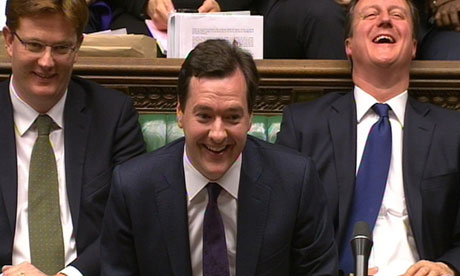
Osborne’s economic strategy has failed

These GDP figures are a disaster for the coalition government – politically as well as economically
When the rating agencies strip Britain of its AAA credit rating – as they almost certainly will – George Osborne’s strategy will be in complete tatters.

The strategy has failed. The public knows it. The International Monetary Fund knows it. The credit rating agencies know it. Even George Osborne knows it, although he can’t bring himself to admit as much.

Image

Here is a brief résumé of how things stand for the economy after two and a half years with the coalition government at the helm. National output has just contracted for the fourth quarter in the last five. The only quarter of 2012 in which the economy expanded was the one that contained the London Olympics, and unfortunately for the chancellor these sort of jamborees happen once every half century rather than once every three months.

During 2012 as a whole the economy registered no growth at all. Nothing. Zilch. A big fat zero. The level of gross domestic product is 3% below where it was when the recession started, a weaker performance than during the 1930s. Royal Bank of Scotland says the four-year performance of the economy between 2008 and 2012 is the weakest since the 1930s apart from post-war mobilisations.

Industrial production was to blame for the drop in output in the final three months of 2012, with factory output back to levels last seen in the early 1990s. Rebalancing is a pipedream. Unsurprisingly, the Treasury’s deficit reduction programme is well off track. This is an abysmal record.

Sure, there are all sorts of excuses that can be trotted out to explain away the fact that three years after the recession first ended GDP is still contracting. The crisis in the eurozone hasn’t helped. Rising commodity prices have raised business costs and acted as a brake on consumer spending.

But the government also sucked demand out of the economy by raising taxes, cutting welfare and by taking the axe to capital spending programmes. The blood-curdling rhetoric from Osborne in 2010 about Britain being a Greece in waiting had the entirely predictable effect of shredding consumer and business confidence.

So what happens next? Clearly, there is a risk that the first quarter of 2013 will also be negative. The economy is fundamentally weak and the heavy snow of the past week will not have helped.

Against this backdrop, there will be mounting pressure for further steps to get the economy moving. Ideally, action would come from the chancellor himself in the budget in the form of tax cuts and higher spending on small-scale infrastructure projects that can be started immediately.

In reality, changes to fiscal policy are likely to be small scale and cosmetic. Osborne will rely, as he has for the past two and a half years, on the Bank of England to do the heavy lifting. Further monetary easing looks inevitable, even though a combination of 0.5% bank rate and £375bn of quantitative easing has proved ineffective until now.

Politically as well as economically, these figures are a disaster for the government. It ensures the next few months will be spent debating whether the UK is heading for a triple dip and how soon the credit rating agencies will strip Britain of its AAA credit rating. When that happens – as it almost certainly will – Osborne’s strategy will be in complete tatters.

Someone tell David Cameron that tax avoidance starts at home

Cameron’s Davos speech was long overdue. But the very corporate tactics he condemns abroad, he enables in the UK

Richard Murphy
guardian.co.uk, Thursday 24 January 2013 14.40 GMT

After a decade of campaigning for tax justice it was gratifying to hear David Cameron endorse much of what we have called for at Davos this morning. Unfortunately, as just a few examples show, the prime minister has a long way to go before he walks the talk.

Tax avoidance

Cameron’s said “There are some forms of avoidance that have become so aggressive that …. it’s time to call for more responsibility and for governments to act accordingly.”

When delivering the message he added: “Companies need to wake up and smell the coffee, because the customers who buy from them have had enough”. It could not have been more obvious that he has Starbucks in mind. He’s set the bar on this issue at a point where it must be tackled.

And yet Cameron faces a massive domestic credibility problem as a result. The government’s much trumpeted General Anti-Abuse Rule, which will be enacted this year, which Cameron says targets tax avoidance, will deliberately not go near targeting the sorts of tax avoidance undertaken by Starbucks, Google and Amazon. Legislation put forward by Michael Meacher MP and written by me that would let HM Revenue & Customs challenge their sort of tax avoidance has also been rejected by the government.

It’s all very well for Cameron to say that tax avoidance must be tackled internationally. His difficulty is that he could do it at home as well and has chosen not to do so. He’s correctly assessed that there is real political anger on this issue now; he’s got his assessment of what people want seriously wrong if he thinks his government’s proposals will satisfy those demanding reform.

Transparency

Cameron said: “The third big push of our agenda is on transparency, shining a light on company ownership, land ownership and where money flows from and to.” I’m delighted he said this, but I am disappointed he added that “this is critical to developing countries” as if somehow this is a problem for Africa but not for us.

Opacity permits corruption everywhere. Accounts that fail to account meaningfully hinder effective economic decision-making. Limited liability companies, existing in a void with no apparent owners who accept responsibility for their decisions, blight economies and permit massive tax dodging. And nowhere is that more true than in the UK.

At present a multinational company trading in the UK does not have to publish a separate profit and loss account for this country so we can see how much tax it pays in the UK. Nor does it have to do so for all the tax havens in which it operates. If Google, Starbucks and Amazon had been required to do that we’d have seen their tax avoidance a lot earlier. So yes, we need transparency for developing countries, but we need it too in the form of full country-by-country reporting.

Despite that, just a couple of days ago David Gauke, the Conservative exchequer secretary, under Labour questioning showed his continued indifference towards country-by-country reporting.

That’s also true on beneficial ownership. There is no legal requirement to disclose beneficial ownership of a company in the UK at present, and our company registry is a near perfect example of appalling company regulation on this and other issues, striking off hundreds of thousands of companies a year rather than demand that they comply with their legal obligations.

If Cameron wants to show the world the way on beneficial ownership he can begin at home by making Companies House into a regime fit for the 21st century. He should follow up with the land registry – riddled as it is with anonymous offshore companies – and then demand that our tax havens put beneficial ownership on public record just as we should.

Automatic information exchange

Cameron said: “If there are options for more multilateral deals on automatic information exchange to catch tax evaders, we need to explore them.” I agree, wholeheartedly. It’s just a shame he said this the month the UK’s appalling tax agreement with Switzerland comes into force that guarantees tax evaders anonymity, lets them off most of the tax they owe, and preserves Swiss banking secrecy in the process. Germany’s parliament rejected such a deal to hold out for full automatic information exchange with Switzerland. The UK harmed the cause by going ahead alone.

And that’s the problem with this whole speech. The talk is great. I welcome it. As Cameron said: “After years of [tax] abuse, people across the planet are calling for more action and most importantly, there is gathering political will to actually do something about it.” He’s right. But Cameron’s pretending the solution lies outside the UK. It doesn’t. It starts at home. And some of the biggest obstacles to be overcome require some serious rethinking of his own government’s agenda on tax, accountancy, regulation, transparency and tax havens, all of which could change without the need for any outside co-operation. We’ve still got a long way to go to win this debate.

The less well-paid you are when you enter the labour market, the more your degree will now cost

Posted: 22 Jan 2013 06:00 AM PST

Ron Johnston argues that much of the debate on tuition fees is misleading. Not only is the size of the debt incurred by students persistently understated but the repayment system is itself regressive. The greater your rewards from studying for a degree the less you pay for the opportunity. This has profound consequences for postgraduate education and recruitment to the professions. 

On 6 January 2013 The Independent on Sunday reported that a number of UK university vice-chancellors and other senior academics had expressed great concern about the absence of financial support for, and thus problems of recruitment to, taught masters’ courses – many of which provide necessary training for a range of (mainly) public-sector professions rather than introductions to fundamental research. On the same day, The Observer carried a major article by Will Hutton (Principal of Hertford College, Oxford) on that issue, rightly associating those difficulties with the amount of debt students will have accumulated at the end of their undergraduate degrees. Unfortunately, like so many  others, he did not fully address the nature and extent of such debts, nor the misleading representations of the repayment system from both the politicians who implemented it and many subsequent commentators.

The details needed to make a full assessment are readily available from the ‘student loans repayment calculator’ on a government website. Although it makes some pragmatic assumptions, such as at what rate individuals’ post-graduation incomes increases and future rates of inflation, the information provided is sufficient to generate a clear conclusion: the extent of the debts students graduating from 2015  onwards will be carrying is not only often understated but in addition the repayment system is regressive according to income and not progressive, as frequently claimed.

Take, for example, a student who reads for a three-year degree at a fee of £9,000 per annum, but does not take up the available maintenance loans. Because interest is charged during the three years of study at the rate of inflation (RPI – assumed to be 3.6%) plus 3%, the debt on graduation is not £27,000 but £30,723. Repayments only commence when the graduate earns more than £21,000 per annum, and are at the flat rate of 9% of the difference between gross income and £21,000 – so that someone earning £25,000 repays 9% on £4,000.

The smaller the amount that you earn, the less you pay in any one year, but as you continue to be charged interest on the outstanding amount (at the rate of inflation if you earn £21,000; at the rate of inflation plus up to 3% depending on your income if you earn £21-41,000; and by the rate of inflation plus 3% if you earn more than £41,000) the size of your debt continues to increase – for nine years if your starting income was £21,000. As a consequence our student whose course fees were £27,000 will take 23 years and 4 months to pay off the loan, at a total cost of £67,743.

The larger your starting salary above a threshold, however, the less you pay back in total – and in a shorter time. According to the ‘student loans repayment calculator’, somebody who ‘borrowed’ £27,000 for the fees and whose starting salary is £25,000 repays a total of £57,526 over 17 years and 8 months; with a starting salary of £30,000, the repayment period is 13 years, 9 months and the total repaid is £50,943; and for a starting salary of £40,000, only £44,354 is repaid – over a period of just 9 years and 9 months. The conclusion is clear: the less well-paid you are when you enter the labour market, the more your degree costs, both relatively and absolutely – and not the other way round.

David Willetts and others have claimed that the repayment system is, in effect, better than a graduate tax: on page 18 of BIS’s June 2011 White Paper Students at the Heart of the System, for example, we are told that the proposed system of graduate contributions ‘preserves a careful balance between the interests of higher and lower earners, by requiring higher earners to make a fair contribution to the costs of the system as a whole’ and that because ‘all graduates will pay less per month than under the old system, … higher education [will be made] more affordable for everyone’! Furthermore, the better-paid (and those from wealthier backgrounds) can pay off their debt immediately on graduation, at no cost – a further regressive element to the system; or they can pay the full fees upfront.

All this is built on assumptions regarding not only the rate of inflation (the higher it is, the larger your debt) but also increases in the graduate’s income over time, plus any change in the repayment threshold. A graduate with a starting salary of £21,000 is assumed to be earning £41,000 thirteen years later, with increases of up to 15% in the early years, falling to about 5%. (The source for the government website’s calculations is an Office for National Statistics analysis of Labour Force Survey data) If income grows more slowly, the debt accumulates even more, the repayment period is longer, and the total repaid also increases – which again disadvantages the lower-paid. Another website  allows further experimentation with varying rates of salary increase and inflation; the conclusions developed here do not change, only the inflexion point in the graphs discussed below.

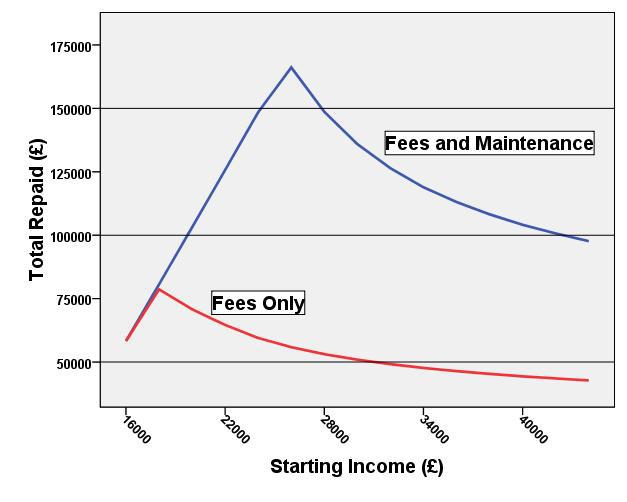
These calculations all assume that the student doesn’t take out a maintenance loan – a maximum of £7,675 per annum for those living away from home and studying in London. If you also take out that loan for three years (and do not qualify for any support because of low parental income), the government’s calculations show that for graduates with a starting salary of £21,000 the initial debt is £56,924 (not the £50,025 ‘borrowed’). It grows until the 26th year of continuous earning (when it stands at £101,976); repayments stop after 30 years (after which any remaining debt is wiped), by when the full sum remitted has been £114,418. Someone whose starting salary is £30,000 has a peak debt of £67,457 after 10 years; the full amount is paid off after 23 years and 9 months, with the total costs of the package being £135,914. And the graduate with a starting salary of £40,000 makes repayments totalling just £104,105 (23% less than that for the person whose starting salary is £10,000 lower), completing the process in only 16 years and one month.

Those whose starting salaries are low are protected, therefore. The government assumes a minimum income once the graduate enters the labour force of £15,795: somebody earning that amount who takes out loans for both fees (£9,000) and maintenance (£7,675) repays £56,041 over 30 years, by which point the amount owed has increased from the initial sum of £56,924 to £136,304 – when it is wiped out. The system is progressive in its impact for those with the lowest starting salaries, therefore, but above £21,000 it becomes regressive because of the single ‘tax rate’ (and despite the link between income and a varying interest rate on the accumulating debt): so, the greater your rewards from studying for a degree the less you pay for the opportunity (or, as the Institute of Fiscal Studies concluded in its 2010 evaluation of the government’s proposals: the scheme ‘does benefit poor students, [but] it does not benefit poor graduates’).

The graph above shows just how large the differences are, especially for students who take out loans not only for fees but also for the maintenance grant: it contrasts a student who has a fees-only loan for three years and another who in addition takes out the maximum maintenance loan for studying in London. Starting incomes from £16,000 to £44,000 are shown; all of the data are taken from the ‘student loans repayment calculator’. If a student takes out a fees-only loan, then the total amount repaid falls once the starting income exceeds £18,000. For the student studying in London who also takes out a maintenance loan, the amount repaid increases with the starting salary until that reaches £26,000, and then begins to fall; somebody with a starting salary of £44,000 pays back less for the same amount ‘borrowed’ (£50,025) than somebody with a starting salary just above £20,000.

No wonder that Vice-Chancellors are worried about the future market for postgraduate masters’ degrees. Even if loans were available for those courses, how many students would avail themselves of such opportunities, given the debts they are carrying from their undergraduate education – especially if they want to work in the relatively poorly-paid professions like social work? Society as a whole should share their concern – where are the next generations of entrants to many of our (under-rewarded) professions to come from given this unfair burden?

(With many thanks to Rich Harris, Kelvyn Jones, Dan Lunt, David Manley and Ed Thomas for illuminating discussions of these issues.)

Note: This article gives the views of the author, and not the position of the British Politics and Policy blog, nor of the London School of Economics. Please read our comments policy before posting.

About the Author

Ron Johnston is Professor of Geography in the School of Geographical Sciences at the University of Bristol. His academic work has focused on political geography (especially electoral studies), urban geography, and the history of human geography. 

You may also be interested in the following posts:

  1. The government’s plans to place a levy on early student loan repayments will change little and add an unnecessary layer of complexity to the system
  2. Efforts to strengthen and promote the role of universities in the UK often ignore the European dimension, to their cost
  3. Book Review: Creating the Market University: How Academic Science Became an Economic Engine by Elizabeth Popp Berman

Seven hazards in David Cameron’s intended European policy

Posted: 23 Jan 2013 12:00 AM PST

This morning sees UK Prime Minister David Cameron’s long anticipated (and delayed) speech on the UK’s relationship with the EU. Michael Emerson sets out seven major hazards that his expected policy positions will have to overcome, ranging from defining its core objective, problems with the referendum process, and the economic costs of generating uncertainty over the EU/UK relationship. 

This article was first published on LSE’s EUROPP blog

Unless the British Prime Minister changes the script that he has led us to expect for his speech later this week on his policy intentions towards the European Union, his propositions are going to encounter a plethora of problems for their successful implementation in the British and European interests. To set out the litmus tests, there are no less than seven major hazards for his policy to overcome.

The first hazard is the task of defining the core objective in a way that holds water, i.e. operational and proportionate to the political purpose of repatriating sufficiently substantial EU competences to claim that he has strategically rebalanced the relationship. The UK has already opted out of the eurozone and the Schengen area, and does not want to opt out of the single market and foreign and security policy. What is left to add to the opt-outs? Not much. That is why much is being made of the possibility (provided for by Protocols 21 and 36 to the Lisbon Treaty) to repeal the UK’s implementation of much existing EU law and policy in the Freedom, Security and Justice area. The populist argument being made that this legislation somehow threatens the rule of law in the UK is utterly contrived.

Michael Theis Credit: (Creative Commons BY ND)

The second hazard lies in the negotiating style and tactics currently already being announced by the Prime Minister, namely that of either getting his way, or if not, blocking the eurozone’s proposals for a new EU-based treaty to correct its systemic deficiencies. This is already criticised as ‘blackmail’, notably by some senior German parliamentarians, but the use of this damning language gets an immediate echo around the rest of Europe. The blackmail tactic encounters two problems, both fundamental. The first is that it will not work, since eurozone countries are already prepared if necessary to negotiate a new treaty outside the formal EU legal order. The second is that it will harden the terms of opposition to whatever the UK wants or has as a special favour (e.g. the UK’s budget rebate).

The third hazard arises from the political manageability of the process, when the outcome would have to be settled by referendum in the UK. The Swiss are well trained to use the referendum instrument for precisely targeted issues. For the rest of Europe with less training, like the UK with hardly any, the hazard is that of the referendum question being transformed in the eyes of voters into something other than what the text exactly says, like general dissatisfaction with the state of the economy or general performance of the government.

Indeed these first three hazards might push the political dynamics into the secession scenario, or fourth hazard, which the Prime Minister says he does not want. But if one looks at the secession scenario, what does one see? The most obvious approximate model is that of Norway, which is wholly in the single market as member of the European Economic Area (EEA). The problems here are that the UK would have no say in the negotiation of a new single market law. So the UK would have less sovereignty than it does now over the single market, which is its highest priority domain of EU activity. In addition, Norway has agreed to substantial financial contributions to the EU structural funds, which would certainly be demanded of a seceding UK.

Hazard number five is the potential economic cost of the strategic uncertainty that is being created for a number of years ahead, with the scenario of secession in the air. Competition between EU member states over footloose investment by multinational corporations is already fierce. As British business interests are already saying with alarm, in a situation of strategic uncertainty for the UK the most obvious sales pitch of its close neighbours will be “you cannot know where the UK will be in relation to the EU single market in a few years time”. With the obstinately on-going recession in the British economy, this is hardly a message one wishes to facilitate.

Hazard number six concerns the political future of the United Kingdom itself, with pressure for a referendum in Scotland over its possible secession from the UK. The Scottish nationalists do not however want to secede from the EU, and for the UK to be toying with secession from the EU could intensify Scottish arguments for seceding from the UK. EU lawyers seem to be of the view that an independent Scotland would have to apply under the regular accession procedure, and several member states would not want to endorse this precedent. But the prospects for a very messy tangling up of the debates over these Scottish, UK and EU affairs are very real, with Cameron risking that his epitaph becomes “the man that led the unravelling of both the UK and EU”.

Hazard number seven concerns the place of the UK in the world, and its relations with its closest allies and friends. The US has already in recent days made its position absolutely clear, that its interest lies in a strong UK voice within a strong EU. Here they are getting a crystal-clear message that the current British government is heading in the wrong direction. The UK’s traditional like-thinking liberal democratic allies in the EU, such as the Nordics and Benelux, are appalled at what they see emerging. As for the old Commonwealth, they went their own way a long time ago. The UK’s remaining international prestige with major powers such as China and Russia will decline.

At least these seven hazards are now being aired in public debate, and it is for the normal democratic processes to sift through the arguments and see informed judgement prevail. The responsibility of the British Prime Minister in these next days will be at least not to foreclose the debate by locking his government onto a path of uncontrollable political damage, for which the possibilities are nonetheless abundantly evident.

This article is a shortened version of a CEPS Commentary paper.

Note: This article gives the views of the author, and not the position of the British Politics and Policy blog, nor of the London School of Economics. Please read our comments policy before posting.

Michael Emerson has since 1998 been Associate Senior Research Fellow at the Centre for European Policy Studies (CEPS), Brussels.  Since 1998, researching European foreign, security and neighbourhood policies. He was a Senior Research Fellow at the LSE in 1996-1998. He has numerous publications on EU integration, EU relations with the wider European neighbourhood and contemporary European conflict.