Conservative claims about benefits are not just spin, they’re making it up

Government ministers like Iain Duncan Smith and Grant Shapps are misrepresenting official statistics for political gain

Declan Gaffney and Jonathan Portes
guardian.co.uk, Monday 15 April 2013 15.32 BST

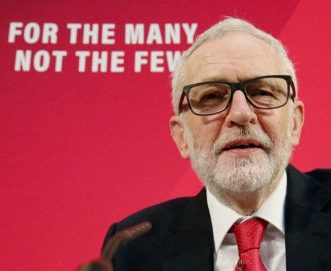
Conservative minister Grant Shapps has quoted a misleading statistic about the number of people on incapacity benefit dropping their claims as evidence of a broken welfare system. Photograph: Richard Sellers/Allstar/Sportsphoto Ltd
In the past three weeks, readers of mainstream UK newspapers have learned a number of things about the UK social security system and those who rely on it. They have learned that 878,000 claimants have left employment and support allowance (ESA) to avoid a tough new medical assessment; that thousands have rushed to make claims for disability living allowance (DLA) before a new, more rigorous, assessment is put in place; and that one in four of those set to be affected by the government’s benefit cap have moved into work in response to the policy. These stories have a number of things in common. Each is based on an official statistic. Each tells us about how claimants have responded to welfare policy changes. Each includes a statement from a member of the government. And each is demonstrably inaccurate.

When we say inaccurate, we are choosing our words carefully. Politicians are inevitably selective in the data they choose to publicise, picking the figures that best suit whatever story they want to tell. This can mean that stories that are technically accurate can nonetheless be potentially misleading. Within reasonable limits that is in itself neither improper nor unethical: indeed, it is virtually unavoidable. But here are some examples that are not just misleading: they assert that official government statistics say things they do not.

First, the claim that “more than a third [878,000] of people who were on incapacity benefit [who] dropped their claims rather than complete a medical assessment, according to government figures. A massive 878,300 chose not to be checked for their fitness to work [our italics].” For the Conservative party chairman, Grant Shapps, the figures “demonstrate how the welfare system was broken under Labour and why our reforms are so important”.

In fact, every month, of the roughly 43,000 people who leave ESA, about 20,000 have not yet undergone a work capability assessment (WCA); a number that over four years or so adds up to the headline 878,000. There is no mystery about this: there is an inevitable gap between applying for the benefit and undertaking the WCA. During that time, many people will see an improvement in their condition and/or will return to work (whether or not their condition improves). DWP research has shown that overwhelmingly these factors explain why people drop their claims before the WCA; it also showed that it was extremely rare for claimants not to attend a WCA. In stating, in effect, that official figures showed the opposite of this, the story was simply wrong.

Iain Duncan Smith’s assertion about a surge in DLA claims turns on the fact that DLA is being abolished for new claims and replaced with a new benefit, personal independence payment (PIP), for which most claimants will require a face-to-face assessment (for DLA, other forms of medical evidence could be used to support claims). He said: “We’ve seen a rise [in claims] in the run-up to PIP. And you know why? They know PIP has a health check. They want to get in early, get ahead of it. It’s a case of ‘get your claim in early’.”

Some very specific figures were cited: “In the north-east of England, where reforms to disability benefits are being introduced, there was an increase of 2,600 in claims over the last year, up from 1,700 the year before, the minister told the Daily Mail. In the north-west, there were 4,100 claims for the benefits over the past 12 months, more than double the 1,800 in the previous year, he said.”

But these figures, to be found on DWP’s website, in fact represent the change – successful new claims minus those leaving the benefit – in the total DLA caseload from August 2011 to August 2012, crucially including pensioners and children who are not affected by the change from DLA to PIP. They do not constitute even indicative evidence of a DLA “closing down sale”. So what happens if we look at new claims, or indeed the total caseload, for those (between 16 and 64) who will be actually affected by the change? In fact, both fell, in both regions, between those two dates. These falls – well within the normal quarterly variation – tell us little, except to show conclusively that Duncan Smith’s statements are supported by no evidence that he has offered whatsoever.

Finally, the coalition’s flagship “benefit cap”. On this occasion, not only did Duncan Smith misrepresent what his own department’s statistics meant, but he chose to directly contradict his own statisticians, claiming: “Already we’ve seen 8,000 people who would have been affected by the cap move into jobs. This clearly demonstrates that the cap is having the desired impact.”

But the official DWP analysis, from which the 8,000 figure is drawn, not only does not say this, it says the direct opposite: “The figures for those claimants moving into work cover all of those who were identified as potentially being affected by the benefit cap who entered work. It is not intended to show the additional numbers entering work as a direct result of the contact [their emphasis].”

As DWP analysts know only too well, people move off benefits into work all the time. Unless it is shown that these flows have increased for those affected, and by more for them than for other claimants – and no such analysis has yet been published, either by DWP or anybody else – we know nothing about whether the policy has had any impact (this claim is now being reviewed by the UK statistics authority).

None of this should be taken as comment on the merits of the policies in question. But these misrepresentations of official statistics cross a line between legitimate “spin”, where a government selects the data that best supports its case, and outright inaccuracy.

Public cynicism about official statistics is often misplaced – the UK, like most democracies, strictly limits the ability of governments to influence the production and dissemination of official data, often, no doubt, to the frustration of ministers. These restrictions on what government can do with official data are an unsung but essential element in modern democratic governance. When government seeks to get around these limitations by, in effect, simply making things up, this is not just an issue for geeks, wonks and pedants – it’s an issue for everyone.

• This article was amended on 19 April 2013. The original said 130,000 people leave employment and support allowance every month; that is in fact how many people leave ESA each quarter.

Tony Blair: Labour must search for answers and not merely aspire to be a repository for people’s anger

The centre has not shifted to the left, says Tony Blair. Labour must resist the easy option of tying itself to those forces whose anti-Tory shouts are loudest. 

The paradox of the financial crisis is that, despite being widely held to have been caused by under-regulated markets, it has not brought a decisive shift to the left. But what might happen is that the left believes such a shift has occurred and behaves accordingly. The risk, which is highly visible here in Britain, is that the country returns to a familiar left/right battle. The familiarity is because such a contest dominated the 20th century. The risk is because in the 21st century such a contest debilitates rather than advances the nation.

This is at present crystallising around debates over austerity, welfare, immigration and Europe. Suddenly, parts of the political landscape that had been cast in shadow for some years, at least under New Labour and the first years of coalition government, are illuminated in sharp relief. The Conser­vative Party is back clothing itself in the mantle of fiscal responsibility, buttressed by moves against “benefit scroungers”, immigrants squeezing out British workers and – of course – Labour profligacy.

The Labour Party is back as the party opposing “Tory cuts”, highlighting the cruel consequences of the Conservative policies on welfare and representing the disadvantaged and vulnerable (the Lib Dems are in a bit of a fix, frankly).

For the Conservatives, this scenario is less menacing than it seems. They are now going to inspire loathing on the left. But they’re used to that. They’re back on the old territory of harsh reality, tough decisions, piercing the supposed veil of idealistic fantasy that prevents the left from governing sensibly. Compassionate Conservatism mat­tered when compassion was in vogue. But it isn’t now. Getting the house in order is.

For Labour, the opposite is true. This scenario is more menacing than it seems. The ease with which it can settle back into its old territory of defending the status quo, allying itself, even anchoring itself, to the interests that will passionately and often justly oppose what the government is doing, is so apparently rewarding, that the exercise of political will lies not in going there, but in resisting the temptation to go there.

So where should progressive politics position itself, not just in Britain but in Europe as a whole? How do we oppose smartly and govern sensibly?

The guiding principle should be that we are the seekers after answers, not the repository for people’s anger. In the first case, we have to be dispassionate even when the issues arouse great passion. In the second case, we are simple fellow-travellers in sympathy; we are not leaders. And in these times, above all, people want leadership.

So, for Britain, start with an analysis of where we stand as a country. The financial crisis has not created the need for change; it has merely exposed it. Demographics – the age profile of our population – technology and globalisation all mean that the systems we created post-1945 have to change radically. This is so, irrespective of the financial catastrophe of 2008 and its aftermath.

Labour should be very robust in knocking down the notion that it “created” the crisis. In 2007/2008 the cyclically adjusted current Budget balance was under 1 per cent of GDP. Public debt was significantly below 1997. Over the whole 13 years, the debt-to-GDP ratio was better than the Conservative record from 1979-97. Of course there is a case for saying a tightening around 2005 would have been more prudent. But the effect of this pales into insignificance compared to the financial tsunami that occurred globally, starting with the sub-prime mortgage debacle in the US.

However, the crisis has occurred and no one can get permission to govern unless they deal with its reality. The more profound point is: even if it hadn’t happened, the case for fundamental reform of the postwar state is clear. For example:

What is driving the rise in housing benefit spending, and if it is the absence of housing, how do we build more?

 How do we improve the skillset of those who are unemployed when the shortage of skills is the clearest barrier to employment?

 How do we take the health and education reforms of the last Labour government to a new level, given the huge improvement in results they brought about?

 What is the right balance between universal and means-tested help for pensioners?

How do we use technology to cut costs and drive change in our education, health, crime and immigration systems?

 How do we focus on the really hard core of socially excluded families, separating them from those who are just temporarily down on their luck?

 What could the developments around DNA do to cut crime?

There are another 20 such questions, but they all involve this approach: a root-and-branch inquiry, from first principles, into where we spend money, and why.

On the economy, we should have one simple test: what produces growth and jobs? There is roughly $1trn (£650bn) of UK corporate reserves. What would give companies the confidence to invest it? What does a modern industrial strategy look like? How do we rebuild the financial sector? There is no need to provide every bit of detail. People don’t expect it. But they want to know where we’re coming from because that is a clue as to where we would go, if elected.

Sketch out the answers to these questions and you have a vision of the future. For progressives, that is of the absolute essence. The issue isn’t, and hasn’t been for at least 50 years, whether we believe in social justice. The issue is how progressive politics fulfils that mission as times, conditions and objective realities change around us. Having such a modern vision elevates the debate. It helps avoid the danger of tactical victories that lead to strategic defeats.

It means, for example, that we don’t tack right on immigration and Europe, and tack left on tax and spending. It keeps us out of our comfort zone but on a centre ground that is ultimately both more satisfying and more productive for party and country.

You are invited to read this free preview of the upcoming centenary issue of the New Statesman, out on 11 April. 

http://newstatesman100.tumblr.com/post/47687650241/tony-blair-labour-must-search-for-answers-and-not

Benefits in Britain: separating the facts from the fiction

How many people are dependent on welfare – and do families where three generations have never worked really exist?

Family walking in a park

What percentage of the UK’s adult population is dependent on the welfare state?

The welfare state is a big part of British family life, with 20.3 million families receiving some kind of benefit (64% of all families), about 8.7 million of them pensioners. For 9.6 million families, benefits make up more than half of their income (30% of all families), around 5.3 million of them pensioners. The number of families receiving benefits will be between 1 and 2 million fewer now because of changes to child tax credits that mean some working families who previously got a small amount now get nothing.

How big is the problem of families on benefits where generations have never worked?

Patterns of work in working-age households

The Joseph Rowntree Foundation published a study in December testing whether there were three generations of the same family that had never worked. Despite dogged searching, researchers were unable to find such families. If they exist, they account for a minuscule fraction of workless people. Under 1% of workless households might have two generations who have never worked – about 15,000 households in the UK. Families with three such generations will therefore be even fewer.

The graphic shows this broken down. Importantly, families experiencing long-term worklessness remained committed to the value of work and preferred to be in jobs rather than on benefits. There was no evidence of “a culture of worklessness” – values, attitudes and behaviours discouraging employment and encouraging welfare dependence – in the families being passed down the generations. The long-term worklessness of parents in these families was a result of complex problems (particularly related to ill-health) associated with living in long-term and deep poverty. In an already tight labour market, multiple problems combined to place people at the back of a long queue for jobs.

For 2011-12 it is estimated that 0.8%, or £1.2bn, of total benefit expenditure was overpaid as a result of fraud. This is far lower than the figures widely believed by the public, as revealed repeatedly in opinion polls. A TUC poll recently revealed that people believe 27% of the welfare budget is claimed fraudulently.

Hard to judge, and hard to generalise. There is a lot of movement in and out of work, so many Job Seekers Allowance claims are very short. More than 80% of claimants never go near the work programme because they aren’t on the benefit for long enough. A lot are off it in under six months. For disability benefits, there are a lot more long-term claimants, of course. In 2012, 18% of working-age households were workless; in only 2% had no one ever worked. More than half of adults in households where no one has ever worked were under 25. So although the proportion of households where no one has ever worked has increased recently, it is likely to be a manifestation of high and rising young adult unemployment.

What proportion of the welfare bill goes on benefits to the unemployed? And how has this changed?

GU 2

It’s rising – but we’ve seen such movements before. At 13% between 2009-10 and 2011-12, the proportion of gross domestic product devoted to benefits is at an all-time high, but this is not the result of a long-term upward trend. Levels in the 1990s to 2008-09 fluctuated between 10% and 12%. The recession resulted in a substantial increase and the overall level has not fallen since. This mirrors the recession in the early 1990s, when the proportion of GDP spent on benefits increased by slightly more at around 3 percentage points.

Between 2001/02 and 2011/12, spending on “social protection” benefits – help given to those in need or at risk of hardship – increased from £156bn to £210bn. This £54bn growth was after inflation, a rate of 34%. At an increase of £24bn, pensioner incomes made up the largest share of the change, around nine-tenths of the growth, reflecting their size within the budget. Housing benefits spending grew at the fastest rate, 62%, because of increases in the number of claimants and the average cost of the benefit. Claimant numbers rose from 3.8 million in 2002 to 5 million in 2012, while average weekly benefit increased from £52 to £87.

If unemployment benefits are reduced, do more claimants find work?

They may stop claiming – but not necessarily go to work. The Joseph Rowntree Foundation has carried out a systematic review of international research on the impact of benefit sanctions. This finds, mainly from US research, that sanctions are successful in getting people off benefits, but this may be because they are dropping out of the system altogether, rather than going into decent work. European studies show that the use of sanctions is likely to lead to worse employment outcomes (lower pay and more likely to be back on benefits) than if sanctions are not used. This is because the threat or use of sanctions makes people take lower-quality jobs than if they had been allowed to wait for a better opportunity.

How many families last year received more in benefits than the proposed government cap of £26,000?

Around 58,000 households will have their benefits reduced by the policy in 2014-15. Greater numbers are affected by other welfare changes.

What proportion of people affected by the welfare reforms are in households where someone works?

Welfare graphic three

It’s not just the workless who will have to cut back. As the Institute for Fiscal Studies pointed out in January, because the proposed uprating changes apply to almost all benefits and tax credits both in-work and out-of-work households are affected.

Out of 2.8 million workless households of working age, 2.5 million will see their entitlements reduced by an average of about £215 a year in 2015-16.

Of 14.1 million working-age households with someone in work, 7 million will see their entitlements reduced, by an average of about £165 a year. Note that this figure includes 3 million families who lose only from the cuts to child benefit, at an average of about £75 a year. They also point out that other elements of the “consolidation package” have different effects, particularly for those on higher incomes (chart C)

The impacts of other changes will also be very significant for working as well as out-of-work households. Joseph Rowntree Foundation research on the council tax benefit showed that 2.4 million low-income families will pay on average £138 more in council tax in 2013-14. About 78% of the 2.4 million affected live in non-working households and pay no council tax. The average additional payment will be £132 for in-work recipients and £140 for those not working.

What is the correlation between a country’s economic performance and the size of its welfare bill?

Richer countries spend much more (as a proportion of income) on welfare than poor ones – compare Sweden and Somalia. But of course that doesn’t mean spending more on welfare makes a country richer: it mostly reflects the natural tendency of societies, as they become more prosperous, to increase social spending. Some economists argue that large welfare states, which need to be financed by equally large tax revenues, over time inhibit private-sector growth. However, the experience of the Nordic countries does show clearly that there is no necessary inconsistency between economic dynamism and a large and relatively generous welfare state.

Expenditure on benefits and tax credits

Perhaps a better way to think about it is this: it seems likely that having no welfare state would not only make a country a very unpleasant place to live in but would inhibit economic growth, as a consequence of the inevitable social breakdown; equally a country where the state taxed away everyone’s income and redistributed it would have no incentives for economic activity. So there’s unlikely to be one “right answer”. In practice, what matters to growth is not so much the size of the welfare bill but how it is spent – what sort of incentives does it give to people to work, become trained or educated, and so on.

What does this tell us about the UK’s welfare state and its impact on growth? In fact, the overall size of the welfare bill as a proportion of GDP has been fairly stable over the past quarter century, as the chart shows.

To the extent there has been an upward trend, it’s been driven by increasing numbers of pensioners, rather than more generous benefits. Meanwhile, spending on those below pension age – working age and children – has been flat overall, rising in recessions and falling outside them. And it’s false to suggest that “benefit dependency” has been steadily increasing; the number on out-of-work benefits (unemployment benefit, incapacity benefits, and lone parents) peaked in the early 1990s and is now fully a million below that level.

Welfare graphic 5

This certainly doesn’t tell us that spending is at the “right” level. Indeed, most economists would agree that over time reforms – especially increasing state pension ages to reflect increasing life expectancy – are required to ensure long-term sustainability. But it does tell us that anyone who says that spending too much on welfare or benefits is the cause of the country’s economic problems, or that spending less on them is the cure, is not paying much attention to the facts.

How many large families are heavily dependent on benefits?

Families by number of dependent children receiving any type of out-of-work benefit

To quote the Economist: “Though most of them seem to end up in newspapers, in 2011 there were just 130 families in the country with 10 children claiming at least one out-of-work benefit. Only 8% of benefit claimants have three or more children. What evidence there is suggests that, on average, unemployed people have similar numbers of children to employed people … it is not clear at all that benefits are a significant incentive to have children.”

How generous are our benefits in comparison to other EU countries?

Figures from Eurostat suggest the UK spends about the same as the EU average on unemployment and disability-related benefits, although it is behind the larger economies. The UK spends 12% less a head than France and 19% less than Germany, but almost twice as much as the Czech Republic.

How many have come off disability benefits since the reforms?

Since 2008, 878,000 new employment and support allowance claims have been closed before the claimant was able to be assessed and 729,000 have been found “fit for work” by tests. Since May 2010, 527,000 employment and support allowance claims have been closed and 414,000 found “fit for work”.

Do any families get more than £100,000 a year in benefits, asGeorge Osborne has claimed?

A freedom of information request by Full Fact showed that in August 2010, there were fewer than five housing benefit claimants receiving the equivalent of £100,000 a year.

• Compiled with help from the Joseph Rowntree Foundation (www.jrf.org.uk); Full Fact (www.fullfact.org); and Jonathan Portes, director, National Institute of Economic and Social Research (www.niesr.ac.uk)