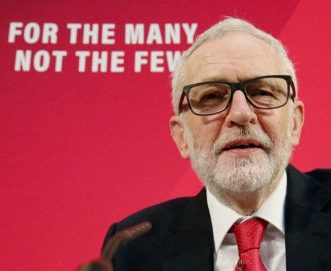
The Chartered Institute of Housing says 79 per cent of the Government’s homes budget up to 2020/21 will go towards private housing, while only 21 per cent will be spent on affordable homes

The Chartered Institute of Housing says 79 per cent of the Government’s homes budget up to 2020/21 will go towards private housing, while only 21 per cent will be spent on affordable homes.

Almost a quarter of a million social homes in England for residents on low incomes will have been lost under the Conservatives by 2020, new figures have revealed.

More than 150,000 of the most affordable homes have gone since 2012, and a further 80,000 will have disappeared by 2020, analysis showed – taking the total to 230,000 in just eight years.

The Chartered Institute of Housing (CIH), which conducted the analysis of official data, said the loss was a result of government policies such as Right to Buy and the decision to stop funding new social housing in order to focus on more expensive “affordable housing”.

The finding raises fresh questions about the Government’s social housing rethink in the wake of the Grenfell Tower disaster, and highlights how tens of thousands of the most affordable homes have been sold off at a time when house prices and private rents have rocketed.

CIH urged ministers to urgently change their approach and prioritise the funding of genuinely affordable homes over other types of housing.

Since 2010, the Government has stopped all central funding for new social housing and instead focused on boosting the building of new “affordable” homes, which cost up to 80 per cent of market value and are 20-30 per cent more expensive than social homes.

Other measures, such as the Help to Buy scheme, are geared towards helping more buyers access full-price properties, but none are designed to help create more social housing.

The CIH said 79 per cent of the housing budget up to 2020/21 will go towards private housing, while only 21 per cent will be spent on affordable housing. The organisation said the budget should be “rebalanced” to prioritise lower-cost homes.

Labour said the new figures were “indefensible” for the Government and called for Right to Buy to be suspended until more of the homes sold have been replaced.

The CIH study found that, since 2012, 103,642 council homes and 46,972 housing association properties at social rent have been lost, mainly because they were converted to more expensive “affordable rent” properties or sold off under Right to Buy.

If the trend continues, a total of 230,000 social homes are likely to been lost between 2012 and 2020: 158,642 council homes and 70,972 housing association properties.

The drastic loss of social housing is explained largely by the Right to Buy scheme, under which hundreds of thousands of social homes have been sold off since its introduction in 1980.

In recent years, swingeing budgets cuts have stopped local councils building new homes, meaning just one new property is now being built for every five sold under Right to Buy.

Just 1,102 new social homes were completed across England last year – down from 36,700 in 2010.

Despite widespread warnings about the loss of low-cost housing, policies introduced by the Conservatives in 2016 as part of the Housing and Planning Act will accelerate the loss of social homes.

The law introduced measures to extend the Right to Buy scheme to housing association properties, despite growing calls for a rethink of the policy, and will also force local councils to sell off their most valuable council homes.

Commenting on the latest figures, John Healey, Labour’s Shadow Housing Secretary, said: “This lays bare the haemorrhage of low-cost housing under the Conservatives. In the midst of a housing crisis, it is indefensible that communities are losing much-needed affordable homes.

“In many cases the taxpayer is paying three times over: first to build the homes, second for a Right to Buy discount of up to £100,000 per property and third for the higher housing benefit bill as more people end up in more expensive private rented homes.

“Labour will suspend Right to Buy, only allowing properties to be sold if they are replaced like-for-like, and build at least 100,000 genuinely affordable homes a year – including the biggest council house-building programme in 30 years.”

The new figures are likely to place fresh pressure on ministers to overhaul their current housing policies.

After the Grenfell Tower fire raised questions about a lack of investment in low-cost homes, the Conservatives promised a “wide-ranging, top-to-bottom review” of government policy on social housing.

Sajid Javid, the Communities Secretary, admitted in October that the Tories were “failing” on housing and promised a “complete rethink of our approach to social housing”.

In the same month, Theresa May announced an extra £2bn investment in affordable housing, including some for social rent, but analysis showed this would fund just 5,000 homes per year – a tiny fraction of those that have been lost.

Terrie Alafat, chief executive of the Chartered Institute of Housing, said: “For many people on lower incomes, the only truly affordable option is social rent. It is simply unacceptable that we are losing so many of our most affordable homes at a time when more and more people are in need.

“We need to increase the number of homes we are building, but it’s not just a numbers game – we need to make sure we are building the right homes, in the right places, and that people can afford them.

“The Prime Minister is absolutely right to make housing a priority, and some of the things the Government is doing will help. But government investment is still heavily skewed towards the private market.”

UK news in pictures

CIH said the Government should immediately reform the Right to Buy scheme to allow councils to keep all the proceeds they generate from homes that are sold. Currently a significant chunk of the money must be given to the Treasury.

Mr Alafat said: “Right to Buy is undermining efforts to provide genuinely affordable homes for people on lower incomes.”

The Department for Housing, Communities and Local Government was contacted for comment.

Benjamin Kentish Political Correspondent
Wednesday 31 January 2018 00:05 GMT, The Independent

Number of social homes to fall by 230,000 by 2020, analysis reveals



Michael Gove’s agricultural utopia?: Britain cannot keep high standards without real subsidy | British Politics and Policy at LSE

Michael Gove’s agricultural utopia?: Britain cannot keep high standards without real subsidy | British Politics and Policy at LSE

Secretary of State for Environment, Food and Rural Affairs Michael Gove has stated that Britain should be ‘competing at the top’ in agricultural policy after Brexit, maintaining high animal welfare and environmental standards. Charlie Cadywould argues that, to get the wider economic benefits advocated by hard Brexiteers, a race to the bottom would be inevitable.

Michael Gove is a man who knows when to pick a fight, and when to make friends. Unlike his tenure in the Department for Education when he took on the ‘vested interests’ of the teachers’ unions and others to implement radical reforms to the education system, his time as Environment Secretary so far has been characterised by a surprisingly cosy relationship with environmental, animal welfare, and conservation pressure groups.

His most recent interventions on farming after Brexit have largely been an echo of warm words in July – a commitment to maintaining current EU payments to farmers for five years alongside a transition to payment for the provision of environmental and other public goods. Gove also signalled an intention – though without any specific commitments – to maintain high welfare and environmental standards in trade deals, arguing that Britain needs to be “competing at the top of the value chain, not trying to win a race to the bottom.”

Who’s going to supply the Basics range?

The issue is that British agriculture’s post-Brexit future lies as much in the hands of Liam Fox as with Gove. A leaked Brexit impact assessment seen by Buzzfeed suggested that, unlike the rest of the economy, agriculture would not suffer if Britain defaulted to WTO terms. But that document, though the full details are yet to come out, most likely doesn’t take into account the political decisions that could be taken in such a scenario.

To get the wider benefits of a hard Brexit, many Brexiteers are advocating a lowering of tariffs and a cutting of red tape. In this scenario, where the government agreed trade deals that led to lower quality food produced to lower environmental and welfare standards than the status quo, the “race to the bottom” would come whether British farmers were part of it or not.

If farmers wanted to continue to be the main producer of food consumed in the UK, the government would have to allow them to lower their standards to cut costs too, and Gove’s supposed commitment to environmentalism and quality food would come crashing down pretty quickly. If not, there would still be a large domestic market for cheaper food like the Sainsbury’s Basics and Tesco Value ranges. Without subsidies guaranteed long term and without protection from countries with lower standards, British farmers would just be ceding the market to foreign imports.

It seems optimistic to expect the domestic agriculture sector to make up the resulting income shortfall by exporting a bit more farmhouse Cheddar or a few more organic carrots to the rest of the world. Even if it could, through our national consumption we’d just be exporting environmental degradation, our carbon footprint, and poor animal welfare to the rest of the world.

That’s the beauty of the single market: by being part of a large bloc with harmonised standards, not only can we trade with our closest partners on equal terms, we have the economic clout to hold out for higher standards of imports too, pushing up standards across the world.

When is a subsidy not a subsidy?

The other big question mark is how these ‘subsidies for public goods’ will be calculated. Are they going to be based on costs or income foregone for implementing the measures? Or is there to be a genuine attempt to quantify the environmental and other costs and benefits of different farming activities that hit society as a whole, and put a value on them?

If it’s the latter, all power to the Secretary of State. But it’s a tough ask to put a value on more abstract goods like the retention of strong rural communities. Even more difficult is what to do about agricultural activities that are inherently very environmentally damaging – do we pay for mitigation or use the end of EU subsidies to discourage such activities? That would surely preclude any support for livestock farming, given its environmental impact. But I somehow doubt the government is leading Britain to the vegan utopia depicted in Simon Amstell’s Carnage.

If instead it’s the former, it’s not really a subsidy for farming activity at all – it’s a payment for managing land responsibly like planting trees or returning previously farmed land to wild flora and fauna. And maybe that’s the point. Subsidy is a form of industry protection, which in the same speech Gove argued leads to:

higher costs for consumers, lower productivity from producers, less pressure to husband scarce resources, less concern about sustainability, more rent-seeking and capital accumulation, less investment in innovation, less dynamism and ultimately, less security as others forge ahead.

The problem is that agricultural activity, without real subsidy, is for the most part a loss-making enterprise in the UK. We can pay farmers to plant trees but if they can’t make a living from farming then they might soon stop bothering. And remember, our closest neighbours will still be subsidising their farmers through the Common Agricultural Policy, so unless Britain goes down the full protectionist route (tariffs, quotas, etc.) the scales will be tipped against our producers.

Most likely, it will end up as a fudge. We’ll end up over-paying farmers for providing public goods as a back door to subsidising their farming. If they are high enough, there will still be an incentive to farm because some payments will be tied to specific farming practices – no tillage farming is one example cited by Gove. It wouldn’t be the worst outcome, but it hardly solves the problem of inefficiency that Gove is trying to solve with these changes.

The Environment Secretary has bought himself some time and some good will for the time being. But as with the rest of Brexit, the big decisions are yet to come. Ultimately, the government will have to decide: is it willing to pay to keep a strong domestic agriculture sector, or is it willing to trade in the countryside for the sake of getting the trade deals it wants and needs so badly?

About the Author

Charlie Cadywould is Senior Researcher at Policy Network.

All articles posted on this blog give the views of the author(s), and not the position of LSE British Politics and Policy, nor of the London School of Economics and Political Science.

http://blogs.lse.ac.uk/politicsandpolicy/post-brexit-agricultural-policy/?utm_source=feedburner&utm_medium=email&utm_campaign=Feed%3A+LSEGeneralElectionBlog+%28General+Election+2015%29

Capitalism will not give us the will to fight capitalism – what we need is a new International

With the rich getting richer and the poor getting poorer, and with socialist parties around Europe fighting only for national attention, is there hope for an international left? Lea Ypi writes that, more than ever, the world has to be made by those sceptical of capitalism. She makes the case for rebuilding international solidarity.

At the 2018 World Economic Forum in Davos, Google’s CEO responded to criticism about tax avoidance in the EU by arguing that his company was “happy to pay a higher amount, whatever the world agrees on as the right framework”. The trouble is that there is no such thing as the world, and no such thing as an agreement when it comes to how wealth is distributed. There are private companies who gain through profits and there is a public sector that loses through cuts. The rich get richer and the poor get poorer.

The UK, one of Europe’s most affluent states, is on the verge of collapse: child poverty, hunger, rough sleeping are all on the rise. That was the case in the past too. But in the past, losers had figured out two things. The first was that the great means of production had to be democratically controlled. The second was that one had to be internationally organized to hold the winners to account.

Google and Facebook are the 21st century equivalent of textile and coal factories. But where is the battle cry of the international left for their democratic control? Now one has to wait for Google to say: “tax us”. One has to wait for George Soros to remind capitalism of its responsibilities to future generations. One has to wait for “le président des riches” (as Macron was recently called) to kindly ask his friends to share their wealth.

Capitalism is capitalism as much as it used to be. It is transnational as much now as in the past. And it is in crisis, a crisis of production but importantly also of values, and arguably one of the worse in its history. One does not need to wonder whether any of this is still true: the capitalists have been telling us for quite some time. But anticapitalism can’t even find a name for itself. And international coordination seems to be nobody’s priority.

Even when not playing catch with populists on how to make migrants’ life harder, the left is in perpetual self-interrogation mode. Of course there are exceptions. Like the current Labour party, willing to take on capital with a clear anti-austerity message and reaping the benefits of that message to everyone’s surprise. But even there, the best outcome one seems to hope for is (serious) social democracy in one country. Yet British workers cannot save themselves if German workers are doomed. And if German workers win at the expense of Greek ones, all remain losers and the crisis is only postponed. Neither loss will turn into a gain, however many fences and walls one builds around one’s borders.

Capitalism has no borders and neither should labour. Capitalists are united and so should anticapitalists be. The left needs to rediscover its cosmopolitan roots and build a new International. Of course, times have changed. But have they changed so much?

Both the First and Second International mobilized around issues that were strikingly similar to the ones we seem to find no answers for today: the importation of cheap labour, the effects of foreign workers on national labour organisation, the critique of imperialism linked to the process of dislocation of capital, exploitation in the workplace, shorter working days, and the fight for women’s rights. None of these questions has been resolved. But they are international questions, now as they were before.

And yet, socialist parties around Europe seem resolved to continue competing for national attention. That can only be a limited first step. They should call for shared rallies, shared days of strike, a shared constituency. They should construct the same electoral programme and build shared electoral platforms. They should call together for Europe-wide taxation and ultimately much more. They should challenge capitalism as a system and challenge it internationally.

Forget what Google tells you, the winners will not give away anything just because they were asked. And there is no world out there that will agree on anything. The world has to be made by those sceptical of capitalism. They have to coordinate, mobilise, and fight internationally. Now, as in earlier times, capitalism gives us a name for that fight and the means to conduct it. It gives us instant messaging and social networking, the tools which make rebuilding a world of international solidarity easier than ever before. But capitalism will not give us the will to fight it. It cannot make a shared world for us or pretend that it is already out there.

______

About the Author

Lea Ypi is Professor of Political Theory at the LSE. She is the author of Global Justice and Avantgarde Political Agency (Oxford University Press 2011) and (with Jonathan White) of The Meaning of Partisanship (Oxford University Press 2016).

All articles posted on this blog give the views of the author(s), and not the position of LSE British Politics and Policy, nor of the London School of Economics and Political Science. Featured image: World Economic Forum (Flickr; CC BY-NC-SA 2.0).


Until government releases its Brexit analyses, the data available suggests we are better off in the EU

The government has refused to publish its sector-by-sector analyses of the impact of Brexit, arguing that releasing them they would undermine its negotiating position. Molly Scott Cato says businesspeople trying to plan for the future have a right to know what the likely effects of leaving the EU will be.

It was, I thought, a fairly reasonable request, for an MEP representing five million constituents: has the government undertaken studies into the impacts of Brexit, and if so could it provide some key findings? After all, it is part of my elected responsibility to provide my constituents and their families; businesses and public services with information that can help them prepare for what will inevitably be the biggest economic and social transformation this country has seen in my lifetime.

In particular, I wanted to know if any studies have explored issues surrounding the economic impacts of leaving the single market and ending freedom of movement and, as an MEP representing the South West, what impacts are expected on farmers and rural communities.

I was prompted by leaked documents revealing that under such a ‘hard Brexit’ scenario the NHS could be short of 40,000 nurses by 2026 as well as reports that dozens of other impact assessments have been carried out by the Government into its chosen course of leaving not just the EU, but the single market.

The response from government was an acknowledgement that they have indeed “conducted analysis of over 50 sectors” but they failed to inform me which sectors, let alone any findings. The argument against publication is that it would undermine the Government’s ability to negotiate the best deal for Britain. Yet the leaking of the report into the impacts on the NHS has had no discernible effect on the government’s negotiation position. What stands in the way of progress in the Brexit discussions is the government’s own intransigence or lack of clarity over issues such as the ‘divorce settlement’, the Irish border and the rights of EU citizen’s post-Brexit. If ‘take back control’ from ‘Brussels bureaucrats’ means anything, it should mean a new commitment to openness and transparency, with evidence-based decision-making, and that evidence being available to the public and their democratic representatives.

But it is a wonder that the government needed to carry out these studies at all. In 2013, the coalition government commissioned the ‘most extensive analysis ever undertaken of the UK’s relationship with the EU’. The ‘Review of the balance of competences’ took 2300 pieces of written evidence – submitted by experts, NGOs, businesses, members of Parliament, the public and other interested parties – and pulled them together into 32 reports. These covered issues such as economic and monetary policy, health, environment and climate change, fundamental rights and education and vocational training and youth.

While the reports provided some useful pointers on areas for reform, such as better EU regulation and the need for more effective implementation and enforcement of existing legislation, the overall conclusion was that membership of the EU was positive for the UK. It also highlighted how successful the UK has often been in shaping the EU’s agenda and legislation.

On the UK’s membership of the single market, the review noted that ‘most studies suggest that the GDP of both the EU and the UK are appreciably greater than they otherwise would be, thanks to economic integration through the Single Market’. It concluded that, ‘integration has brought to the EU, and hence to the UK, in most if not all observers’ opinions, appreciable economic benefits’. These findings are borne out by the responses I have had from businesses who have beaten a path to my door in the past year to explain the disastrous impact on them of the government’s Brexit plans.

I began with a tour of North Devon, where the dominant sectors are agriculture, food and tourism. All three rely heavily on EU labour and have no idea how they could survive without it. For them, freedom of movement is an economic lifeline, not the threat to British jobs portrayed by the tabloid headlines.

Then it was finance and automotive – not two sectors I expected to be championing as a Green MEP. However, both sectors employ thousands in South West England. There are at least 75,000 finance-related jobs and the sector is especially important to Bournemouth, Swindon and Bristol. Their trade body brought them together for a conference in Bristol where we were also joined by Trade Minister Mark Garnier. When I explained about the impact of the withdrawal of the EU banking passport, and the problems with establishing equivalence of regulations to ensure the right to continue selling financial products, faces in the room turned visibly pale.

For the car industry, it’s the plan to leave the customs union that leaves them weak at the knees, as explained to me by Honda’s EU policy representative. It would mean time-consuming checks and paperwork as components were forced to pass across currently open borders.

So still we wait to see what sectors the government has studied, and whether the findings of these studies are in any way different to the extensive analysis carried out in 2013. We must assume they won’t be. In which case, the evidence available, and in the public domain, suggests we are in fact better off inside, rather than outside, the EU.

______

This post was originally published on the LSE Brexit blog.

About the Author

Molly Scott Cato is Green MEP for the South West. She is an economist, member of the Economics and Monetary Committee in the European Parliament, and Green Party speaker on Brexit.