The lockdown and social norms: why the UK is complying by consent rather than compulsion

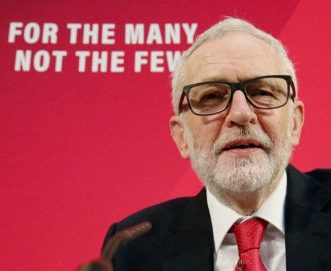
The belief that ‘we are all in it together’ is more important than other factors in explaining why the UK public has complied with lockdown measures so far, early data suggests. Jonathan JacksonChris PoschBen BradfordZoe HobsonArabella Kyprianides, and Julia Yesberg discuss the first findings of a survey on lockdown compliance in ten UK cities.

Throughout the lockdown, calls have centred on the need for collective action: to unite as a community, people need to remain apart as individuals. The roots of what has become an all-too-familiar mantra, ‘stay home, save lives, protect the NHS’, can partly be traced back to the recommendations of one of the Scientific Advisory Group for Emergencies expert groups. Framed as a way ‘to reduce the risk of public disorder’, the advice was that the government should:

‘Provide clear and transparent reasons for different strategies [that]… set clear expectations on how the response will develop… Promote a sense of collectivism: All messaging should reinforce a sense of community, that “we are all in this together.” This will avoid increasing tensions between different groups (including between responding agencies and the public); promote social norms around behaviours; and lead to self-policing within communities around important behaviours.’

The powers that Parliament passed on 26 March were unprecedented, with basic freedoms enshrined in English law on free movement and on free assembly, taken away overnight. The police were tasked to enforce the legal requirement for social distance, yet at the time of writing, public compliance seems to have been remarkably widespread, and the police have rarely had to intervene. By all accounts, in the UK it seems to have been compliance by consent not compliance by compulsion.

How did this happen? As of 26 April there have been over 20,000 Covid-19-associated deaths in UK hospitals. Has adherence to the guidelines been partly about fear of catching the virus? Did making social distancing a legal requirement and the policing of this requirement also make a difference? Was adherence actually only an issue of widely shared norms and values—a simple success for the mantra ‘stay home, save lives, protect the NHS’?

To examine empirically some of the factors underlying people’s levels of lockdown compliance, we started a multi-wave panel study to track the experiences, attitudes, and behaviours of 1,200 people recruited on the platform Prolific Academic—300 living in London and 100 living in each of Edinburgh, Newcastle, Cardiff, Leeds, Liverpool, Manchester, Birmingham, Sheffield and Glasgow.

First wave data were collected on 21 April and it is important to stress that our (convenience) sample is not representative of the 10 cities. The strength of the data lie in our ability to field a large number of measures quickly and our ability to track individuals over time (in the case of this study, every three weeks). By way of benchmark, we are also currently conducting a nationally representative sample survey. However, gathering data from random samples takes time.

To measure compliance in our 10 city study, we asked research participants ‘How often during the past week have you engaged in each of the following behaviours during the Covid-19 outbreak?’:

  • ‘socialised in person with friends or relatives whom you don’t live with?’ (86% said never, 10% said rarely, 2% said sometimes and 2% said often or very often),
  • ‘went out for a walk, run, or cycle and spent more than a few minutes sitting somewhere to relax?’ (62% said never, 15% said rarely, 11% said sometimes, and 11% said often or very often), and
  • ‘travelled for leisure (e.g. driven somewhere to go for a walk)?’ (87% said never, 7% said rarely, 3% said sometimes and 10% said often or very often).

We used a standard form of regression modelling to see which factors explain (what was to us a surprising amount of) variation in self-reported lockdown compliance.

Knowledge and concern about catching Covid-19 is not important

We asked people to rate their knowledge level on Covid-19 and tell us how concerned they were about getting infected. Our analysis indicates that neither knowledge nor fear of catching the virus played a role in explaining differing levels of lockdown compliance (holding constant other factors).

In other words, those who said that they often travelled for leisure, and/or often socialised out of their household, and/or often stopped in the park for a rest or a sunbathe, were not less frightened of catching Covid-19 nor felt less knowledgeable about the virus, compared to people who never or rarely did those things.

Does the law make a difference? Yes, but only with respect to the values and norms that the law expresses

The question ‘does making something illegal and policing the particular law actually make a difference to people’s behaviour?’ is an important one. Beyond incapacitation, the legal system has three levers at its disposal to secure voluntary compliance. The first lever is deterrence. Deterrence models are based on the idea that (would-be) offenders are responsive primarily to the risk of punishment. People comply because they fear getting caught by the police and being punished by the courts. The second lever is legitimacy. A legitimate authority has the right to exercise power: it commands consent that motivates people to be law-abiding citizens. People comply because they feel a moral obligation to obey the police and law.

We found that neither deterrence nor legitimacy (police and legal) predicted people’s self-reported levels of lockdown compliance. But we did find evidence for the third lever: the expressive function of the law. We asked people whether they thought it was right to make social distancing a legal requirement (it is worth saying that under 90% of our research participants said it was ‘right’ or ‘completely right’); whether by making it a legal requirement, the government sent the message that social distancing is important to fight the pandemic; and whether making social distancing a legal requirement helped to clarify what we should and should not be doing. Interestingly, 35% somewhat agreed that making it illegal ‘helped to clarify what we should and should not be doing’ and 53% completely agreed—to us this reflects ongoing debate about ambiguities and mixed-messages in the law, its enforcement, and Government advice.

We found that endorsement of these sentiments predicted lockdown compliance, adjusting for fear of the virus, police and law (and all the other factors). The law, through what it expresses, influences our beliefs and coordinates our behaviour. On the one hand, the content of law expresses to citizens what authorities and other citizens deem to be right or wrong and reveals widespread attitudes towards the behaviour the law regulates. On the other hand, by shaping expectations about how others will behave, the content of law helps to coordinate behaviour: the law helps to create concordant expectations.

In short, our analysis suggests that making social distancing a legal requirement may have strengthened public compliance not through deterrence or legitimacy, but through signalling that the nation needs to take social distancing seriously, underlining what people should and should not be doing, and why.

A story of the power of social norms centred around supporting the NHS

Finally, we found that social norms—the ways people think it is correct to behave and the social pressures this places on them—played a role. We define norms as commitment to (and knowledge of other people’s commitment to) the normative principle that everybody should follow social distancing guidelines. Norms motivate behaviour not only through coordination and cooperation, helping to make people accountable to each other; they also enable people to express shared values, meaning, and identities. Through the take-up of, and adherence to, norms:

we project a certain image and craft a sense of self: of people who care about the dignity of human beings, for whom death is a sombre and serious business, for whom the group is more important than the individual, or whatever.

Unsurprisingly, given the media and political debate, we found that sentiments like ‘most people in my local community would disapprove if some individuals were not strictly following social distancing to help prevent the spread of Covid-19’ and ‘it is important to the National Health Service that everybody sticks to the guidelines on social distancing’ played a central role in explaining lockdown compliance (adjusting for the other factors). Framing the call for collective action to rally behind a beloved institution like the NHS seems to have worked.

Take-home message

At least according to our survey of a convenience sample of people in 10 cities conducted on 21 April, we found that most important to self-reported lockdown compliance was the belief that ‘we are all in it together and we all need to come out of it together’—a sense of common fate, a shared identity, and acting for the common or the social good, centred around national sentiment towards the NHS. Social norms also seem to have been backed up by making social distancing a legal requirement. This may have helped underline how important social distancing is if we are to collectively (as a nation) fight the pandemic. Fear of the virus, police or law were unimportant; neither was the legitimacy of the police or law.

Our results may not be all that surprising. But how are things going to change? Will levels of compliance go down and will motivations to comply shift as lockdown fatigue sets in, and/or as different transition from lockdown phases begin, or indeed if lockdown returns for certain periods, for current groups? Watch this space!

_____________________

About the Authors

Jonathan Jackson is Professor in Research Methodology and Head of the LSE Department of Methodology.

Chris Posch is a Postdoctoral Research Fellow in the Department of Methodology at LSE.

Ben Bradford is Professor of Global City Policing in the Department of Security and Crime Science at UCL.

Zoe Hobson is a Researcher in the Department of Security and Crime Science at UCL.

Arabella Kyprianides is a Research Fellow in the Department of Security and Crime Science at UCL.

Julia Yesberg is Research Fellow in the Department of Security and Crime Science at UCL.

LSE blog

To protect older people from COVID-19, state coordination of the social care sector is urgently needed

As COVID-19 rips through our social care sector, now is the time to put an end to the highly fragmented social care market and for the NHS and local government to step in to provide coordination, writes David Rowland. The arguments for doing so are becoming more compelling by the day.

Using the market to deliver social care on a low-cost basis had manifestly failed even before the current pandemic: one in five care homes are rated as inadequate or needing improvement, personal care is provided to people in their own homes in 15-minute slots, with the sector as a whole suffering from a 30% turnover rate – a fact which might explain why there are currently over 120,000 vacancies.

But this market failure, whilst tolerated by politicians of all parties for over 20 years, is fast becoming the cause of a national tragedy. Due to the fragmented nature of social care provision, it is almost impossible to say what is happening to these older people. Within one local authority, as many as 800 different care businesses are delivering vital care services at any one time, making it all but impossible for public health teams to track and monitor the spread of the disease across these providers.

At a national level, the data on care home deaths and infection rates is appearing in the media on a company-by-company, and sometimes home-by-home basis with seemingly no standardised method of reporting. The care regulator has only just started collecting data on deaths caused by COVID-19, some four weeks into the crisis. And family members are often unable to visit their loved ones and so are unable to see what kind of care they are receiving.

And because care home companies exist as separate businesses, in competition with one another, it is difficult if not impossible for them to collaborate to jointly procure protective equipment, or to re-allocate staff members from one home to another to cover sickness absences. The success of one care provider in getting access to PPE or staff cover is to the detriment of another, and without state support it is impossible to develop additional care facilities so as to isolate those who are infected from those who aren’t.

Moreover, the care workforce has become so casualised that care workers will sometimes work in more than one care setting – providing care services in someone’s home one day, whilst working in a residential care setting the next – thus potentially increasing the spread of the disease amongst those who are most vulnerable. The reliance on zero-hours contracts, particularly in the home care sector where nearly 60% of workers operate on such terms, also heightens the risk that those workers who are sick with the virus are unable to afford to stay at home and isolate.

Because the state has driven the cost of delivering care down to a bare minimum, and because offshore investors have sought to extract the maximum short-term profit out of the residential care sector, many care provider companies were teetering on the brink of collapse even before COVID-19 hit. This has left the financial structure of the industry in such a fragile state that it is not able to withstand even a minor downturn in income or increase in costs.

When the relatively mild winter flu hit in 2017, one of the largest and most financially troubled care providers, Four Seasons, reported that its profits had been badly hit due to a 2% decline in occupancy rates caused by an increase in deaths amongst the older population.  The government’s impact assessment on a no deal Brexit, published in 2019, predicted that an increase in inflation would cause the care sector to fall over. And the home care industry was also found to be loss-making even before the pandemic, with a quarter of all businesses at risk of insolvency. 

But these shocks are nothing compared to the sustained impact of coronavirus over an 18-month period – the increased hygiene and cleaning requirements, PPE and staff costs which come with dealing with this crisis, and the fall in income and occupancy due to the tragically premature deaths of large numbers of older people. All these mean that the sector is heading towards financial collapse.

The government’s plan for the social care sector, published in late April, works on the assumption: that it can turn the social care system round by building on this dysfunctional market structure. It sets out plans to provide greater amounts of PPE for staff, to increase testing, and to recruit more care workers alongside an additional £1.6 billion of funding. But these are only the very basics that the system currently needs to deal with the impact from COVID-19.

The government’s plan does nothing to address the high likelihood of provider failure, instead relying on the sector regulator’s ‘market oversight regime‘, which merely warns local authorities if a major provider is about to go bust but does nothing to prevent it.  And it says nothing about addressing the highly precarious employment status of the workforce. Whilst acknowledging that a quarter of care workers are on zero-hours contracts, the government proposes to do nothing to provide them with any additional security, which might prevent them from working when sick and endangering the people they are caring for.

Unlike in the NHS, where the Secretary of State has legal powers in an emergency to issue commands and in effect suspend the operation of the NHS internal market, no similar powers exist in relation to the social care sector. Yet it is becoming clearer that it is impossible to effectively respond to a public health emergency of the current magnitude by relying on market-based provision.

At the very least, local authorities and the NHS should be given the legal powers to take over direct responsibility for providing care in people’s homes, where this can be justified on public health grounds, and to also, if necessary, take back publicly-funded contracts for home care and employ the home care workforce directly as part of the NHS or the local authority.

The NHS and local authorities should also have powers to issue directions to all care providers where there are concerns about their ability to respond effectively to the virus, irrespective of whether the recipients are private payers or are state funded. Publicly-funded capital should be quickly made available to allow the NHS or local authorities to open new homes to provide additional facilities in order to shield vulnerable people. Where care homes are at risk of going bust, local authorities and the NHS should have the right to step in and run the facilities, rather than having to re-house residents at very short notice as currently happens.

Arguments about the state’s long-term role in directly providing social care services and the funding arrangements for social care can wait until this crisis is over. For now, the NHS and local authorities need levers to coordinate social care provision in order to have the best chance of minimising the harm to our older population.

____________________

About the Author

David Rowland is the Director of the Centre for Health and the Public Interest. Prior to this he worked within healthcare professional regulation in the UK as the Head of Policy at three national regulators and has developed significant expertise in social care policy, NHS workforce issues, regulation, safeguarding, whistleblowing and patient safety.

LSE blog

The Tories must not reward tax-dodgers with ‘no strings attached’ bailouts.

Government bailouts must not enrich tax dodgers, writes Prof. Prem Sikka

The UK government is bailing out companies affected by the coronavirus pandemic. What do the public get in return?

The initial kitty of £330bn worth of government-backed loans has been supplemented by the Bank of England’s quantitative easing programme of another £200bn to purchase corporate bonds.

The corporate queue for bailout includes airlines, pubs, restaurants, clothing, oil/gas and numerous other sectors. Take EasyJet. The UK government has given a £600m loan to the company. But the terms of the loan are secret, which means that the public and parliament can’t easily call the government or the company to account.

In the normal course of events, companies must ask their shareholders for additional funding when in distress. After all, they have been receiving dividends, share buybacks and other forms of returns for years. Between 2011 and 2018, the UK’s biggest companies paid out £400bn in dividends and £61bn in share buybacks to shareholders. Now most want to provide little/no additional investment. This includes billionaires like Sir Richard Branson and Sir Philip Green.

Choices

If shareholders fail to invest, the company can enter administration, and its control effectively passes to bondholders, or secured creditors – mostly banks and private equity. They can convert their bonds/debt to equity, and effectively become shareholders and nurse the business.

This means that the entity is no longer obliged to make interest payments on its debt and can preserve its cash flow. It seems that many bondholders do not want to exercise this option. In the final analysis, an insolvency administrator can seek buyers for the business. If that option does not materialise then liquidation and a piecemeal sale of assets beckons.

Other countries are given far more thought to the issue of bailouts. For example, Denmark and Poland have stated that companies registered in tax havens are not eligible for any government bailout funds. After all, they did not directly contribute to the public purse and therefore have no moral right to make a claim on it. The UK must also follow the same principles and refuse to reward elites or companies who excelled at dodging taxes and their social responsibilities.

The case of Virgin

Such principles can help to deal with the £500m Government-backed loanand credit guarantee sought by Virgin Atlantic. US-based Delta Airlines holds 49% of the company’s shares. The ultimate holding company of Virgin Atlantic is Virgin Group Holdings Limited, a company registered in the tax haven of British Virgin Islands (BVI). Its sole shareholder is BVI-resident Sir Richard Branson. Therefore, he holds 51% of the shares of Virgin Atlantic. BVI provides opacity and does not levy corporation or income tax.

Virgin Atlantic should ask its shareholders for additional funding. With an estimated wealth of £4.7bn, Sir Richard – a self-confessed tax-exile – should provide additional funds. He controls numerous companies, including Virgin Care which has £2bn of NHS and local authority social care contracts but has not paid UK corporation tax. The company is ultimately controlled through BVI registered Virgin Group Holdings Ltd. Virgin Group has collected £306m in dividends from Virgin Trains.

Two years ago, Sir Richard sold part of his stake in Virgin Money to Clydesdale Bank and Yorkshire Bank for £1.7bn. The new owners also pay Virgin Group £12m a year, rising to £15m, for the licence to use the Virgin Money brand.

Sir Richard has resources. Even his paper-wealth can be used as collateral to generate funds – but he shows little appetite for that.

If Sir Richard decides to abandon Virgin Atlantic, then bondholders can step-in. If they show no interests then the company should ask BVI for support. It is hard to see any moral case for the UK to rescue Virgin Atlantic and enrich a tax-exile who has carefully crafted his personal and business affairs to avoid UK taxes. Of course, the UK government can buy the airline from administrators at a low price to preserve jobs.

Getting something back

The UK government needs to state the principles which will guide its bailouts. They must be based on social responsibility. Currently, the UK government is subsidising 80% of the employee wages, up to a maximum of £2,500 per month, until June. After that unemployment is likely to spike. To prevent that, bailed out businesses must guarantee not to cut jobs for the next 12 months.

Bailouts should be used to bring essential industries under public ownership. In return for bailout funds, the recipients must terminate all strategies for avoiding UK taxes and embrace socially responsible objectives.

These should include targets for reducing carbon emissions, gender and ethnicity pay gap; greater diversity in company boards and employee-elected directors on the boards of large companies. Companies must not haemorrhage cash through payment of excessive dividends. Director remuneration should be no more than 10 times the lowest wage in the company.

Any government bailout has to protect jobs, taxpayer and social interests. It must not reward bad companies or corporate elites who eye a sack load of money to enhance their own wealth. It’s time to see some strings attached.

Prem Sikka is Professor of Accounting at University of Sheffield and Emeritus Professor of Accounting at University of Essex. He is a Contributing Editor to LFF and tweets here.

The Great Virgin Train Robbery

ByStefan Bielik

After rail privatisation, Virgin Trains were presented as an engineering triumph – but they amounted to nothing more than a sewage-scented rebranding of British Rail’s managed decline.

Since Britain’s rail network was privatised in the mid-1990s, the matter of its return to state control has dogged the country’s left. British commuters have been forced to watch on as European neighbours modernised and pushed forward technologically, while their own network was left to rot in the hands of avatars for PFI and PPP like Richard Branson. As we pick through the aftermath of December’s catastrophe for the British left, considering what worked and what we ought to rethink, the renationalisation of the entire rail network should be one of the pledges we consider inarguable – as well as the more obvious reasons for government ownership, such as job creation and the potential for revenue generation, the demise of British Rail is an under-reported moment in the decline of the UK’s manufacturing industry. Simply put, reviving this would be one step towards regaining the mythologised days when the country Still Made Things, and draw manufacturing industries away from defence sectors, allowing us to head off nativist swerves by right-wing factions without compromising our values.

To illustrate, a name that will invoke instant recollections of a very specific smell to users of the West Coast Mainline – the Pendolino. Bought by Virgin Trains to serve its flagship route acquired in the mess of rail privatisation Britain underwent in the 1990s, these trains began serving the route in the giddy heights of the Blair years. Their fast acceleration, racing car nose and futuristic interiors were shown off in a typically vainglorious campaign, featuring plenty of shots of Richard Branson gurning and giving thumbs-ups out of driver’s cab windows. This press release hints in its corporate way at the excitement surrounding manufacturer ALSTOM ‘introducing tilting technology to the UK’ – but that is not, in fact, the truth, and overlooks a story which almost by itself makes the case for nationalised rail. 

The UK’s rail network, like so much of the country’s infrastructure, suffers from a problem of early adoption followed by a failure to continue innovating. Being pioneers in modern rail, the first to construct wrought iron tracks as well as introduce steam engines, has not led to sustained dominance in the industry. Contrary to other European leaders in the field such as Austria or Switzerland, both largely nationalised since the late 19th century, outside of wartime Britain’s trains did not come under state ownership until the Transport Act of 1947. This laid out plans to finally bring the four private companies, created by forced consolidation under previous Acts, under state control (of course, at this time it had not occurred to anyone to advocate separating track and rolling stock ownership, but more on that later). The initial period of private ownership had not been a barrier to the early expansion of routes, both freight and passenger, as profitability and relative usefulness of lines largely managed to happily coexist – indeed, the irony of nationalisation leading rather rapidly to the Beeching cuts, as opposed to the railways existing as a public good without the obligation to turn a profit, is often cited as proof that privatisation is best for Britain’s trains.

However, this is of course an argument that deliberately limits its scope. The fatal blows to Britain’s pioneering developments in locomotion were the combination of nationalisation with a succession of Conservative governments that seemed determined to prove the unworkable nature of state-owned rail, as well as a decision to prioritise motorways and other road construction – the Beeching Report even advocated transferring freight transport from rail to road. Consequently, while Japan was spending 400bn yen, or roughly £400m at the time, opening its pioneering Shinkansen lines in the mid-1960s, Britain was following up on the rail network cuts of the previous decade by pledging £1bn of investment in new trunk roads, just to ease car access into London. The country was moving firmly towards its model of suburban living, which reached full fruition by the 1980s. Reading’s Lower Earley – at one point the largest private housing estate in Europe – was archetypal. Endless roundabout junctions, the absence of a clear centre and no proper pedestrian routes to even access one, and crucially, almost no public transport connections – and certainly no rapid transit or light rail. What Lower Earley does have is a 5-minute drive to a motorway junction for almost all houses, and a dual carriageway directly into the town centre. It is, like hundreds of similar estates across the country, an area where it is near-impossible to live without owning a car. Even without the pernicious tactics of US car manufacturers (buying tram companies in order to close the lines, as happened across the USA), the UK managed to achieve a market ready-made for the motor vehicle industry.

This unwillingness to invest in grand public transport projects (at least, outside of London) left Britain with a network of railways largely built in an age when ‘high speed train’ meant something that travelled at a top speed of around 125kph (78mph). By the beginning of the 1970s, following the Shinkansen’s initial success as it took passengers between Tokyo and Osaka for the 1964 Olympic Games, then over 100m passengers in the following 3 years alone, other countries began to take interest in the potential for mass transit at high speeds. In Britain, it would not be a simple, or cheap task however. To make the technical part as simple as possible, deployment of trains going faster than around 200kph (125mph) on older lines encounters three main problems: firstly, capacity – clearly, a train capable of travelling at over 200kph cannot maintain full speed on a line also used by freight and local passenger trains travelling at 90. Secondly, every high speed train in the world is equipped with an in-cab signalling system, allowing drivers to rely on computerised internal systems and automated braking systems rather than watching for trackside signals, thus removing the risk of error. Finally, the curvatures on British tracks would result in derailment for trains travelling at higher speeds, or at the very least extreme discomfort for passengers as lateral forces shift them in their seats. With the government clearly unwilling to embark on a costly network of more direct, fast lines, any plans for bringing Britain’s trains into the modern age seemed to be limited to the constraints of the existing network.

Therefore, in 1975, British Rail’s HST project rolled out the InterCity 125, a compromise that could achieve 125mph, albeit with far less acceleration than international competitors thanks to its diesel-electric engines. Like many stop-gap solutions in British infrastructure, these near-50 year old designs still form an important part of the country’s rolling stock today, but with a little more willing and investment, a project being worked on in the background could have led to a very different story.

In 1981, British Rail invited journalists to Glasgow for a trial run of a new type of train, a sleek, futuristic, electric train named simply APT – Advanced Passenger Train. Faced with adapting to the old network, designers and engineers came up with the solution of creating a technology that used sensors and computerised hydraulic systems to tilt into corners, thus enabling the train to maintain high speeds where traditional units would have had to brake. This technology had been in development for over two decades by this time, and despite that domestic fanfare (including a notorious PR video presented by Peter Purves) was not the first of its kind in the world – Fiat Ferroviara, the Italian firm’s rail division, had built an experimental Electric Multiple Unit capable of similar technological tricks and deployed it on the line from Rome to Ancona in 1975. It was nicknamed Pendolino – a diminutive version of the Italian word for pendulum – the first usage of that name. Back in Britain, BR hoped that the APT would help them compete with the burgeoning motorway network, as well as the rise of aeroplane travel between Britain’s more distant cities. As is clear from the absence of APTs from the modern rail network, this was not to be the case.

Things began to fall apart from that initial promotional ride. Despite Purves’ best attempts to talk at a normal volume over clattering crockery (“it’s smooth, and it’s quiet”) as the train tilts into another Victorian-era curve, and a best-ever time of 4 hours 15 minutes for the journey from Glasgow to London, the newspapers were full of reports of passengers feeling sick thanks to the constant rocking of the tilting system, and a sensation that can be summed up as the inverse of seasickness – ie, a perception of movement without the body experiencing correspondent effects. Soon after, a northbound service was suspended at Crewe thanks to a frozen braking system, and the problems continued until BR was forced to withdraw the train from service. Its time serving West Coast Mainline passengers had lasted under three weeks. Taken out of service, and sent for re-evaluation, the APT trains made a final, unheralded appearance from 1984 for a year or two, before this last gasp of British Rail’s development department was killed off for good. £50m had been spent on the project across its entire history.

Meanwhile, Fiat – an awkward case, given that they are a private company who benefit from close associations with the Italian state – were continuing research on the technology after the relative success of prototype experiments in Italy and Spain (through a collaboration with state-owned RENFE). Taking lessons from the failure of the British project, the project finally created a train suitable for regular passenger service in 1988, with ETR-450 models running initially from Rome to Milan. Of course, in this time France had opened its TGV, with SNCF invoking Aristotle in its inauguration (‘Le progrès ne vaut que s’il est partagé par tous’ – progress is worthless unless shared by all), reaching speeds unimaginable in the rest of Europe and doing so with at least the pretence of socialist ambition afforded by the Mitterand government. Spain was beginning construction on its own dedicated high-speed network, and Germany was progressing towards lightning speeds at a more measured, methodical pace through its Intercity Express network. Each of these focused on newly-built, dedicated lines, though – not something possible in the Major or Blair years of Britain, where large infrastructural projects were predicated on private sector investment and guaranteed income, as with the M6 Toll Road or Dartford Bridge. 

Virgin Trains, like all other products in the Virgin brand, was something that seems only possible in the “things can only get better” era of the late 90s. Concentrating solely on the sexier intercity routes, with their fast speeds and glamorous routes into the heart of London, owner Richard Branson did all he could to bring his personality to the distinctly dull world of rail transport. Bikini women, ticket discounts, Rik Mayall-fronted adverts (with an apparent brief to channel the train knight himself) – the British public were bombarded with efforts to entice them back onto trains and off the motorways. The problem was, no amount of presentation could hide a passenger experience involving 20 year old trains and hastily-repainted interiors, with slam doors, shaky rides and toilets that still emptied directly onto the tracks. The answer, inevitably, was the Pendolino. Those rounded-edge interiors, the space-age toilets that a good half of users failed to work out how to lock, sliding doors and, in the Branson rewriting of history, completely new technology in Britain finally gave Virgin an end product that matched their marketing. At this point, due to various corporate buy-outs, the trains (registered as BR Class 390) were produced by the French conglomerate Alstom, but that technology developed simultaneously by Italian and British engineers was still there. Of course, in a different timeline, these trains are deployed by British Rail far earlier after repeated testing thanks to sufficient investment levels. 

In our timeline, however, the Pendolino (and, in a stroke of bad luck, Virgin’s diesel equivalent Bombardier Voyager) was an adapted version of a technology developed for slightly different circumstances, and with more than a few design flaws. As far as passenger experience went, the most famous of these was the constant smell of sewage thanks to a construction flaw in the air intake system. On top of this, promised improvements to the line that would have allowed the train to operate at its top speed never materialised, thanks to any track work being in the hands of the disastrous, even fatally so Railtrack company. And yet in other countries, the technology was booming. Italy, Poland, Czech Republic, Finland, Slovenia among others – almost all, interestingly, with at minimum a retained state interest in the rail network – all by now use train units which trace their design back to those first BR and Fiat trials.

Of course, a continuing reliance on now 40-year old diesel trains is by no means the end, nor even the beginning of the list of problems with UK transport. A perfect storm of decades of under-investment (a tactic of ‘managed decline’ used effectively in this area as well as health services and of course the entire city of Liverpool) and the extreme centralization of the country’s economy have led to, London aside, a service that fails to meet the needs of its potential users. Those fortunate enough to live on a spoke from London to one of the cities deemed important enough to have a main line to the capital can generally rely on fast travel to other places along this route, but lateral travel between these lines is generally awful, thus increasing reliance on cars. 

Perhaps the most brutal example of this is to consider a trip between the Welsh coastal towns of Haverfordwest and Bangor, which would take under four hours by road. The train journey, however, involves at best a little over seven hours, a change at Cardiff and a decent amount of time across the border in England. Both of these places, of course, have much quicker train connections to London – indeed, Bangor has a faster connection to the UK capital than to Cardiff, the capital of its own nation. Compare this with, for example, a train between German provincial centres of Bremen and Rostock – a similar distance but with a journey time less than half that of the Welsh example above. 

Of course, the UK is not alone in having poor intercity connections outside of the capital – Spain suffers from a centralised hub-and-spoke model that for instance means the fastest route from Murcia to Malaga (again around 200 miles/320km) by train involves first travelling to the central province of Castile. Spain here has the excuse of being ruled by a fascist, Madrid-focused government for 40 years. France meanwhile has since World War II strived to ensure an even economical distribution around the country – indeed, the TGV project was arguably as much about ensuring fast routes for northerners going on holiday as it was about ensuring non-Parisians could get to Paris quicker. But it’s within metropolitan areas that the difference between Britain-outside-of-London and everywhere else is largest. Suburban S-Bahn systems can be found in most major cities of central and western Europe – from Kraków and Ostrava to Stuttgart and Le Havre, those living in peripheral estates and villages can still rely on regular commuter trains to their regional centre. In Britain, the ‘Northern Powerhouse’ capital of Manchester is served from Bolton and the Peak District, natural feeder areas, by one of the most infamous projects in British rail history, the bus-on-rails Pacer. 

As a country led by the party most responsible for gutting its public transport prepares to embark on its most ambitious infrastructure project since the Channel Tunnel with HS2, it seems that we are no closer to a system that imagines users wishing to occasionally travel to somewhere other than London or a town on the way. The full, theoretical plans including HS3 or ‘Northern Powerhouse Rail’ go some way to righting this, albeit exclusively in England and with a best-case completion date of some 20 years hence. Compare that with China’s high-speed rail network, which through essentially applying mass-production principles to rail construction (and, admittedly, the world’s most plentiful supply of labour) has gone from having a single ‘fast’ line with a 100mph (160kph) limit in 1995 to thousands of miles of some of the highest-speed tracks in the world by now, and plans to continue expanding and improving. On top of this, the private Czech carrier Leo Express will this year deploy Europe’s first Chinese-designed trains, cementing the nation’s place as a major player in rail. It is worth noting that some of the greatest leaps forward in this journey were made during the global recession which started in 2008, thanks to the CPC’s economic stimulus packages. This isn’t just an economic concern, either – the net result of high-speed rail between important cities has a drastic effect on domestic flights and car journeys. Thanks to state ownership and thus a lesser incentive to turn direct profits, the Chinese government (just like the French before them) were able to aggressively price their tickets against airlines, and with centre-to-centre connections and no need to ‘check-in’, as well as the ability to work en-route, domestic car and plane journeys fell dramatically.

Some of the problems of Britain’s 19th century infrastructure are unsolvable without tearing everything down and starting again. The legacy of its train lines being built up by competing Victorian businessmen led to many oddities, such as Wigan’s two stations, or the five different answers you would receive to the question ‘what is the main station in London?’ But there are many more aspects that can and must be fixed – and it is clear from countless historical examples that this can only be done with bold, organised state planning, without profiteering.

Tribune link

Can’t, won’t and what’s the point? Explaining the U.K. public’s muted response to austerity

Since 2010, the government has undertaken extensive spending cuts, subsequently linked with rising poverty, food bank use, and serious health issues. Kate Harrison identifies key factors that explain why the public’s response to austerity has been relatively muted.

Since 2010, successive governments have instigated round after round of spending cuts, reducing or closing many public services. However, the government’s 2020 budget, followed by the spending necessitated by the COVID-19 crisis, appear to have brought an end to cuts, at least in the short term. Many, though, now faced with unemployment, are being forced to turn to government support such as Universal Credit. They have been met by a benefits system depleted by long-term underinvestment and face the reality of living on £94 per week, or less. Many who previously were shielded from austerity’s worst effects must now face the reality of it.

Under austerity, the UK has seen cuts to spending disproportionately spread across the country, with deprived areas typically facing the highest cuts to services. Over the last decade, child poverty has risen, foodbank referrals have more than doubled and health inequalities have widened. Those who are most in need have borne the brunt of the cuts: people with the most severe disabilities have faced a burden of cuts 19 times higher than the rest of the population.

Despite this, the public response to austerity has been relatively muted, with a spate of protests in the initial years of the coalition government and relatively little political activism since. My research looks at why there hasn’t been a stronger public response to these measures. Some argue that Brexit could have been a protest vote against the cuts and their consequences for many people. The evidence on this is so far limited, but it is still worth noting that if austerity did play a role in the UK’s vote to leave the EU, this is an indirect and nonspecific way of protesting the cuts. As such, it is important to understand why people are not taking more conventional approaches to opposing austerity.

Across many forms of political participation, including voting and protesting, it is typically those with low wealth, income, and education who are least likely to take part. Given that it is these groups who are suffering the most under austerity, without their voices being heard the political establishment are given no reason to change their policies. This maintenance of the status quo then allows the most powerful members of society to preserve their position of privilege.

The key question is therefore why are more people not expressing opposition to austerity? Research suggests that people need time, money and civic skills to participate. However, when there is an economic shock like the financial crisis of 2008, there can be a spike in protest behaviour as people express their grievances, such as a demonstrating against rising unemployment.

This theory of grievances as motivation for protest can explain the early protests the UK saw, such as Occupy London and student protests against rising tuition fees. Nevertheless, what this doesn’t explain is why these protests didn’t continue, as austerity deepened and public services were reduced or closed. This suggests the picture is more complex.

Building on the two theories mentioned above, I propose a four-fold explanation for the relatively low levels of political activity seen in response to austerity. The starting point will be the argument that resources like time and money are needed for political participation. Under austerity, those from disadvantaged and minority groups have lost out the most, meaning that those who already had the least time, money, and resilience have fewer resources now than they did before. As such, participating in politics is even less accessible for those with disabilities, on benefits, and low incomes than it was before the cuts began.

But what about those more fortunate, who had more resources and haven’t lost out in the same way? The theory of grievances suggests that those who have experienced an economic or political struggle will engage in political participation. For those whose experience of austerity has been less extreme and less personal, there is little cause for mobilisation. Indeed, following the introduction of harsh austerity measures in Spain, the participants in the wave of strikes and demonstrations that took place were disproportionately those affected. For the population as a whole, political engagement actually declined, on average, after the introduction of cuts.

There are two further factors that are important to consider for a more nuanced understanding of low political participation. Firstly, the government chose to talk about the cuts in a way that made them seem both necessary and unavoidable. They made arguments such as ‘we are not doing this because we want to, driven by theory or ideology. We are doing this because we have to’. Despite some arguing that austerity is, in fact, an ideological choice and not the only solution, the British public largely accepted the narrative that there is no alternative. This may have led to a sense that participation is futile, because the lack of a viable alternative means that political action is unlikely to result in change.

Also, for those most affected by the cuts, the government’s choice to evoke a ‘blitz spirit’ narrative of ‘sticking together as a country’ is likely to have come across as insensitive, if not insulting. The highly unequal way that cuts have been implemented is likely to exacerbate distrust in politicians who try to claim that we are in it together.

The final consideration in understanding the impact of austerity is the broader picture of participation. There is evidence that trust in politicians has been declining while discontent with democracy grows. The distrust in politicians and lack of political efficacy fostered by the government’s austerity narrative is therefore likely to exacerbate more general recent trends of declining political participation.

In combination, these factors will typically lead to lack of political participation through two possible avenues, shown in the figure below. Generalised dissatisfaction with politics forms a backdrop for all, undermining participation even before austerity began. For those significantly affected by austerity, opportunities to engage in politics are diminished by the loss of resources to participate caused by spending cuts. The ‘in it together’ rhetoric then fosters alienation from the government, further exacerbating the disinclination to participate.

Figure 1: Theoretical model to illustrate low political participation in response to austerity.

Meanwhile, for those on higher incomes and less dependent on public services, the low personal impact of austerity produces no significant grievance to communicate, resulting in little motivation to act. Additionally, the rhetoric of austerity as necessary and unavoidable fosters the belief that nothing would change if they were to act. While general participation levels are already falling, more provocation is needed for political participation.

This theory demonstrates the complex ways in which people can become silenced by austerity, which is deeply problematic because those who are most dependent upon the state face the most challenges in engaging with politics. Those on low incomes, with disabilities or otherwise marginalised have lost out the most and, with their influence further diminished, are only likely to lose out more.

______________________

Note: the above draws on the author’s published work in Representation.

About the Author

Kate Harrison is a PhD Researcher at the University of Southampton

LSE blog